
Title
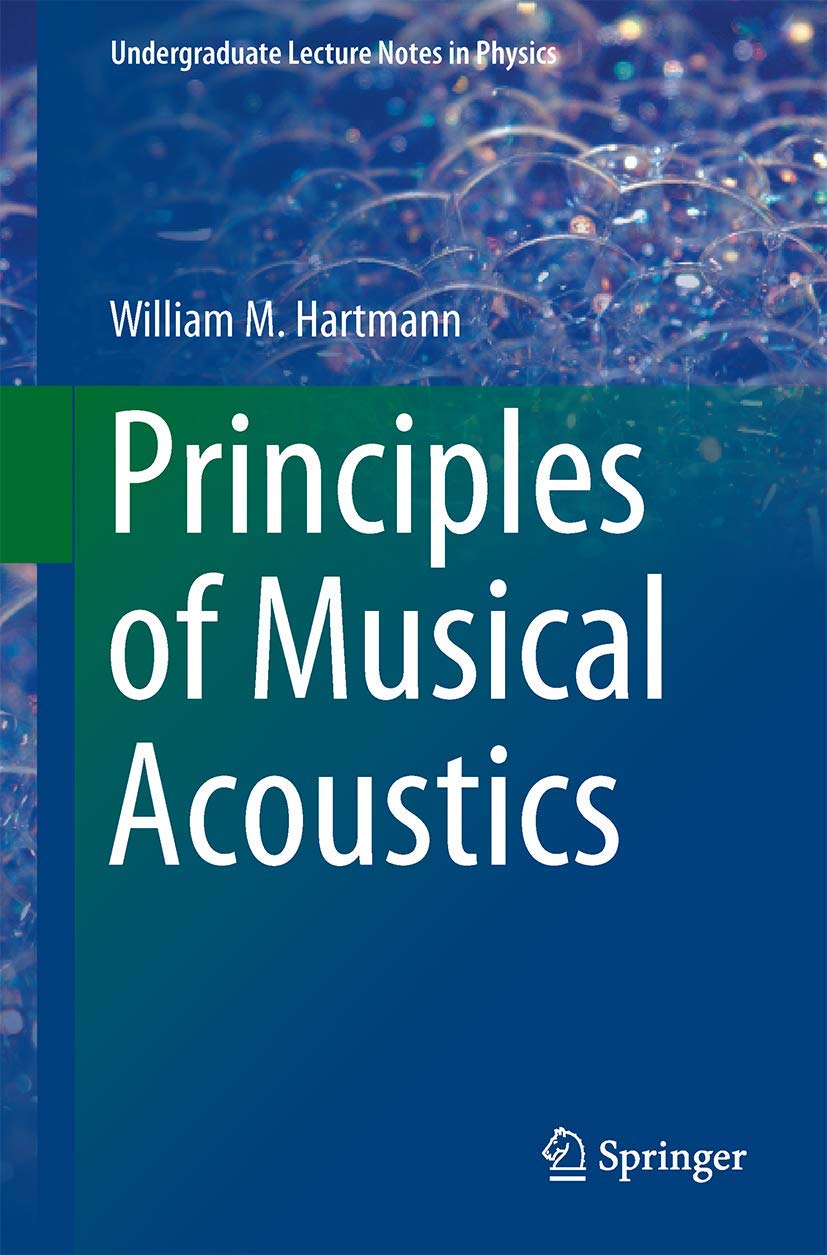
Springer Principles of Musical Acoustics - Undergraduate Lecture Notes in Physics
Sold by Ergodebooks, an authorized reseller.
Returns accepted within 30 days | support@ergodebooks.com
Shipping Information
- Free Standard Shipping — United States only
- Processing Time: 3–5 business days
- Estimated Delivery: 6–10 business days after dispatch
- Double-boxed, fully insured & discreetly packaged
- Tracking number sent via email once dispatched
Returns & Refund
Returns accepted within 30 days of delivery.
Damaged or Defective Item
Free return shipping + replacement or full refund
Wrong Item Received
Free return shipping + replacement or full refund
Change of Mind
Return shipping at customer's expense · 25% restocking fee applies
Payment Option

Principles of Musical Acoustics is an essential textbook for students and professionals interested in the science and technology of music. This comprehensive resource provides a solid foundation in the principles of musical acoustics, making it ideal for those studying music, sound engineering, or acoustics.
This book focuses on the basic principles underlying the science of sound, utilizing musical examples and specific instruments to illustrate key concepts. It begins with a thorough exploration of vibrations and waves, which are crucial to understanding the basic physical properties of sound. The text also delves into the human element, covering physiological and psychological aspects of acoustical science, including topics like loudness, pitch, tone color, and localization of sound. With these two pillars established, the book explores various applications, including room acoustics, audio technology, broadcasting, and speech, and concludes with an overview of traditional musical instruments organized by family.
Key Features:- Comprehensive Coverage: Covers both physical and human elements of musical acoustics.
- Accessible Mathematical Approach: Assumes familiarity with elementary algebra and includes computational techniques for complex concepts.
- Illustrative Examples: Uses musical examples and instruments to explain acoustical principles clearly.
- Variety of Applications: Discusses practical applications in room acoustics, audio technology, and broadcasting.
- Structured Learning: Organized chapters that progressively develop knowledge in acoustics and its related fields.
- Useful Appendices: Provides technical help for readers to better understand advanced topics.
- Good Condition: A used book in good condition, ensuring affordability without sacrificing quality.
Principles of Musical Acoustics is an invaluable resource for students, educators, and professionals in the fields of music, sound engineering, and acoustics. Its structured approach and practical applications make it suitable for anyone looking to deepen their understanding of musical acoustics. This text not only serves as a foundational study guide but also as a reference for practitioners seeking to apply acoustic principles in real-world scenarios. Enhance your knowledge of sound science with this essential book.
⚠️ WARNING (California Proposition 65):
This product may contain chemicals known to the State of California to cause cancer, birth defects, or other reproductive harm.
For more information, please visit www.P65Warnings.ca.gov.
- Q: How many pages does the book have? A: The book has three hundred sixty-two pages. It provides a comprehensive exploration of musical acoustics and its principles.
- Q: What is the binding type of this book? A: This book is available in paperback binding. This makes it lightweight and easy to handle for reading.
- Q: What are the dimensions of the book? A: The book measures six point one inches in length, zero point eight three inches in width, and nine point two five inches in height. These dimensions ensure it is portable and easy to store.
- Q: Who is the author of this book? A: The author of this book is William M. Hartmann. He is noted for his contributions to the field of musical acoustics.
- Q: What topics does the book cover? A: The book covers a variety of topics including room acoustics, audio technology, and traditional musical instruments. It focuses on both physical and perceptual aspects of sound.
- Q: Is this book suitable for beginners? A: Yes, the book is suitable for beginners. It assumes familiarity with elementary algebra and introduces mathematical concepts as needed.
- Q: How can I use this book effectively? A: To use this book effectively, start by studying the principles of vibrations and waves. Engage with the musical examples to connect theory with practical applications.
- Q: Is this book appropriate for music students? A: Yes, this book is appropriate for music students. It provides foundational knowledge in musical acoustics essential for further studies in music.
- Q: What is the recommended reading level for this book? A: The recommended reading level is undergraduate. It is designed for students pursuing studies in physics and music.
- Q: How should I store this book? A: Store this book in a cool, dry place. Avoid exposure to direct sunlight to prevent damage to the cover and pages.
- Q: Can this book be cleaned? A: Yes, you can clean the book gently. Use a soft, dry cloth to wipe the cover and avoid using liquids.
- Q: What should I do if the book arrives damaged? A: If the book arrives damaged, contact the seller for a return or replacement. Ensure to keep the original packaging for the return process.
- Q: Is there a warranty for this book? A: No, there is typically no warranty for books. However, check with the seller for their return policy.
- Q: Are there any safety concerns with this book? A: There are no specific safety concerns with this book. It is a scholarly text intended for educational use.
- Q: How does this book compare to other books in acoustics? A: This book provides a unique blend of physical and perceptual approaches, making it distinct from other texts focused solely on one aspect of acoustics.
- Q: What if I have questions while reading the book? A: If you have questions while reading, consider reaching out to peers or instructors familiar with the subject matter for clarification.