
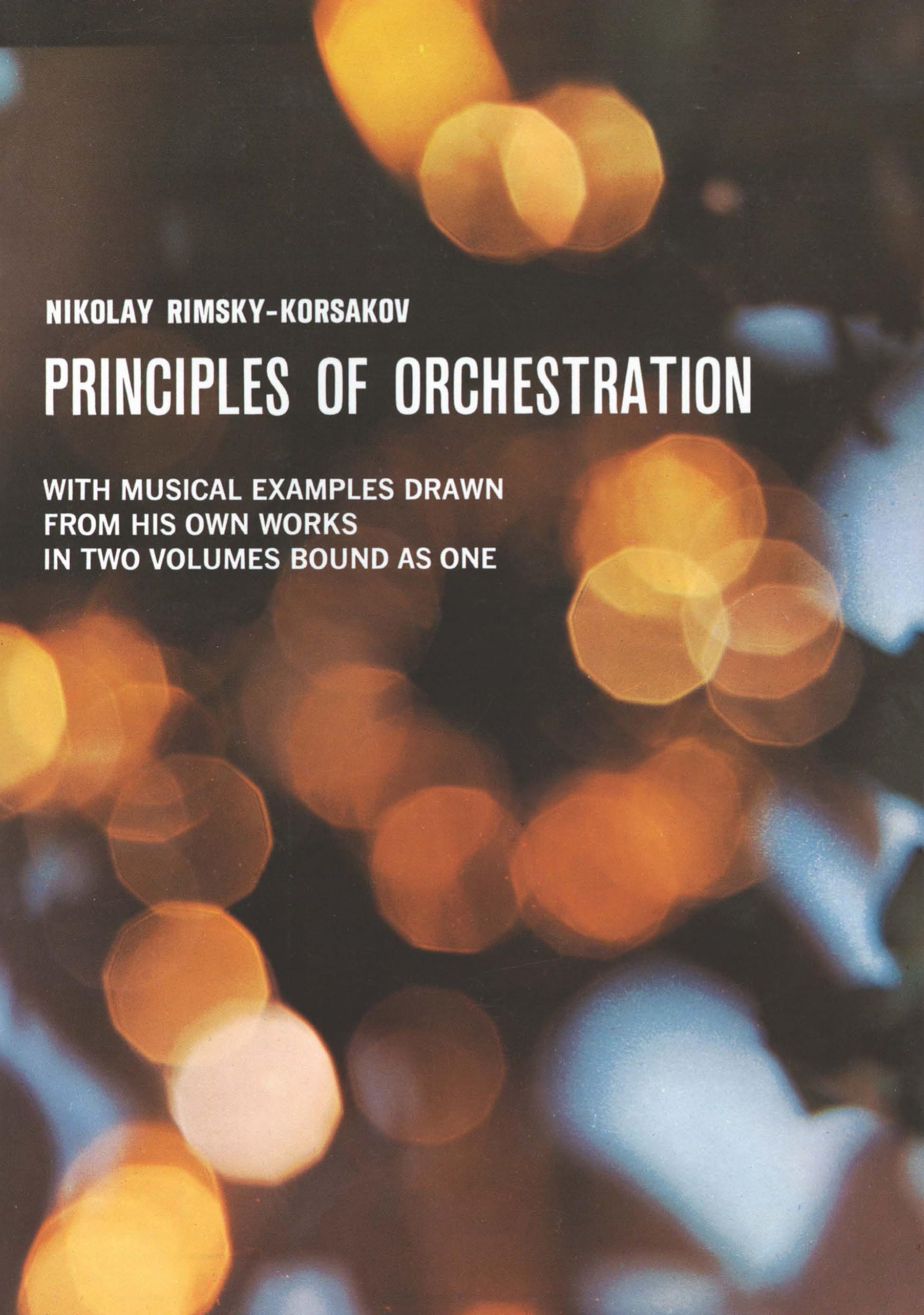
Title
Principles of Orchestration (Dover Books On Music: Analysis),Used
Sold by Ergodebooks, an authorized reseller.
Returns accepted within 30 days | support@ergodebooks.com
Shipping Information
- Free Standard Shipping — United States only
- Processing Time: 3–5 business days
- Estimated Delivery: 6–10 business days after dispatch
- Double-boxed, fully insured & discreetly packaged
- Tracking number sent via email once dispatched
Returns & Refund
Returns accepted within 30 days of delivery.
Damaged or Defective Item
Free return shipping + replacement or full refund
Wrong Item Received
Free return shipping + replacement or full refund
Change of Mind
Return shipping at customer's expense · 25% restocking fee applies
Payment Option

This book is an essential guide for music majors looking to develop their orchestration skills and create imaginative and brilliant orchestral compositions.'To orchestrate is to create, and this cannot be taught,' wrote Nikolay RimskyKorsakov, the great Russian composer whose genius for brilliant, highly colored orchestration is unsurpassed. In this affordable paperback reprint of an influential work of music theory, RimskyKorsakov, the great classical orchestrator, provides fundamentals of tonal resonance, progression of parts, voice and orchestra, tutti effects, and much more. This major document includes 330 pages of musical excerpts and extracts from RimskyKorsakov's 1891 draft and final versions of his Preface.Comprehensive Learning: Principles of Orchestration provides a comprehensive exploration of orchestration principles, covering topics such as tonal resonance, orchestral combination, and achieving specific tone qualities/instrument timbres. Practical Illustrations: The book includes over 330 pages of musical examples and exercises from RimskyKorsakov's own works, allowing students to see practical applications of the discussed techniques and concepts. Historical Perspective: RimskyKorsakov draws on his experience as a composer and conductor to provide historical context and insights into the evolution of orchestral techniques. Systematic Arrangement: The material in the book is systematically arranged according to each constituent of the orchestra, making it easy for students to study and understand the role of different instruments in orchestration. Chapter Topics: Inside, you'll find a general review of orchestral groups and musical instruments string, wind, and percussion; the effect of harmony and melody on individual groups and their impact on different combinations of groups; the composition of the orchestra and other ways of orchestrating the same music; a supplement on voices: solo and combined with the orchestra; voices in duets, trios, quartets, chorus, and more. Technical Guidance: RimskyKorsakov offers technical guidance on various orchestration topics, including chord progression and achieving specific tone qualities, helping students develop their orchestration skills. Valuable Resource: 'Principles of Orchestration' is invaluable for any music student looking to enhance their understanding of orchestration principles and techniques. Classic and Timeless: Written by a major composer, this book is considered a classic in orchestration and continues to be highly regarded for its wealth of musical examples and systematic approach.Principles of Orchestration by Nikolay RimskyKorsakov is an invaluable resource for any music major. With its wealth of musical examples and systematic approach, this book offers a comprehensive exploration of orchestration principles, providing students with the knowledge and techniques necessary to create extraordinary orchestral compositions.
⚠️ WARNING (California Proposition 65):
This product may contain chemicals known to the State of California to cause cancer, birth defects, or other reproductive harm.
For more information, please visit www.P65Warnings.ca.gov.
- Q: What is the main focus of 'Principles of Orchestration'? A: The main focus of 'Principles of Orchestration' is to provide a comprehensive guide for music students to develop their orchestration skills, covering essential principles such as tonal resonance, orchestral combinations, and specific tone qualities.
- Q: Who is the author of this book? A: The author of 'Principles of Orchestration' is Nikolai Rimsky-Korsakov, a renowned Russian composer known for his expertise in orchestration.
- Q: How many pages does this book contain? A: This book contains a total of 512 pages, offering a wealth of musical examples and theoretical insights.
- Q: Is this book suitable for beginners in music? A: Yes, 'Principles of Orchestration' is suitable for music majors and beginners alike, providing foundational knowledge and practical examples that can aid in learning orchestration.
- Q: What type of binding does this book have? A: This book is available in a paperback binding, making it a durable and portable option for students.
- Q: When was 'Principles of Orchestration' published? A: The book was published on June 1, 1964, and has been a significant resource for orchestration studies since then.
- Q: Does this book include practical exercises? A: Yes, it includes over 330 pages of musical examples and practical exercises derived from Rimsky-Korsakov's own works to help students apply the discussed techniques.
- Q: What topics are covered in this book? A: The book covers a variety of topics including orchestral groups, instrument roles, harmony and melody effects, and technical guidance on orchestration.
- Q: Is there historical context provided in this book? A: Yes, Rimsky-Korsakov provides historical context and insights into the evolution of orchestral techniques, enhancing the educational value of the material.
- Q: How can this book benefit music students? A: This book is invaluable for music students as it enhances their understanding of orchestration principles and techniques, equipping them to create imaginative orchestral compositions.