
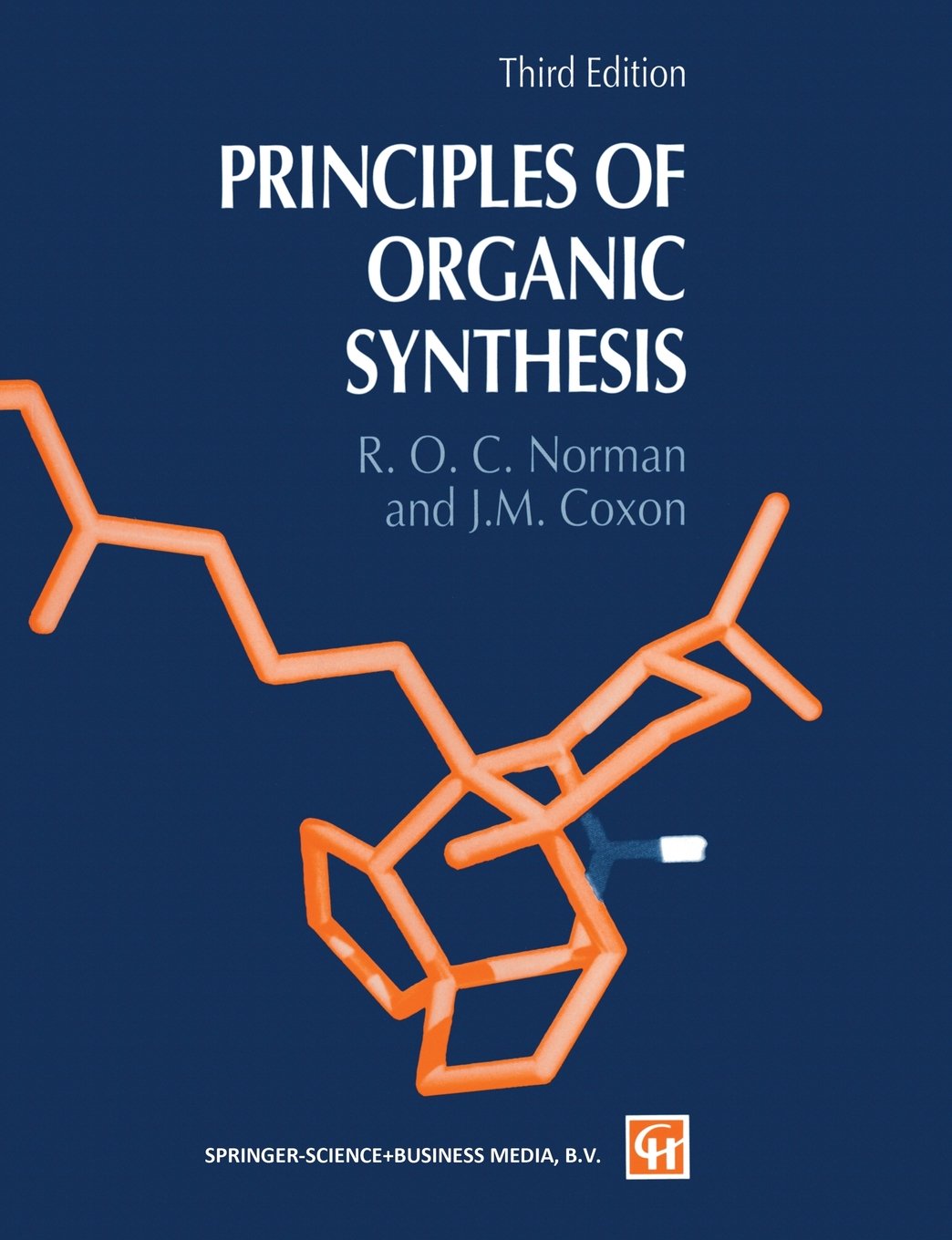
Title
Principles of Organic Synthesis,Used
Sold by Ergodebooks, an authorized reseller.
Returns accepted within 30 days | support@ergodebooks.com
Shipping Information
- Free Standard Shipping — United States only
- Processing Time: 3–5 business days
- Estimated Delivery: 6–10 business days after dispatch
- Double-boxed, fully insured & discreetly packaged
- Tracking number sent via email once dispatched
Returns & Refund
Returns accepted within 30 days of delivery.
Damaged or Defective Item
Free return shipping + replacement or full refund
Wrong Item Received
Free return shipping + replacement or full refund
Change of Mind
Return shipping at customer's expense · 25% restocking fee applies
Payment Option

Organic chemistry is one of the most rapidly developing of the sciences. Each year, there are new applications of organic compounds, for example, in medicine, in agriculture, and in the new technologies such as optoelectronics and supercon ductors; tens of thousands of new compounds are synthesized or isolated from natural sources; and new synthetic methods and reagents are introduced. It might seem to the student that ever more needs to be learned. Fortunately that is not so. The profound increase in our understanding of the pathways by which organic compounds react their mechanisms of reaction has provided a relatively simple superstructure on which the vast array of the facts of the subject can be hung. The mechanistic principles are relatively few, and yet they account for the enormous range of reactions of organic compounds. The purpose of this book is to show how these principles can be applied both to acquiring a knowledge of organic synthetic processes and to planning the construction of organic compounds. It is designed for those who have had no more than a brief introduction to organic chemistry. Nor is it intended to be com prehensive; for example, the vast body of evidence on which reaction mechanisms are based is not included, nor are experimental details given. The object has been to convey a broad understanding rather than to produce a reference text.
⚠️ WARNING (California Proposition 65):
This product may contain chemicals known to the State of California to cause cancer, birth defects, or other reproductive harm.
For more information, please visit www.P65Warnings.ca.gov.
- Q: How many pages does 'Principles of Organic Synthesis' have? A: This book has eight hundred eleven pages. It provides extensive coverage of organic synthesis principles.
- Q: What is the binding type of this book? A: The binding type is paperback. This makes it lightweight and portable for students.
- Q: What are the dimensions of 'Principles of Organic Synthesis'? A: The book measures seven point four four inches in length, one point six five inches in width, and nine point six nine inches in height.
- Q: Who is the author of 'Principles of Organic Synthesis'? A: The author is J.M. Coxon. He is known for his contributions to organic chemistry.
- Q: What is the target audience for this book? A: This book is designed for students with a brief introduction to organic chemistry. It aims to provide a broad understanding of the subject.
- Q: Is 'Principles of Organic Synthesis' suitable for beginners? A: Yes, it is suitable for beginners. The book simplifies complex concepts for those new to organic synthesis.
- Q: How should I care for my copy of this book? A: To care for the book, keep it in a dry place away from direct sunlight. Avoid bending the spine to maintain its condition.
- Q: Can I store this book on a bookshelf? A: Yes, you can store it on a bookshelf. Ensure it is upright to prevent damage to the pages.
- Q: Is this book safe for all ages? A: Yes, it is safe for all ages. However, it is primarily aimed at students studying organic chemistry.
- Q: What if my book arrives damaged? A: If your book arrives damaged, contact the seller for return instructions. Most sellers provide options for replacements.
- Q: Does this book contain experimental details? A: No, the book does not contain experimental details. It focuses on principles and mechanisms of organic synthesis.
- Q: How does this book compare to other organic chemistry texts? A: This book is less comprehensive than others, focusing on mechanistic principles. It is ideal for those seeking a foundational understanding.
- Q: Is there a warranty or return policy for this book? A: Typically, there is a return policy, but warranties are not common for books. Check the seller's policy for specifics.
- Q: What topics are covered in 'Principles of Organic Synthesis'? A: The book covers organic synthesis mechanisms and principles. It does not delve into extensive experimental data.
- Q: Can this book help me plan organic compound construction? A: Yes, it is designed to assist in planning the construction of organic compounds. It outlines key principles for effective synthesis.
- Q: What makes this book a good resource for organic chemistry? A: The book simplifies complex concepts and focuses on fundamental principles, making it an excellent resource for students.