
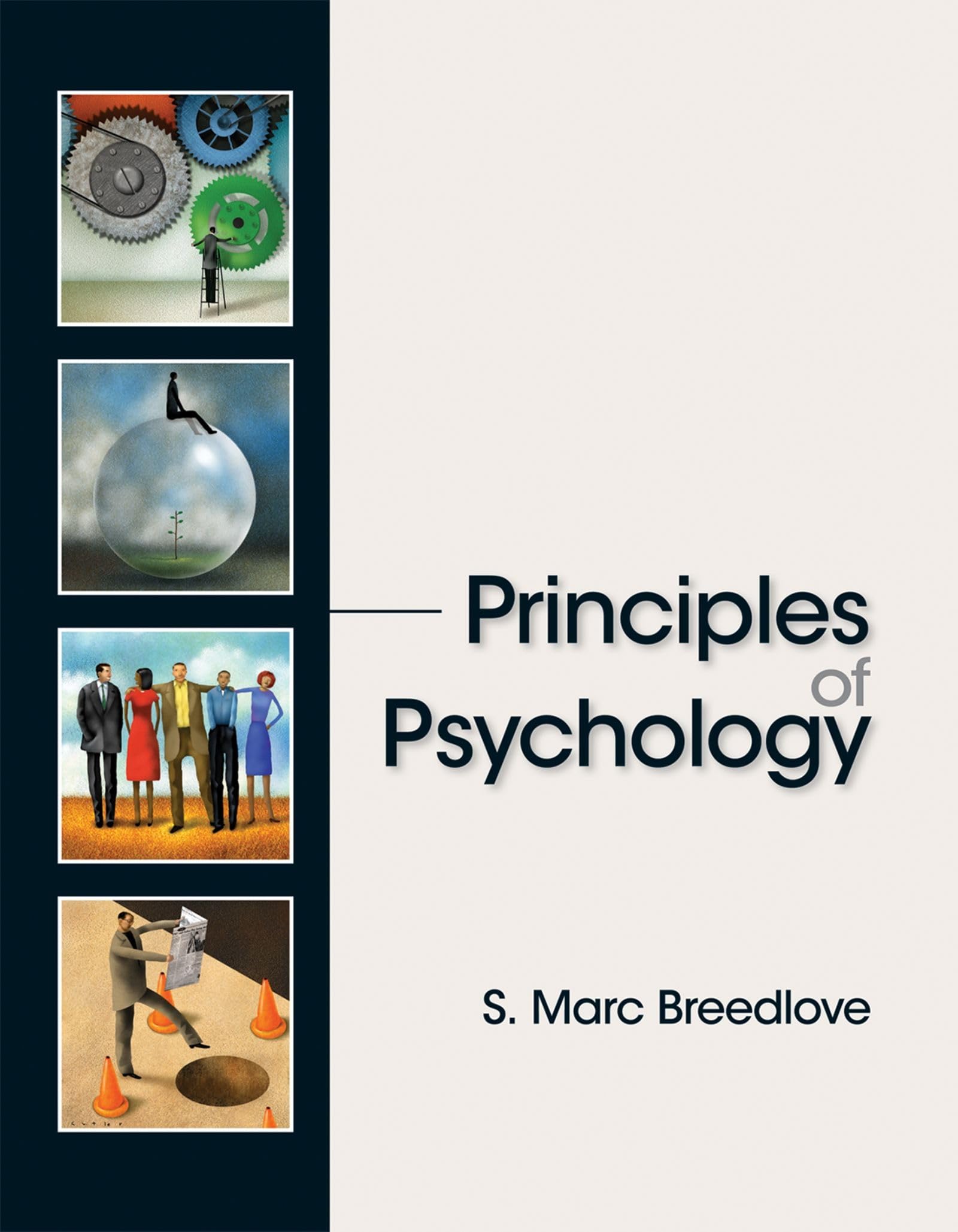
Title
Principles Of Psychology
Sold by Ergodebooks, an authorized reseller.
Returns accepted within 30 days | support@ergodebooks.com
Shipping Information
- Free Standard Shipping — United States only
- Processing Time: 3–5 business days
- Estimated Delivery: 6–10 business days after dispatch
- Double-boxed, fully insured & discreetly packaged
- Tracking number sent via email once dispatched
Returns & Refund
Returns accepted within 30 days of delivery.
Damaged or Defective Item
Free return shipping + replacement or full refund
Wrong Item Received
Free return shipping + replacement or full refund
Change of Mind
Return shipping at customer's expense · 25% restocking fee applies
Payment Option

Organized Around Four Well Established Core Principles, Principles Of Psychology Provides Students With A Framework To Understand The Science Of Behavior. Written In A Conversational Style, The Text Is Organized Around The Following Four Well Established Principles That Serve As Touchstones For The Field Of Psychology:The Mind Is A Process At Work In A Physical Machine, The Brain.We Are Consciously Aware Of Only A Fraction Of Our Mental Activity.We Constantly Modify Our Behavior, Beliefs, And Attitudes According To What We Perceive About The People Around Us.Experience Physically Alters The Structure And Function Of The Brain.With These Four Principles As A Framework For The Text, Principles Of Psychology Emphasizes That Psychology Is A Science Through Discussion Of Relevant Big Picture And Proven Concepts And Cutting Edge Research Based Investigations That Examine Behavioral, Psychological, And Neuroscience Experiments. By Presenting Data And Facts From Other Scientific Disciplines, As Well As Real World Vignettes And Stories, Marc Breedlove Teaches The Reader How To Think Critically And Scientifically About The Underlying Mechanisms Of Behavior.In Text Featuresvignette: Each Chapter Begins With A Story, An Instance When Behavior Has A Big Impact On Someone'S Life. The Chapter Returns To The Vignette Several Times As We Cover Findings That Relate To That Particular Case.Researchers At Work: In Every Chapter, Important Discoveries Are Explained And Illustrated To Highlight The Process Of Experimentation And Hypothesis Testing. Over The Course Of The Book, The Progression Of Experiments Provides An Increasingly Sharper Picture Of The Factors Shaping Behavior.Skeptic At Large: Intended To Sharpen The Student'S Critical Thinking Skills, These Boxes Explore A Widespread Misconception And Demonstrate How Scientific Research Disproves It. The Exploration Of Scientific Experimentation Also Reinforces The Researchers At Work Feature.Psychology In Everyday Life: These Are Topics Where Knowledge Of Psychology Might Be Applicable To Everyday Life, Such As Whether People With Schizophrenia Are Violent, The Importance Of Blind Auditions For Musicians, How To Stop Smoking, Or How Conditioned Taste Aversion Might Cause You To Stop Eating Sushi When You Used To Love It.The Cutting Edge: Just Prior To The End Of Every Chapter, This Feature Explores An Exciting Report Of Current Research. Showing Students These Vibrant And Bold Experiments Will Emphasize That Psychology Research Remains Alive And Well.Think Like A Psychologist: Principles In Action: To Close Each Chapter, Each Principle Is Related Back To The Vignette To Show The Student That When They Observe An Interesting Behavior They Can Recall And Apply The Four Principles. If They Can Do This, They Will Indeed Be Thinking Like A Psychologist.
⚠️ WARNING (California Proposition 65):
This product may contain chemicals known to the State of California to cause cancer, birth defects, or other reproductive harm.
For more information, please visit www.P65Warnings.ca.gov.
- Q: How many pages does 'Principles of Psychology' have? A: This book has seven hundred thirty-six pages. It provides a comprehensive overview of psychology concepts and research.
- Q: What is the binding type of this psychology book? A: The binding type is hardcover. This ensures durability and a professional appearance for academic use.
- Q: What are the dimensions of 'Principles of Psychology'? A: The book measures nine point twenty-one inches in length, one point two inches in width, and eleven point two inches in height. These dimensions make it suitable for standard bookshelves.
- Q: What is the main focus of 'Principles of Psychology'? A: This book focuses on understanding the science of behavior through established core principles. It emphasizes critical thinking and scientific inquiry.
- Q: Who is the author of this book? A: The author is Marc Breedlove. He is known for his contributions to psychology and neuroscience.
- Q: What edition of 'Principles of Psychology' is this? A: This is the latest edition of the book. It includes updated research findings and concepts in psychology.
- Q: How do I apply the principles from this book in real life? A: You can apply the principles by relating them to everyday experiences and behaviors. The book encourages thinking like a psychologist.
- Q: Is 'Principles of Psychology' suitable for beginners? A: Yes, it is suitable for beginners. The conversational style and clear explanations make complex concepts accessible.
- Q: Are there sections dedicated to critical thinking in the book? A: Yes, there are sections like 'Skeptic at Large' that focus on critical thinking and debunking misconceptions in psychology.
- Q: How should I store 'Principles of Psychology'? A: Store the book in a cool, dry place on a bookshelf. This helps preserve the integrity of the hardcover.
- Q: Can I use this book for academic studies? A: Yes, this book is an excellent resource for academic studies in psychology. It covers foundational principles and recent research.
- Q: What if I receive a damaged copy of the book? A: If you receive a damaged copy, you should contact the seller for a return or exchange. Most retailers have a customer service policy for such issues.
- Q: Is there a glossary or index in 'Principles of Psychology'? A: Yes, the book includes an index and glossary. These features help readers locate specific topics and terms easily.
- Q: Does this book include real-world examples? A: Yes, it includes real-world vignettes and examples that illustrate psychological principles in action. This enhances understanding.
- Q: Is there a focus on neuroscience in this book? A: Yes, the book incorporates neuroscience research to explain behavioral phenomena. It provides a well-rounded view of psychology.