
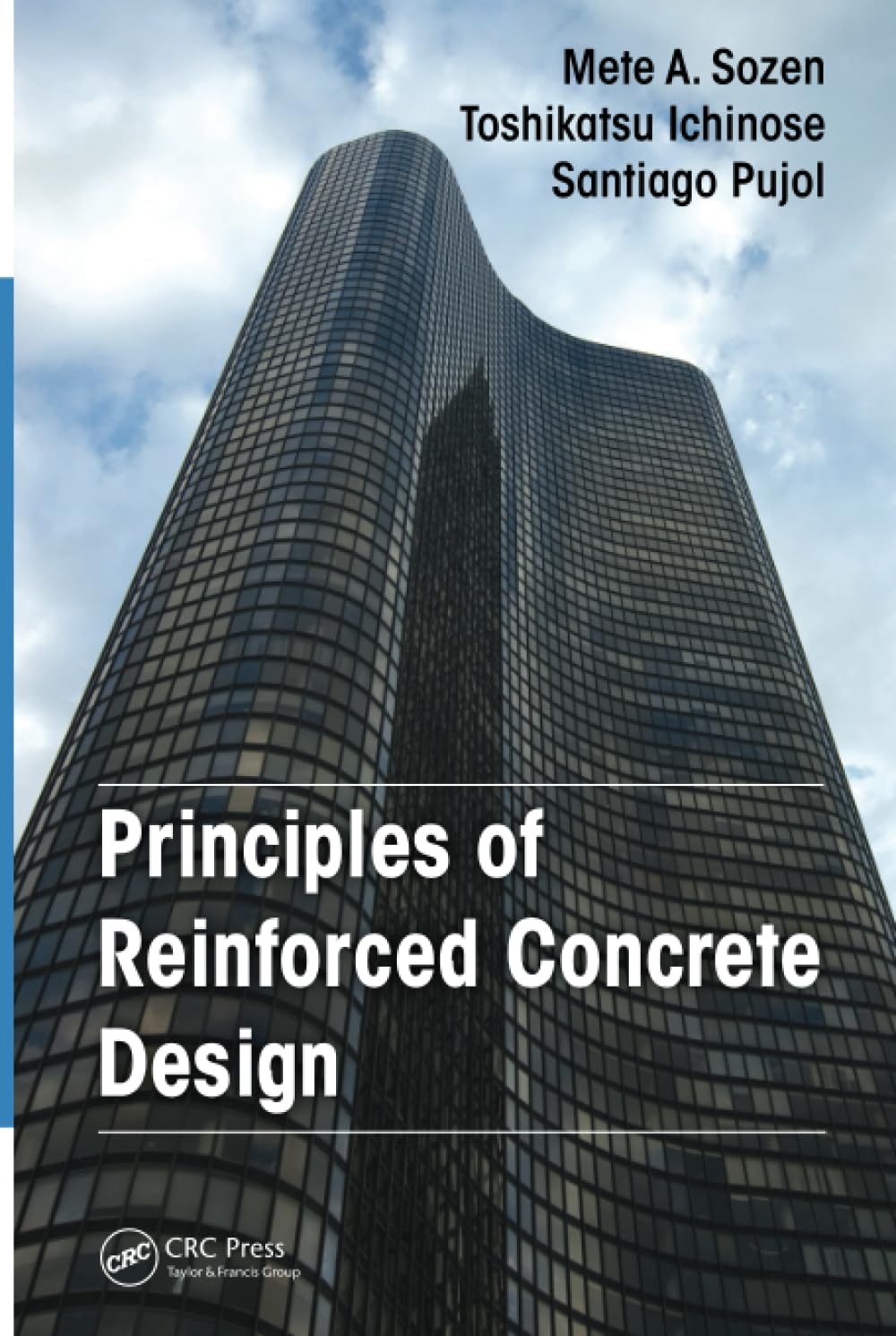
Title
Principles Of Reinforced Concrete Design
Sold by Ergodebooks, an authorized reseller.
Returns accepted within 30 days | support@ergodebooks.com
Shipping Information
- Free Standard Shipping — United States only
- Processing Time: 3–5 business days
- Estimated Delivery: 6–10 business days after dispatch
- Double-boxed, fully insured & discreetly packaged
- Tracking number sent via email once dispatched
Returns & Refund
Returns accepted within 30 days of delivery.
Damaged or Defective Item
Free return shipping + replacement or full refund
Wrong Item Received
Free return shipping + replacement or full refund
Change of Mind
Return shipping at customer's expense · 25% restocking fee applies
Payment Option

Encouraging Creative Uses Of Reinforced Concrete, Principles Of Reinforced Concrete Design Draws A Clear Distinction Between Fundamentals And Professional Consensus. This Text Presents A Mixture Of Fundamentals Along With Practical Methods. It Provides The Fundamental Concepts Required For Designing Reinforced Concrete (Rc) Structures, Emphasizing Principles Based On Mechanics, Experience, And Experimentation, While Encouraging Practitioners To Consult Their Local Building Codes.The Book Presents Design Choices That Fall In Line With The Boundaries Defined By Professional Consensus (Building Codes), And Provides Reference Material Outlining The Design Criteria Contained In Building Codes. It Includes Applications For Both Building And Bridge Structural Design, And It Is Applicable Worldwide, As It Is Not Dependent Upon Any Particular Codes.Contains Concise Coverage That Can Be Taught In One Semester Underscores The Fundamental Principles Of Behavior Provides Students With An Understanding Of The Principles Upon Which Codes Are Based Assists In Navigating The Labyrinth Of Everchanging Codes Fosters An Inherent Understanding Of Designthe Text Also Provides A Brief History Of Reinforced Concrete. While The Initial Attraction For Using Reinforced Concrete In Building Construction Has Been Attributed To Its Fire Resistance, Its Increase In Popularity Was Also Due To The Creativity Of Engineers Who Kept Extending Its Limits Of Application. Along With Height Achievement, Reinforced Concrete Gained Momentum By Providing Convenience, Plasticity, And Lowcost Economic Appeal.Principles Of Reinforced Concrete Design Provides Undergraduate Students With The Fundamentals Of Mechanics And Direct Observation, As Well As The Concepts Required To Design Reinforced Concrete (Rc) Structures, And Applies To Both Building And Bridge Structural Design.
⚠️ WARNING (California Proposition 65):
This product may contain chemicals known to the State of California to cause cancer, birth defects, or other reproductive harm.
For more information, please visit www.P65Warnings.ca.gov.
- Q: What are the dimensions of this book? A: This book measures six point thirty-eight inches in length, zero point eighty-seven inches in width, and nine point forty-five inches in height.
- Q: How many pages does the book have? A: The book contains two hundred ninety-six pages, providing a comprehensive overview of reinforced concrete design.
- Q: What type of binding does this book have? A: This book is bound as a hardcover, ensuring durability and longevity for frequent use.
- Q: Who is the author of 'Principles of Reinforced Concrete Design'? A: The author of this book is Mete A. Sozen, a recognized expert in the field of reinforced concrete.
- Q: What is the main focus of the book? A: The book focuses on the fundamental principles and professional consensus in reinforced concrete design, blending theory with practical applications.
- Q: Is this book suitable for beginners? A: Yes, this book is suitable for undergraduate students and beginners in the field of reinforced concrete design.
- Q: Can this book help with understanding building codes? A: Yes, it assists readers in navigating and understanding the ever-changing building codes related to reinforced concrete.
- Q: Does the book cover applications for bridges? A: Yes, the book includes applications for both building and bridge structural design, making it versatile for various projects.
- Q: Is there a historical context provided in the book? A: Yes, the book provides a brief history of reinforced concrete, highlighting its evolution and increasing popularity.
- Q: How does the book assist in design choices? A: The book outlines design choices that align with professional consensus and provides reference material on design criteria from building codes.
- Q: What is the target audience for this book? A: The target audience includes undergraduate students and professionals looking to deepen their understanding of reinforced concrete structures.
- Q: Are there illustrations in the book? A: Yes, the book features two hundred twenty-four black and white illustrations that enhance the learning experience.
- Q: Does this book emphasize practical methods? A: Yes, it presents practical methods alongside fundamental concepts required for designing reinforced concrete structures.
- Q: Is this book applicable worldwide? A: Yes, the book is designed to be applicable worldwide as it does not rely on specific local building codes.
- Q: What is the significance of reinforced concrete in construction? A: Reinforced concrete is significant due to its fire resistance, creativity in application, and low-cost economic appeal.
- Q: How can this book benefit practitioners in the field? A: This book fosters an inherent understanding of design principles, helping practitioners make informed decisions in their projects.