
Title
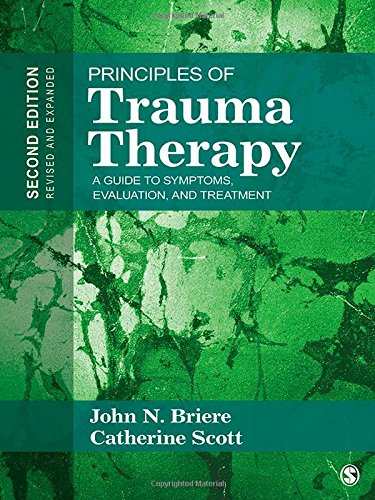
Principles Of Trauma Therapy: A Guide To Symptoms, Evaluation, And Treatment
Sold by Ergodebooks, an authorized reseller.
Returns accepted within 30 days | support@ergodebooks.com
Shipping Information
- Free Standard Shipping — United States only
- Processing Time: 3–5 business days
- Estimated Delivery: 6–10 business days after dispatch
- Double-boxed, fully insured & discreetly packaged
- Tracking number sent via email once dispatched
Returns & Refund
Returns accepted within 30 days of delivery.
Damaged or Defective Item
Free return shipping + replacement or full refund
Wrong Item Received
Free return shipping + replacement or full refund
Change of Mind
Return shipping at customer's expense · 25% restocking fee applies
Payment Option

This Popular Text Provides A Creative Synthesis Of Cognitivebehavioral, Relational, Affect Regulation, Mindfulness, And Psychopharmacologic Approaches To The Real World Treatment Of Acute And Chronic Posttraumatic States. Grounded In Empiricallysupported Trauma Treatment Techniques, And Adapted To The Complexities Of Actual Clinical Practice, It Is A Handson Resource For Frontline Clinicians, Those In Private Practice, And Graduate Students Of Public Mental Health.
⚠️ WARNING (California Proposition 65):
This product may contain chemicals known to the State of California to cause cancer, birth defects, or other reproductive harm.
For more information, please visit www.P65Warnings.ca.gov.
- Q: How many pages does the book have? A: This book has three hundred eighty-four pages. It provides a comprehensive overview of trauma therapy techniques.
- Q: What is the binding type of this book? A: The book is paperback bound. This makes it lightweight and portable for easy reading.
- Q: What are the dimensions of the book? A: The book measures seven point zero one inches in length and ten inches in height. Its thickness is zero point five one inches.
- Q: Who is the author of this book? A: The author is John N. Briere. He is known for his expertise in trauma therapy and mental health.
- Q: What topics does this book cover? A: The book covers cognitive-behavioral, relational, and psychopharmacologic approaches to trauma therapy. It is designed for practical application in clinical settings.
- Q: Is this book suitable for beginners in mental health? A: Yes, this book is suitable for beginners. It is a hands-on resource for graduate students and new clinicians.
- Q: How do I apply the techniques discussed in the book? A: You can apply the techniques by following the practical examples and case studies provided in the book. It emphasizes real-world applications.
- Q: Is this book appropriate for someone studying psychology? A: Yes, it is appropriate for psychology students. The content is grounded in empirically-supported methods relevant to their studies.
- Q: What is the recommended reading level for this book? A: The recommended reading level is for graduate students and professionals. It assumes some prior knowledge of mental health concepts.
- Q: How should I store this book to keep it in good condition? A: Store the book in a cool, dry place away from direct sunlight. Avoid stacking heavy items on top of it to prevent damage.
- Q: Can I clean the book if it gets dirty? A: Yes, you can gently wipe the cover with a damp cloth. Ensure that no moisture seeps into the pages.
- Q: Is there a warranty or guarantee for this book? A: Typically, books do not come with a warranty. However, check with the retailer for their return policy.
- Q: What should I do if the book arrives damaged? A: If the book arrives damaged, contact the seller immediately for a replacement or refund. Keep the original packaging for reference.
- Q: How does this book compare to others in the field of trauma therapy? A: This book offers a unique synthesis of various therapeutic approaches, unlike many others that focus on a single method. It is comprehensive and practical.
- Q: Is this book considered a classic in trauma therapy? A: Yes, it is considered a significant resource in trauma therapy literature. Its empirical grounding sets it apart from many other texts.