
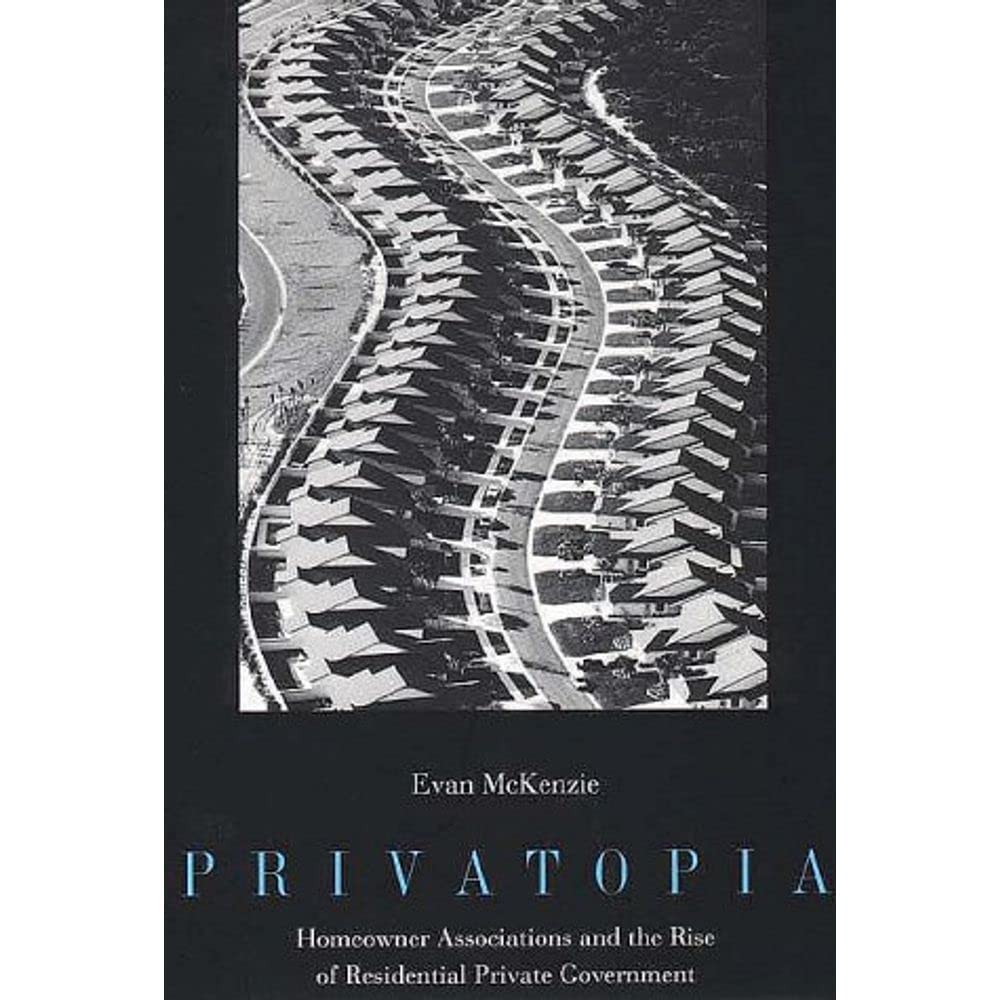
Title
Privatopia: Homeowner Associations And The Rise Of Residential Private Government,Used
Sold by Ergodebooks, an authorized reseller.
Returns accepted within 30 days | support@ergodebooks.com
Shipping Information
- Free Standard Shipping — United States only
- Processing Time: 3–5 business days
- Estimated Delivery: 6–10 business days after dispatch
- Double-boxed, fully insured & discreetly packaged
- Tracking number sent via email once dispatched
Returns & Refund
Returns accepted within 30 days of delivery.
Damaged or Defective Item
Free return shipping + replacement or full refund
Wrong Item Received
Free return shipping + replacement or full refund
Change of Mind
Return shipping at customer's expense · 25% restocking fee applies
Payment Option

Condominiums, Coops, Planned Unit Developments Of Singlefamily Homesthese And Other Forms Of Common Interest Housing Developments (Cids) Have Become A Familiar Sight In America. Currently There Are Approximately 130,000 Of These Developments, Housing Some 30 Million People. Residents Are Required To Belong To Homeowner Associations, Pay Monthly Fees, And Live Under The Rule Of Residential Private Governments. These Governments Perform Functions For Their Residents That Were Once The Province Of Local Government, Providing, For Example, Police Protection, Trash Collection, Street Maintenance, And Lighting. They Also Place Restrictions On Ownership Of Property And Enforce Rigid And Often Repressive Codes Of Conduct Governing The Most Private Aspects Of Residents' Lives.This Book Is The First Comprehensive Study Of The Political And Social Issues Posed By The Rise Of Cids. Evan Mckenzie Shows How The Developments Diminish Residents' Sense Of Responsibility For The City As A Whole By Making Them Reluctant To Pay Taxes For The Same Public Services That Their Fees Provide. Mckenzie Also Shows That The Private Governments Of Cids Depart From Accepted Notions Of Liberal Democracy, Promoting A Unique And Limited Version Of Citizenship That Has Serious Implications For Civil Liberties. He Argues That The Spread Of Cid Housing Has Important Consequences For Politics At All Levels Of Government, Because Cid Advocates Now Constitute A Significant Force In Interest Group Politics In Many States, Often Organizing To Demand Tax Breaks Or Credits For Cid Residents. Tracing The History Of Cid Housing From The Nineteenth Century To The Present, He Highlights The Important But Littleunderstood Role Public Policy Has Played In Advancing This Largescale 'Privatization For The Few,' And He Concludes By Considering The Implications For Urban Politics.
⚠️ WARNING (California Proposition 65):
This product may contain chemicals known to the State of California to cause cancer, birth defects, or other reproductive harm.
For more information, please visit www.P65Warnings.ca.gov.
- Q: How many pages does the book Privatopia have? A: This book has two hundred fifty-four pages. It's a comprehensive study covering important social and political issues.
- Q: What is the binding type of Privatopia? A: The book is a paperback. This makes it lightweight and easy to handle.
- Q: Who is the author of Privatopia? A: The author is Evan McKenzie. He provides in-depth analysis on homeowner associations and private governance.
- Q: What topics does Privatopia cover? A: The book discusses homeowner associations, common interest developments, and their impact on democracy. It explores political and social implications.
- Q: What is the reading level for Privatopia? A: Privatopia is suitable for adult readers. It deals with complex themes relevant to urban policy and governance.
- Q: How do I read the book Privatopia? A: You can read it like any other book. Start from the beginning and progress through the chapters, which analyze various aspects of homeowner associations.
- Q: Is Privatopia suitable for academic study? A: Yes, it is suitable for academic study. The book provides valuable insights for courses in urban studies and public policy.
- Q: How should I store Privatopia? A: Store the book in a dry place. Keep it upright on a shelf to prevent bending and damage to the pages.
- Q: Can I lend Privatopia to others? A: Yes, you can lend this book to others. Just be sure to keep track of who has it.
- Q: What if Privatopia arrives damaged? A: If the book arrives damaged, contact the seller for a return or exchange. Most retailers have a policy for damaged goods.
- Q: What if I have questions about the content of Privatopia? A: If you have questions about the content, consider discussing it in a book club or looking for online forums. Many readers share insights and analyses.
- Q: Is there a warranty for the book Privatopia? A: Books typically do not come with warranties. However, check the seller's policy for returns or exchanges.
- Q: Are there other books similar to Privatopia? A: Yes, there are other books on urban governance and housing. Look for titles that discuss homeowner associations or community developments.
- Q: What implications does Privatopia discuss regarding urban politics? A: The book highlights how homeowner associations influence urban politics. It argues they create a unique form of citizenship affecting civil liberties.
- Q: Does Privatopia discuss the history of common interest developments? A: Yes, it traces the history from the nineteenth century to the present. This historical perspective enriches the understanding of current issues.