
Title
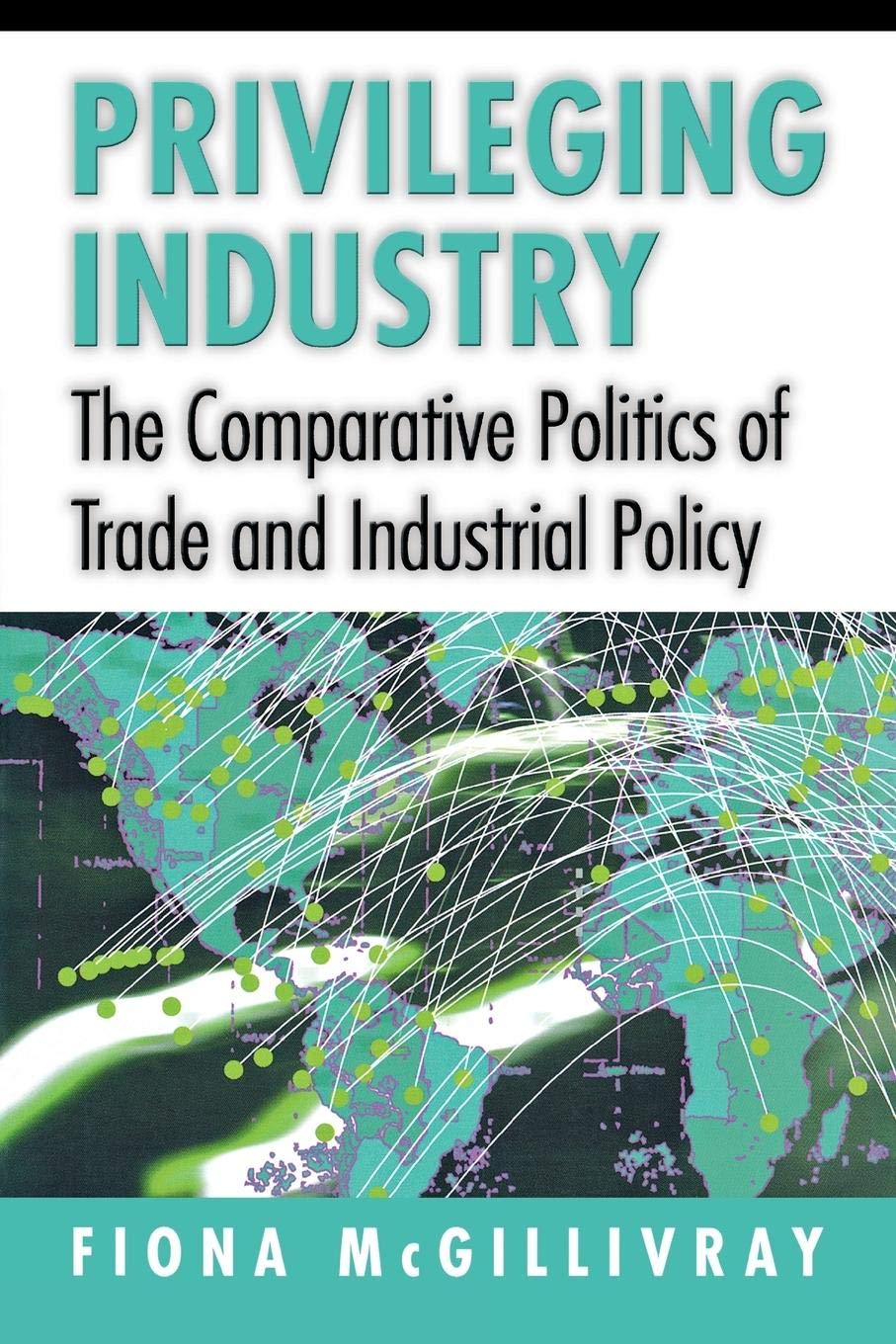
Privileging Industry: The Comparative Politics of Trade and Industrial Policy,Used
Sold by Ergodebooks, an authorized reseller.
Returns accepted within 30 days | support@ergodebooks.com
Shipping Information
- Free Standard Shipping — United States only
- Processing Time: 3–5 business days
- Estimated Delivery: 6–10 business days after dispatch
- Double-boxed, fully insured & discreetly packaged
- Tracking number sent via email once dispatched
Returns & Refund
Returns accepted within 30 days of delivery.
Damaged or Defective Item
Free return shipping + replacement or full refund
Wrong Item Received
Free return shipping + replacement or full refund
Change of Mind
Return shipping at customer's expense · 25% restocking fee applies
Payment Option

Why do some industries win substantial protection from the whims of international trade while others do not? Privileging Industry challenges standard approaches to this question in its examination of when governments use trade and industrial policy for political goals. Fiona McGillivray shows why aiding an industry can be a politically efficient way for a government to redistribute resources from one industrial sector to another. Taking a comparative perspective that stands in contrast with the usual focus on U.S. trade politics, she explores, for example, how electoral rules, party strength, and industrial geography affect redistribution politics across countries. How do political institutions and the geographical dispersion of industries interact to determine which industries governments privilege? What tests can assess how governments distribute assistance across industries?Research has focused on the industries that legislators want to protect, but just as important is identifying those legislators able to deliver trade assistance. Assisting an industry requires both a will and a means. Whether an industry is a good vehicle through which to redistribute income depends on its geographic makeup and the country's electoral system. In turn, the electoral system and party strength affect how legislators' preferences contribute to policy. McGillivray tests these arguments using a tariffbased empirical test and nonstandard dependent variables such as the dispersion of stock prices within fourteen different capital markets, and government influence in the targeting of plant closures within declining industries.
⚠️ WARNING (California Proposition 65):
This product may contain chemicals known to the State of California to cause cancer, birth defects, or other reproductive harm.
For more information, please visit www.P65Warnings.ca.gov.