
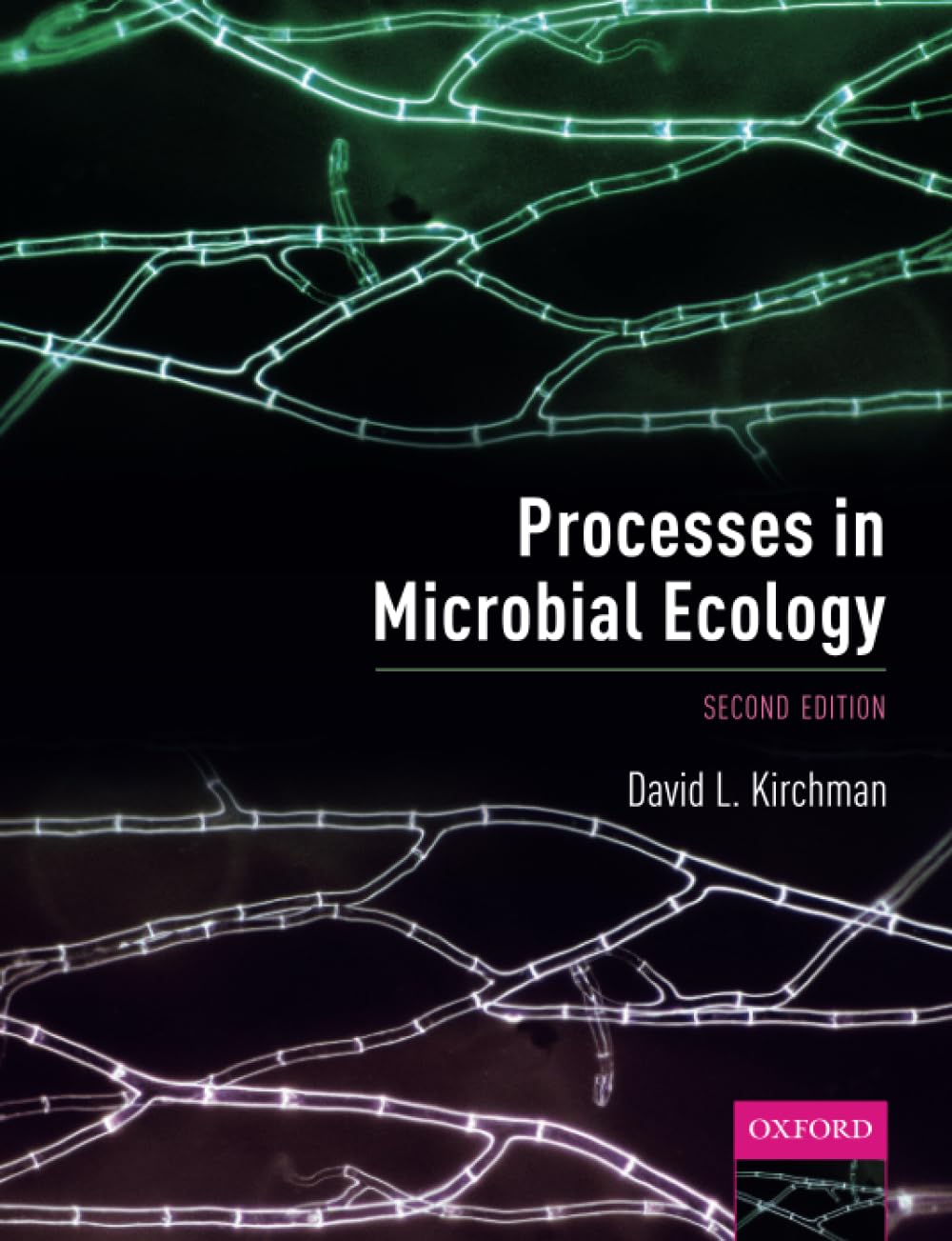
Title
Processes In Microbial Ecology
Sold by Ergodebooks, an authorized reseller.
Returns accepted within 30 days | support@ergodebooks.com
Shipping Information
- Free Standard Shipping — United States only
- Processing Time: 3–5 business days
- Estimated Delivery: 6–10 business days after dispatch
- Double-boxed, fully insured & discreetly packaged
- Tracking number sent via email once dispatched
Returns & Refund
Returns accepted within 30 days of delivery.
Damaged or Defective Item
Free return shipping + replacement or full refund
Wrong Item Received
Free return shipping + replacement or full refund
Change of Mind
Return shipping at customer's expense · 25% restocking fee applies
Payment Option

Microbial Ecology Is The Study Of Interactions Among Microbes In Natural Environments And Their Roles In Biogeochemical Cycles, Food Web Dynamics, And The Evolution Of Life. Microbes Are The Most Numerous Organisms In The Biosphere And Mediate Many Critical Reactions In Elemental Cycles And Biogeochemical Reactions. Because They Are Essential Players In The Carbon Cycle And Related Processes, Microbial Ecology Is A Vital Science For Understanding The Role Of The Biosphere In Global Warming And The Response Of Natural Ecosystems To Climate Change.This Second Edition Has Been Fully Revised, Restructured, And Updated While Remaining Concise And Accessible. It Discusses The Major Processes Carried Out By Viruses, Bacteria, Fungi, Protozoa And Other Protists The Microbes In Freshwater, Marine, And Terrestrial Ecosystems. The Focus Is On Biogeochemical Processes, Starting With Primary Production And The Initial Fixation Of Carbon Into Cellular Biomass, Before Exploring How That Carbon Is Degraded In Both Oxygenrich (Oxic) And Oxygendeficient (Anoxic) Environments. These Processes Are In Turn Affected By Ecological Interactions, Including Competition For Limiting Nutrients, Viral Lysis, And Predation By Various Protists In Soils And Aquatic Habitats. The Book Neatly Connects Processes Occurring At The Micron Scale To Events Happening At The Global Scale, Including The Carbon Cycle And Its Connection To Climate Change Issues. A Final Chapter Is Devoted To Symbiosis And Other Relationships Between Microbes And Larger Organisms. Microbes Have Huge Impacts Not Only On Biogeochemical Cycles, But Also On The Ecology And Evolution Of More Complex Forms Of Life, Including Humans.
⚠️ WARNING (California Proposition 65):
This product may contain chemicals known to the State of California to cause cancer, birth defects, or other reproductive harm.
For more information, please visit www.P65Warnings.ca.gov.
- Q: How many pages does this book have? A: This book has three hundred thirty-six pages. It provides an in-depth exploration of microbial ecology and its significance.
- Q: What are the dimensions of this book? A: The book measures eight inches in length, seven point four inches in width, and nine point six one inches in height. These dimensions make it easy to handle and read.
- Q: What type of binding does this book use? A: This book is paperback bound. The paperback format makes it lightweight and portable for readers.
- Q: What topics does this book cover? A: This book covers microbial interactions, biogeochemical cycles, and ecosystem dynamics. It provides insights into the roles microbes play in the environment.
- Q: Who is the author of this book? A: The author of this book is David L. Kirchman. He is a recognized expert in the field of microbial ecology.
- Q: Is this book suitable for beginners? A: Yes, this book is suitable for beginners. It is written in a concise and accessible manner, making complex topics easy to understand.
- Q: Can this book be used for academic purposes? A: Yes, this book is appropriate for academic use. It is revised and updated, making it a valuable resource for students and researchers.
- Q: What is the reading level for this book? A: The reading level is suitable for undergraduate students and above. It offers a thorough understanding of microbial ecology concepts.
- Q: How should I store this book? A: Store this book in a cool, dry place to prevent damage. Keeping it away from direct sunlight will help maintain its condition.
- Q: Can this book be cleaned? A: No, this book should not be cleaned with water or cleaning solutions. Instead, handle it with clean hands to avoid smudging.
- Q: What if I receive a damaged book? A: If you receive a damaged book, contact the seller for a return or replacement. They typically have policies in place for such situations.
- Q: Is this book available in other formats? A: No, this book is currently only available in paperback format. There is no digital or hardcover version listed.
- Q: Does this book include illustrations or diagrams? A: Yes, the book includes illustrations and diagrams to help explain complex concepts in microbial ecology. Visual aids enhance understanding.
- Q: What is the main focus of the last chapter? A: The last chapter focuses on symbiosis and relationships between microbes and larger organisms. It highlights the ecological significance of these interactions.
- Q: Is this book relevant to climate change studies? A: Yes, this book is highly relevant to climate change studies. It discusses microbes' roles in the carbon cycle and their impact on global warming.
- Q: Who is the publisher of this book? A: The publisher of this book is Oxford University Press, USA. They are well-known for their academic publications.