
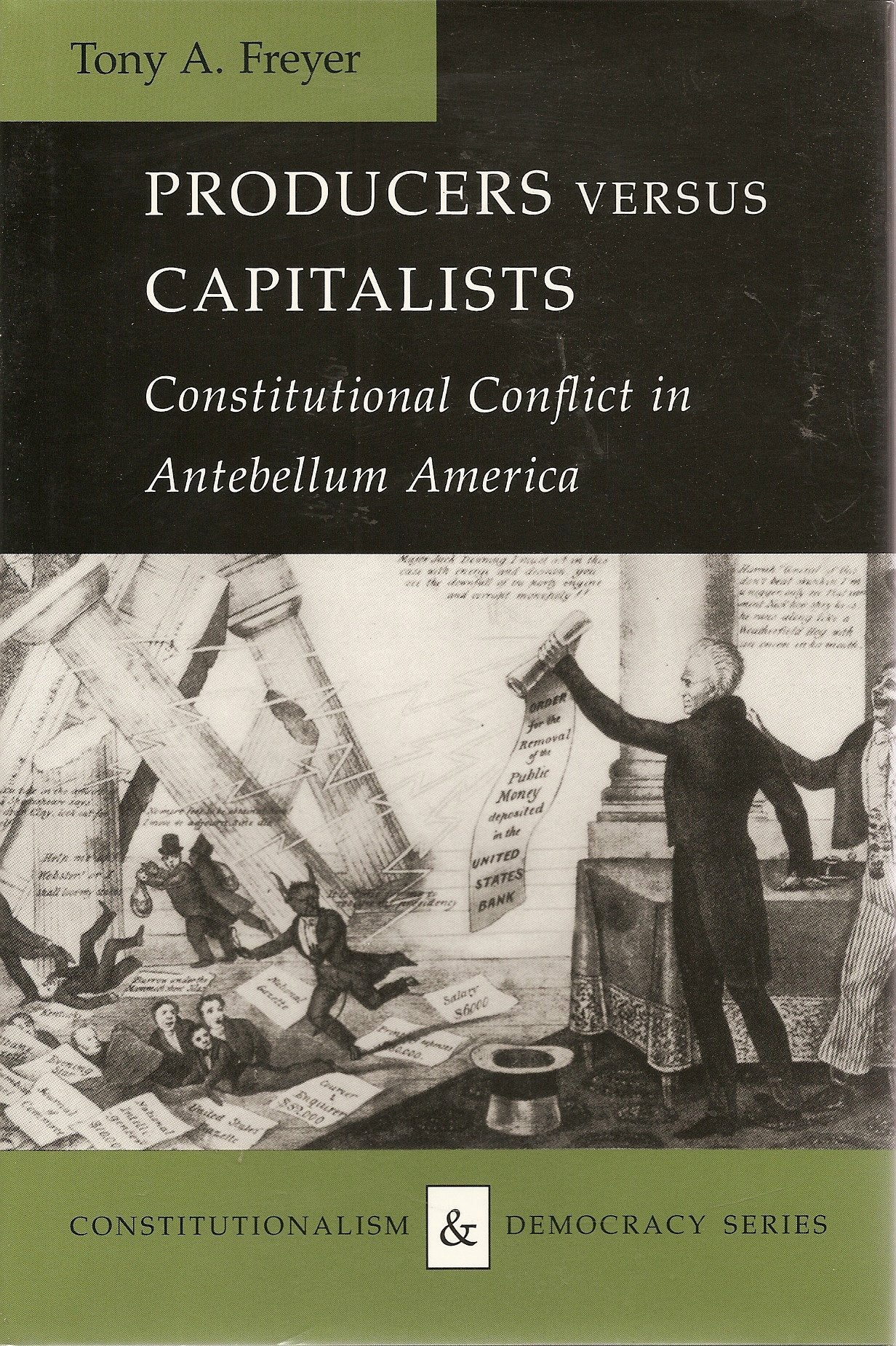
Title
Producers Versus Capitalists: Constitutional Conflict in Antebellum America (Constitutionalism and Democracy),Used
Sold by Ergodebooks, an authorized reseller.
Returns accepted within 30 days | support@ergodebooks.com
Shipping Information
- Free Standard Shipping — United States only
- Processing Time: 3–5 business days
- Estimated Delivery: 6–10 business days after dispatch
- Double-boxed, fully insured & discreetly packaged
- Tracking number sent via email once dispatched
Returns & Refund
Returns accepted within 30 days of delivery.
Damaged or Defective Item
Free return shipping + replacement or full refund
Wrong Item Received
Free return shipping + replacement or full refund
Change of Mind
Return shipping at customer's expense · 25% restocking fee applies
Payment Option

Throughout much of American history the relationship between the Constitution and capitalism has been contentious. Recently, however, consensus has replaced conflict as the framework for understanding capitalism's relationship to constitutional development. Thus the recurrent struggles between producers and capitalists (financiers, speculators, corporations, and the like) over the constitutionality of capitalistic practices have come to be viewed simply as politically manageable tensions within a liberalcapitalist consensus.This study focuses on how antebellum constitutional law and principles responded to and shaped producers' appeals for protection from capitalists' predations. Placing the constitutional system's operation in the context of the nation's profound ideological and social conflicts, Tony A. Freyer suggests that the normative force of constitutional values often enabled proproducer, protectionist policies to be enacted, despite an emerging corporate and mercantile capitalist consensus. The first chapter sets out a framework for understanding the social basis of constitutionalism and its policymaking impact between 1800 and 1860. Subsequent chapters employ this framework in the setting of the midAtlantic states of Delaware, Maryland, New Jersey, and Pennsylvania. They focus on four principal policy areas: debtorcreditor relations, taxation, eminent domain, and railroad accidents. This midAtlantic region is intended to serve as a federal system in miniature, offering opportunities for comparative analysis.By illuminating the interplay between social conflict and constitutional institutions, the book reveals a policymaking process which was dynamic, reflecting a multiplicity of values and supporting diverse producer interests, many of which conflicted with those of corporate and mercantile capitalists. Freyer challenges established historical interpretations not only of socialclass conflict but also of the Supreme Court under chief justices John Marshall and Roger B. Taney, with particular regard to states' rights versus federal power and the growth of the Constitution's contract, commerce, and judicial clauses. Thus the book will be of interest not only to political scientists and to judges, lawyers, and professors of law but also to historians and general readers.
⚠️ WARNING (California Proposition 65):
This product may contain chemicals known to the State of California to cause cancer, birth defects, or other reproductive harm.
For more information, please visit www.P65Warnings.ca.gov.