
Title
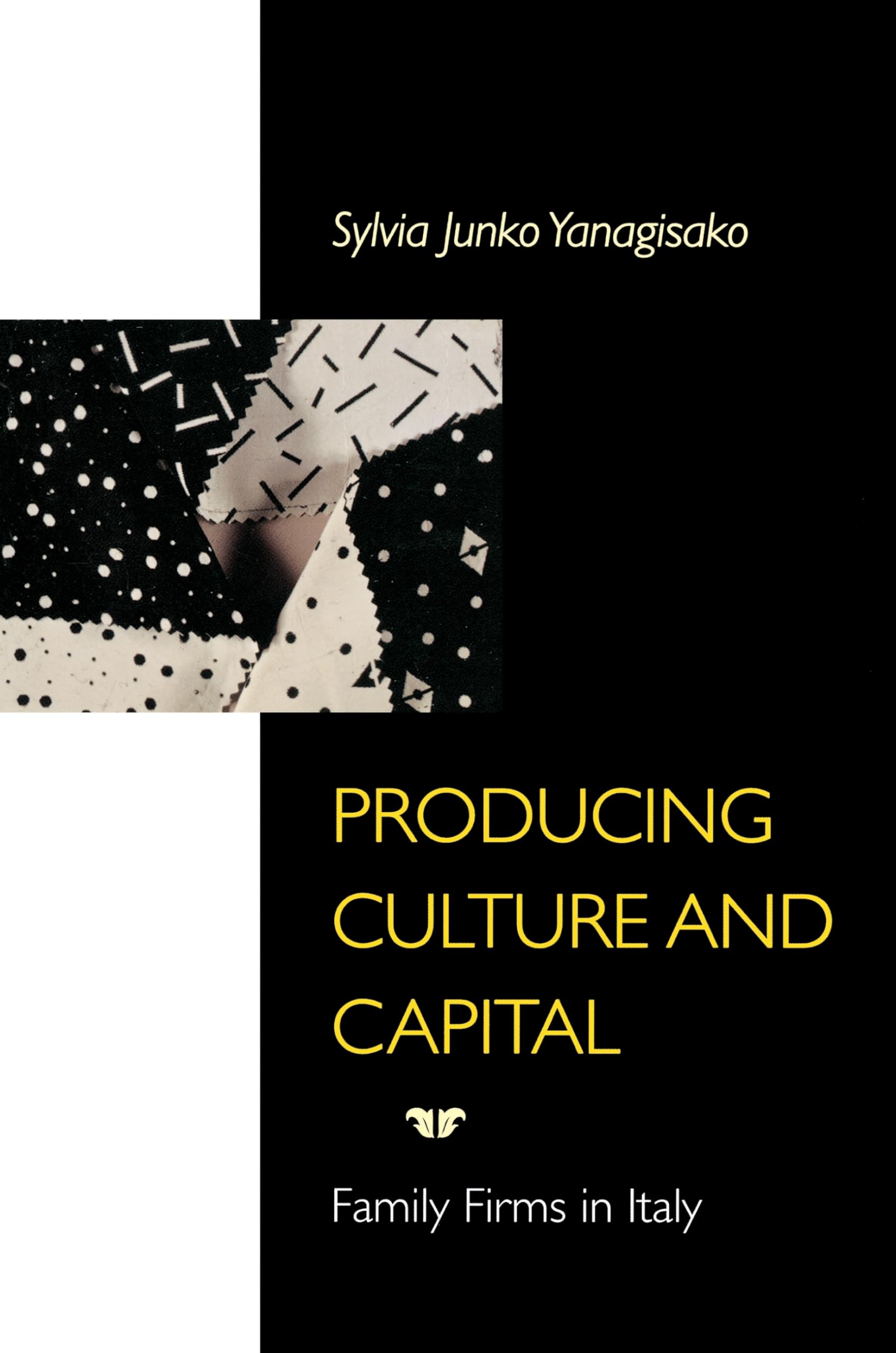
Producing Culture And Capital: Family Firms In Italy,Used
Sold by Ergodebooks, an authorized reseller.
Returns accepted within 30 days | support@ergodebooks.com
Shipping Information
- Free Standard Shipping — United States only
- Processing Time: 3–5 business days
- Estimated Delivery: 6–10 business days after dispatch
- Double-boxed, fully insured & discreetly packaged
- Tracking number sent via email once dispatched
Returns & Refund
Returns accepted within 30 days of delivery.
Damaged or Defective Item
Free return shipping + replacement or full refund
Wrong Item Received
Free return shipping + replacement or full refund
Change of Mind
Return shipping at customer's expense · 25% restocking fee applies
Payment Option

Producing Culture and Capital is a major theoretical contribution to the anthropological literature on capitalism, as well as a rich case study of kinship and gender relations in northern Italy.Drawing on ethnographic and archival research on thirtyeight firms in northern Italy's silk industry, Sylvia Yanagisako illuminates the cultural processes through which sentiments, desires, and commitments motivate and shape capitalist family firms. She shows how flexible specialization is produced through the cultural dynamics of capital accumulation, management succession, firm expansion and diversification, and the reproduction and division of firms. In doing so, Yanagisako addresses two gaps in Marx's and Weber's theories of capitalism: the absence of an adequate cultural theory of capitalist motivation and the absence of attention to kinship and gender. By demonstrating that kinship and gender are crucial in structuring capitalist action, this study reveals these two gaps to be different facets of the same omission. A processoriented approach to class formation and class subjectivity enables the author to incorporate the material and ideological struggles within families into an analysis of classmaking and selfmaking.Yanagisako concludes that both 'provincial' and 'global' capitalist orientations and strategies operate in an industry that has always been integrated into regional and international relations of production and distribution. Her approach to culture and capitalism as mutually constituted processes offers an alternative to both universal models of capitalism as a mode of production and essentialist models of distinctive 'cultures of capitalism.'
⚠️ WARNING (California Proposition 65):
This product may contain chemicals known to the State of California to cause cancer, birth defects, or other reproductive harm.
For more information, please visit www.P65Warnings.ca.gov.