
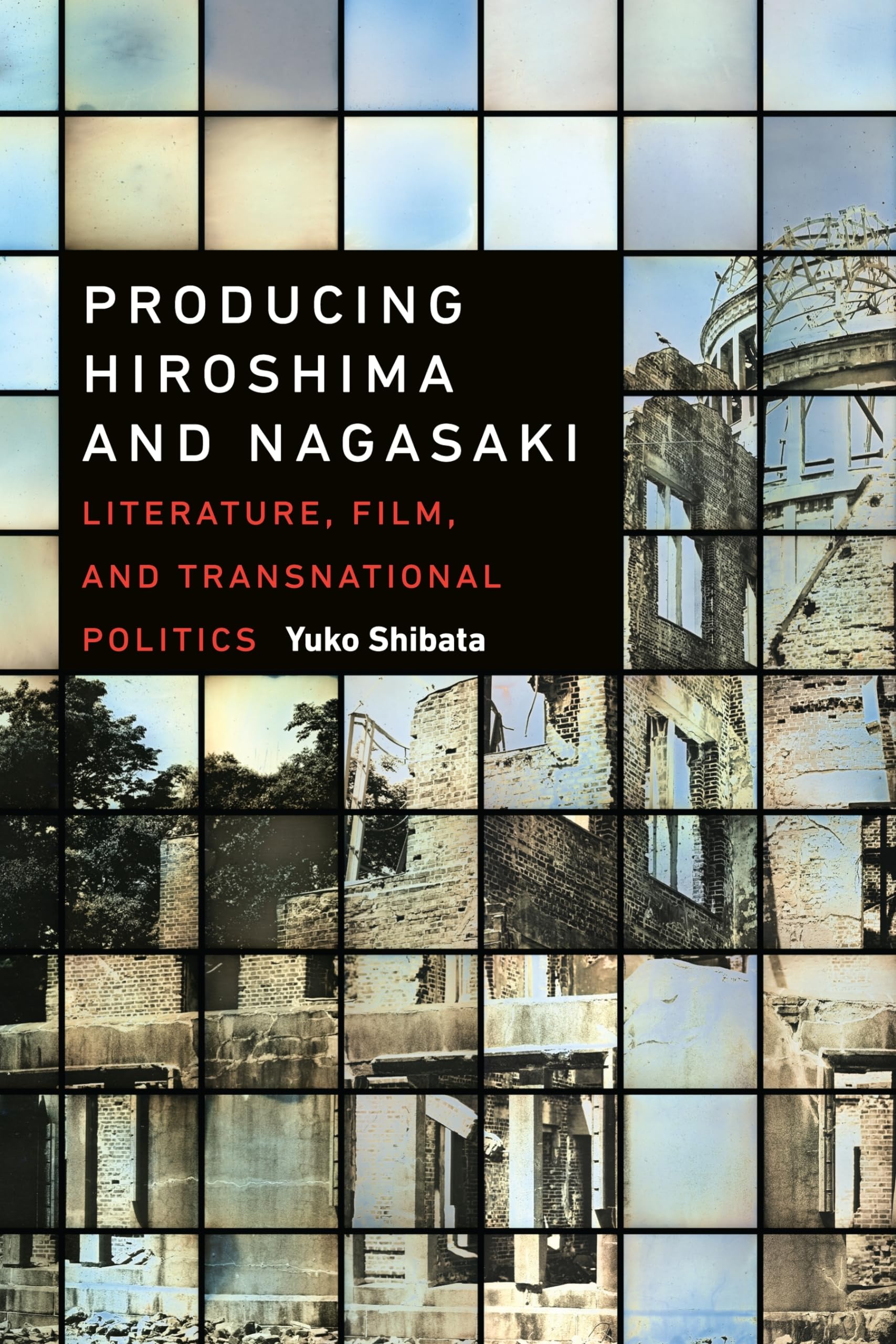
Title
Producing Hiroshima and Nagasaki: Literature, Film, and Transnational Politics,Used
Sold by Ergodebooks, an authorized reseller.
Returns accepted within 30 days | support@ergodebooks.com
Shipping Information
- Free Standard Shipping — United States only
- Processing Time: 3–5 business days
- Estimated Delivery: 6–10 business days after dispatch
- Double-boxed, fully insured & discreetly packaged
- Tracking number sent via email once dispatched
Returns & Refund
Returns accepted within 30 days of delivery.
Damaged or Defective Item
Free return shipping + replacement or full refund
Wrong Item Received
Free return shipping + replacement or full refund
Change of Mind
Return shipping at customer's expense · 25% restocking fee applies
Payment Option

National, disciplinary, and linguistic boundaries all play a role in academic study and nowhere is this more apparent than in traditional humanities scholarship surrounding the atomic bombing of Hiroshima and Nagasaki. How would our understanding of this seminal event change if we read Japanese and EuroAmerican texts together and across disciplines? In Producing Hiroshima and Nagasaki, Yuko Shibata juxtaposes literary and cinematic texts usually considered separately to highlight the connected divides in the production of knowledge on Hiroshima and Nagasaki, shedding new light on both texts and contexts in the process.Shibata takes up two canonical worksAmerican journalist John Herseys account, Hiroshima, and French director Alain Resnais avantgarde film, Hiroshima Mon Amourthat are traditionally excluded from study in Japanese literature and cinema. By examining Herseys Hiroshima in conjunction with The Bells of Nagasaki (Nagai Takashi) and Children of the ABomb (Osada Arata), both Japanese bestsellers, Shibata demonstrates how influential Herseys Hiroshima has been in forging the normative narrative of the hibakusha experience in Japan. She also compares Hiroshima Mon Amour with Kamei Fumios documentary, Still Its Good to Live, whose footage Resnais borrowed to depict atomic bomb victimhood. Resnais avantgarde masterpiece, she contends, is the palimpsest of Kameis surrealist documentary; both blur the binaries between realist and avantgarde representations. Reading Hiroshima Mon Amour in its historical context enables Shibata to offer an entirely new analysis of Renais work. She also delineates how Japanese films came to produce the martyrdom narrative of the hibakusha in the early postwar period.Producing Hiroshima and Nagasaki allows us to trace the complex and entangled political threads that link representations of Hiroshima and Nagasaki, reminding us that narratives and images deploy different effects in different places and times. This highly original approach establishes a new kind of transnational and transpacific studies on Hiroshima and Nagasaki and raises the possibility of a comparative area studies to match the age of world literature.
⚠️ WARNING (California Proposition 65):
This product may contain chemicals known to the State of California to cause cancer, birth defects, or other reproductive harm.
For more information, please visit www.P65Warnings.ca.gov.