If you have any questions, you are always welcome to contact us. We'll get back to you as soon as possible, withing 24 hours on weekdays.
Customer service
All questions about your order, return and delivery must be sent to our customer service team by e-mail at yourstore@yourdomain.com
Sale & Press
If you are interested in selling our products, need more information about our brand or wish to make a collaboration, please contact us at press@yourdomain.com
Help
If you have any questions, you are always welcome to contact us. We'll get back to you as soon as possible, withing 24 hours on weekdays.
Customer service
All questions about your order, return and delivery must be sent to our customer service team by e-mail at yourstore@yourdomain.com
Sale & Press
If you are interested in selling our products, need more information about our brand or wish to make a collaboration, please contact us at press@yourdomain.com
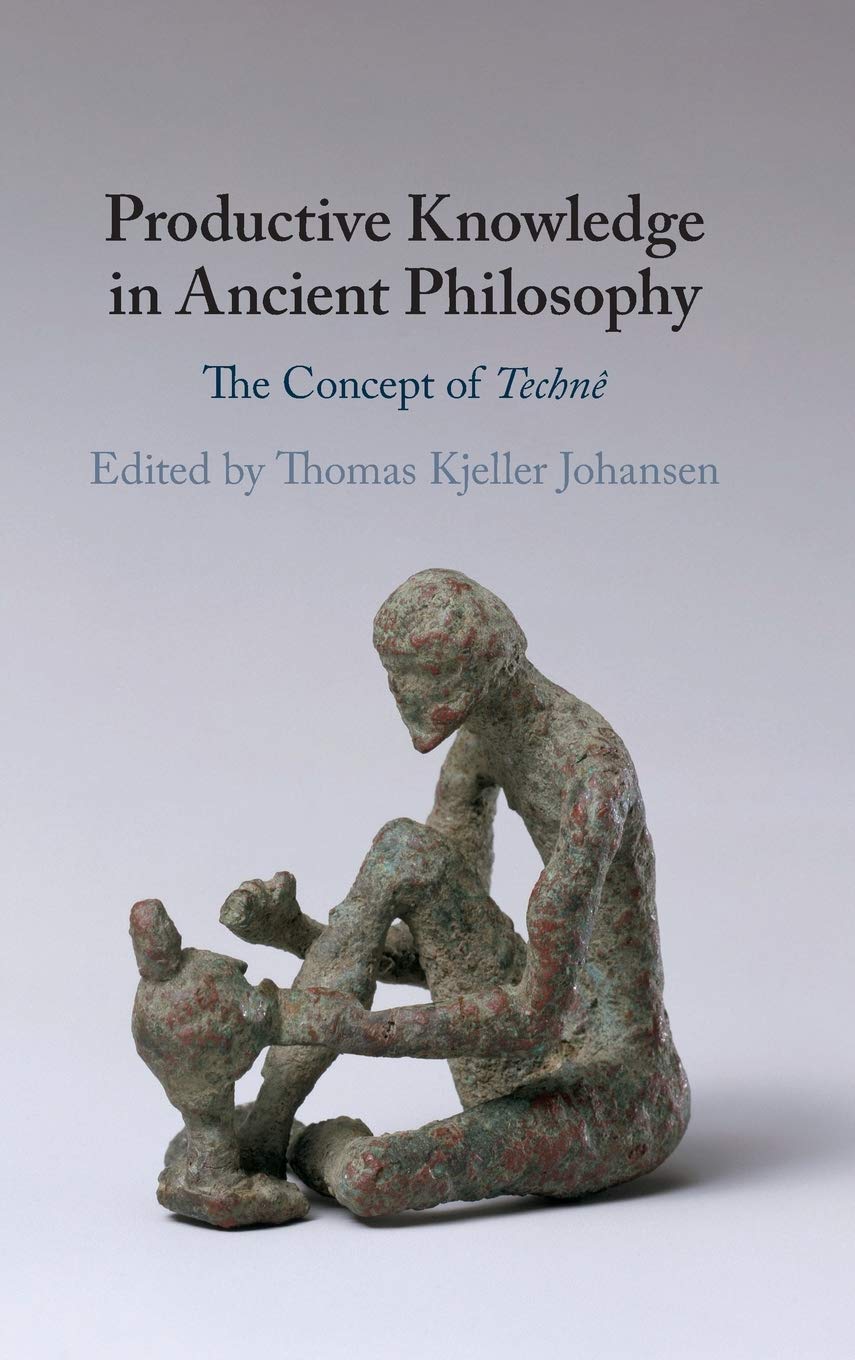
This work investigates how ancient philosophers understood productive knowledge or techn and used it to explain ethics, rhetoric, politics and cosmology. In eleven chapters leading scholars set out the ancient debates about techn from the Presocratic and Hippocratic writers, through Plato and Aristotle and the Hellenistic age (Stoics, Epicureans and Sceptics), ending in the Neoplatonism of Plotinus and Proclus. Amongst the many themes that come into focus are: the model status of ancient medicine in defining the political art, the similarities between the Platonic and Aristotelian conceptions of techn, the use of techn as a paradigm for virtue and practical rationality, techns determining role in Platonic conceptions of cosmology, techns relationship to experience and theoretical knowledge, virtue as an 'art of living', the adaptability of the criteria of techn to suit different skills, including philosophy itself, the use in productive knowledge of models, deliberation, conjecture and imagination.
⚠️ WARNING (California Proposition 65):
This product may contain chemicals known to the State of California to cause cancer,
birth defects, or other reproductive harm.
For MAP (Minimum Advertised Price) violations and Intellectual Property (IP) or Trademark concerns, please contact:
support@ergodebooks.com
⚠️ California Proposition 65 Warning: Some products sold on this website may expose you to chemicals known to the State of California to cause cancer, birth defects, or other reproductive harm. For more information, visit www.P65Warnings.ca.gov.