
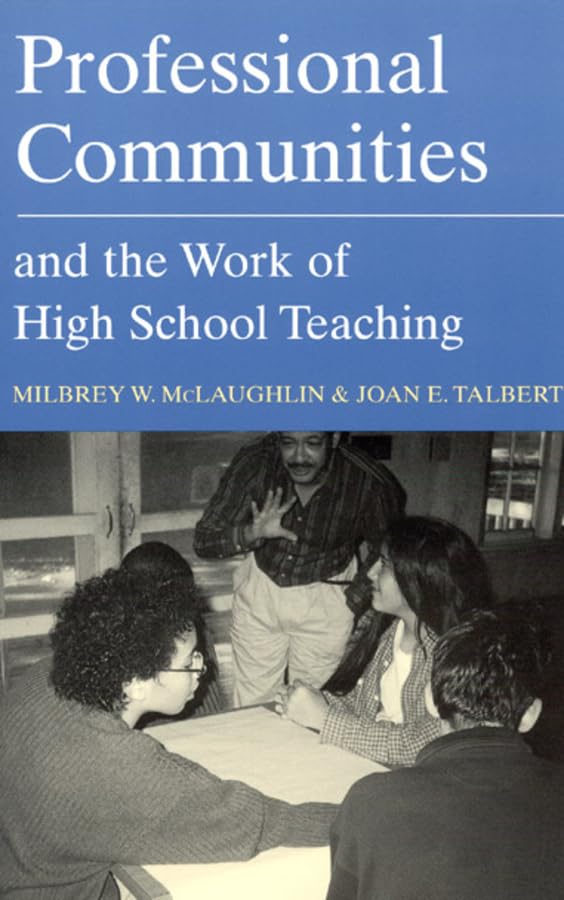
Title
Professional Communities And The Work Of High School Teaching
Sold by Ergodebooks, an authorized reseller.
Returns accepted within 30 days | support@ergodebooks.com
Shipping Information
- Free Standard Shipping — United States only
- Processing Time: 3–5 business days
- Estimated Delivery: 6–10 business days after dispatch
- Double-boxed, fully insured & discreetly packaged
- Tracking number sent via email once dispatched
Returns & Refund
Returns accepted within 30 days of delivery.
Damaged or Defective Item
Free return shipping + replacement or full refund
Wrong Item Received
Free return shipping + replacement or full refund
Change of Mind
Return shipping at customer's expense · 25% restocking fee applies
Payment Option

About the AuthorMilbrey W. McLaughlin is the David Jacks Professor of Education and Public Policy, annd Joan E. Talbert is the senior research scholar at Stanford University, where they codirect the Center for Research on the Context of Teaching. With David Cohen, they are coauthors of Teaching For Understanding.Product DescriptionAmerican high schools have never been under more pressure to reform: student populations are more diverse than ever, resources are limited, and teachers are expected to teach to high standards for all students. While many reformers look for change at the state or district level, the authors here argue that the most local contextsschools, departments, and communitiesmatter the most to how well teachers perform in the classroom and how satisfied they are professionally. Their findingsbased on one of the most extensive research projects ever done on secondary teachingshow that departmental cultures play a crucial role in classroom settings and expectations. In the same school, for example, social studies teachers described their students as 'apathetic and unwilling to work,' while English teachers described the same students as 'bright, interesting, and energetic.'With wideranging implications for educational practice and policy, this unprecedented look into teacher communities is essential reading for educators, administrators, and all those concerned with U. S. High Schools.From the Inside FlapAmerican high schools have never been under more pressure to reform: student populations are more diverse than ever, resources are limited, and teachers are expected to teach to high standards for all students. While many reformers look for change at the state or district level, the authors here argue that the most local contextsschools, departments, and communitiesmatter the most to how well teachers perform in the classroom and how satisfied they are professionally. Their findingsbased on one of the most extensive research projects ever done on secondary teachingshow that departmental cultures play a crucial role in classroom settings and expectations. In the same school, for example, social studies teachers described their students as 'apathetic and unwilling to work,' while English teachers described the same students as 'bright, interesting, and energetic.'With wideranging implications for educational practice and policy, this unprecedented look into teacher communities is essential reading for educators, administrators, and all those concerned with U. S. high schools.From the Back CoverAmerican high schools have never been under more pressure to reform: student populations are more diverse than ever, resources are limited, and teachers are expected to teach to high standards for all students. While many reformers look for change at the state or district level, the authors here argue that the most local contextsschools, departments, and communitiesmatter the most to how well teachers perform in the classroom and how satisfied they are professionally. Their findingsbased on one of the most extensive research projects ever done on secondary teachingshow that departmental cultures play a crucial role in classroom settings and expectations. In the same school, for example, social studies teachers described their students as 'apathetic and unwilling to work,' while English teachers described the same students as 'bright, interesting, and energetic.'With wideranging implications for educational practice and policy, this unprecedented look into teacher communities is essential reading for educators, administrators, and all those concerned with U. S. high schools.
⚠️ WARNING (California Proposition 65):
This product may contain chemicals known to the State of California to cause cancer, birth defects, or other reproductive harm.
For more information, please visit www.P65Warnings.ca.gov.