
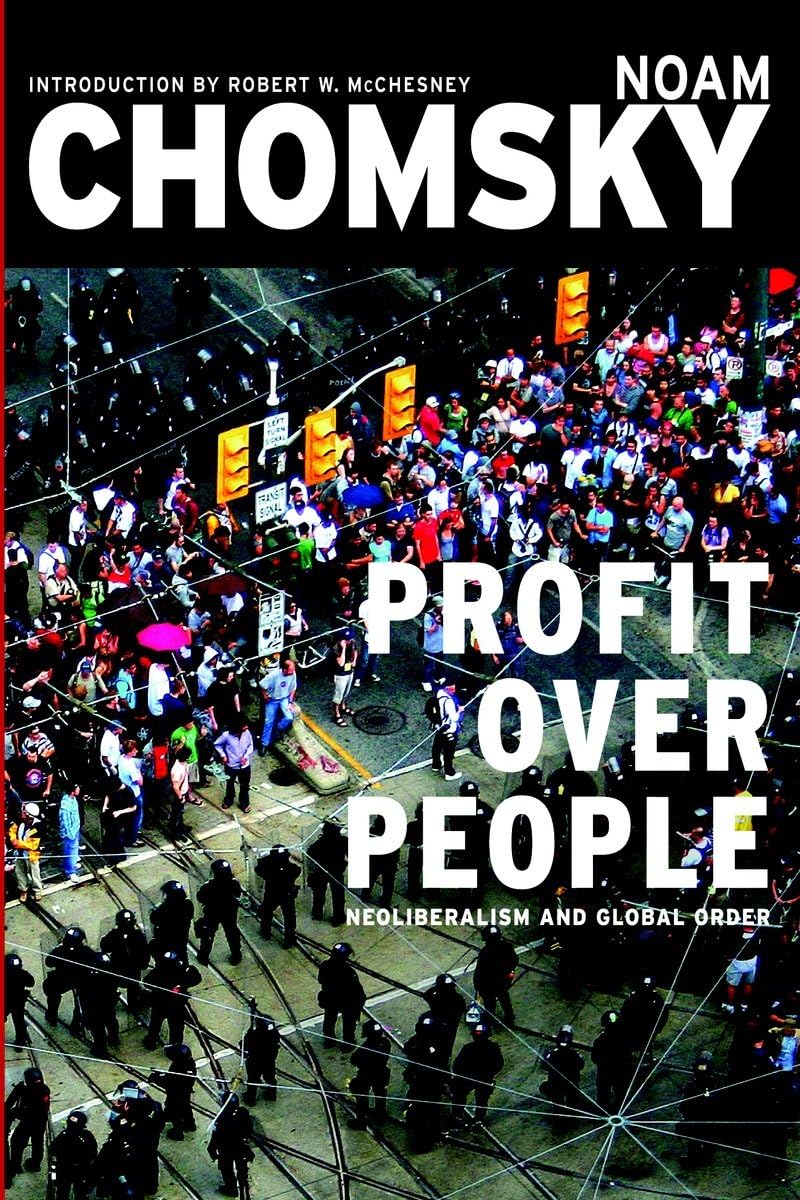
Title
Profit Over People: Neoliberalism & Global Order,New
Sold by Ergodebooks, an authorized reseller.
Returns accepted within 30 days | support@ergodebooks.com
Shipping Information
- Free Standard Shipping — United States only
- Processing Time: 3–5 business days
- Estimated Delivery: 6–10 business days after dispatch
- Double-boxed, fully insured & discreetly packaged
- Tracking number sent via email once dispatched
Returns & Refund
Returns accepted within 30 days of delivery.
Damaged or Defective Item
Free return shipping + replacement or full refund
Wrong Item Received
Free return shipping + replacement or full refund
Change of Mind
Return shipping at customer's expense · 25% restocking fee applies
Payment Option

Why is the Atlantic slowly filling with crude petroleum, threatening a millionsofyearsold ecological balance? Why did traders at prominent banks take highrisk gambles with the money entrusted to them by hundreds of thousands of clients around the world, expanding and leveraging their investments to the point that failure led to a global financial crisis that left millions of people jobless and hundreds of cities economically devastated? Why would the world's most powerful military spend ten years fighting an enemy that presents no direct threat to secure resources for corporations?The culprit in all cases is neoliberal ideologythe belief in the supremacy of 'free' markets to drive and govern human affairs. And in the years since the initial publication of Noam Chomsky's Profit Over People: Neoliberalism and Global Order, the bitter vines of neoliberalism have only twisted themselves further into the world economy, obliterating the publics voice in public affairs and substituting the bottom line in place of peoples basic obligation to care for one another as ends in themselves. In Profit Over People, Chomsky reveals the roots of the present crisis, tracing the history of neoliberalism through an incisive analysis of free trade agreements of the 1990s, the World Trade Organization, and the International Monetary Fundand describes the movements of resistance to the increasing interference by the private sector in global affairs.In the years since the initial publication of Profit Over People, the stakes have only risen. Now more than ever, Profit Over People is one of the key texts explaining how the crisis facing us operatesand how, through Chomskys analysis of resistance, we may find an escape from the closing net.
⚠️ WARNING (California Proposition 65):
This product may contain chemicals known to the State of California to cause cancer, birth defects, or other reproductive harm.
For more information, please visit www.P65Warnings.ca.gov.
- Q: What is the main theme of 'Profit Over People: Neoliberalism & Global Order'? A: 'Profit Over People' explores the impact of neoliberal ideology on global affairs, highlighting how it prioritizes free markets over public welfare and contributes to economic crises.
- Q: Who is the author of the book and what is his background? A: The author is Noam Chomsky, a renowned linguist, philosopher, and political activist known for his critical views on neoliberalism and U.S. foreign policy.
- Q: What are some key topics covered in the book? A: The book discusses free trade agreements, the role of the World Trade Organization, the International Monetary Fund, and movements resisting private sector interference in global governance.
- Q: When was 'Profit Over People' first published? A: 'Profit Over People' was first published on January 1, 1999, with a release date of December 8, 1998.
- Q: What is the significance of this book in understanding current economic issues? A: Chomsky's analysis in 'Profit Over People' is crucial for understanding the roots of contemporary economic crises and the ongoing influence of neoliberal policies.
- Q: What type of binding does this edition of the book have? A: This edition of 'Profit Over People' is available in paperback binding.
- Q: How many pages does the book contain? A: 'Profit Over People: Neoliberalism & Global Order' contains a total of 288 pages.
- Q: Is this book suitable for someone new to economic policy? A: Yes, 'Profit Over People' is accessible for readers new to economic policy, as it provides clear explanations and insights into complex issues.
- Q: What is the condition of the book being sold? A: The book is sold in new condition.
- Q: Are there any movements or examples of resistance mentioned in the book? A: Yes, Chomsky discusses various movements that challenge neoliberal policies and advocate for public interests, providing insights into resistance strategies.