If you have any questions, you are always welcome to contact us. We'll get back to you as soon as possible, withing 24 hours on weekdays.
Customer service
All questions about your order, return and delivery must be sent to our customer service team by e-mail at yourstore@yourdomain.com
Sale & Press
If you are interested in selling our products, need more information about our brand or wish to make a collaboration, please contact us at press@yourdomain.com
Help
If you have any questions, you are always welcome to contact us. We'll get back to you as soon as possible, withing 24 hours on weekdays.
Customer service
All questions about your order, return and delivery must be sent to our customer service team by e-mail at yourstore@yourdomain.com
Sale & Press
If you are interested in selling our products, need more information about our brand or wish to make a collaboration, please contact us at press@yourdomain.com
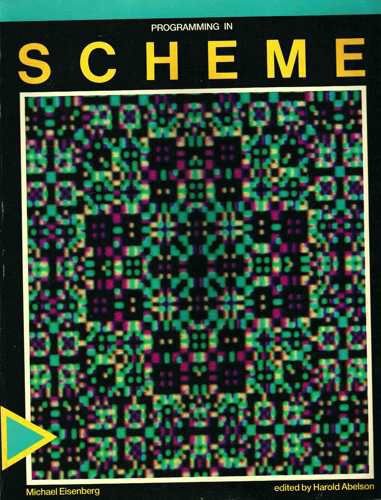
With this book you can learn to write good programs that do interesting things right off the bat,' writes software developer Julie Sussman. 'This is the introductory [programming] text that I wish I had had'Scheme a simple, learnable dialect of LISP has emerged as a popular educational language as well as a serious tool for producing applications and system software. Programming in Scheme provides an accessible introduction to Scheme that assumes no previous programming experience and covers all the basics of the language and many advanced topics as well. It gets readers on the machine early, teaches language structure and programming technique through extended examples an exercises, and emphasizes debugging throughout.Chapters are organized as a series of groups, or 'layers,' each of which advances the reader to a new level in Scheme. The first layer (chapters 27) introduces Scheme procedures how to define, use, and debug them. The second layer (chapters 810) discusses lists and subprocedures. The third layer (chapters 1115) provides a more elaborate and powerful model of the Scheme language. These last chapters also explore the notion of firstclass procedure objects, one of the most fascinating ideas in computer science. Appendixes contain an Edwin minimanual, answers to selected exercises, references and bibliography.Michael Eisenberg is a Ph.D candidate in Computer Science at MIT. Harold Abelson is Associate Professor of Computer Science and Engineering at MIT.
⚠️ WARNING (California Proposition 65):
This product may contain chemicals known to the State of California to cause cancer,
birth defects, or other reproductive harm.
For MAP (Minimum Advertised Price) violations and Intellectual Property (IP) or Trademark concerns, please contact:
support@ergodebooks.com
⚠️ California Proposition 65 Warning: Some products sold on this website may expose you to chemicals known to the State of California to cause cancer, birth defects, or other reproductive harm. For more information, visit www.P65Warnings.ca.gov.