
Title
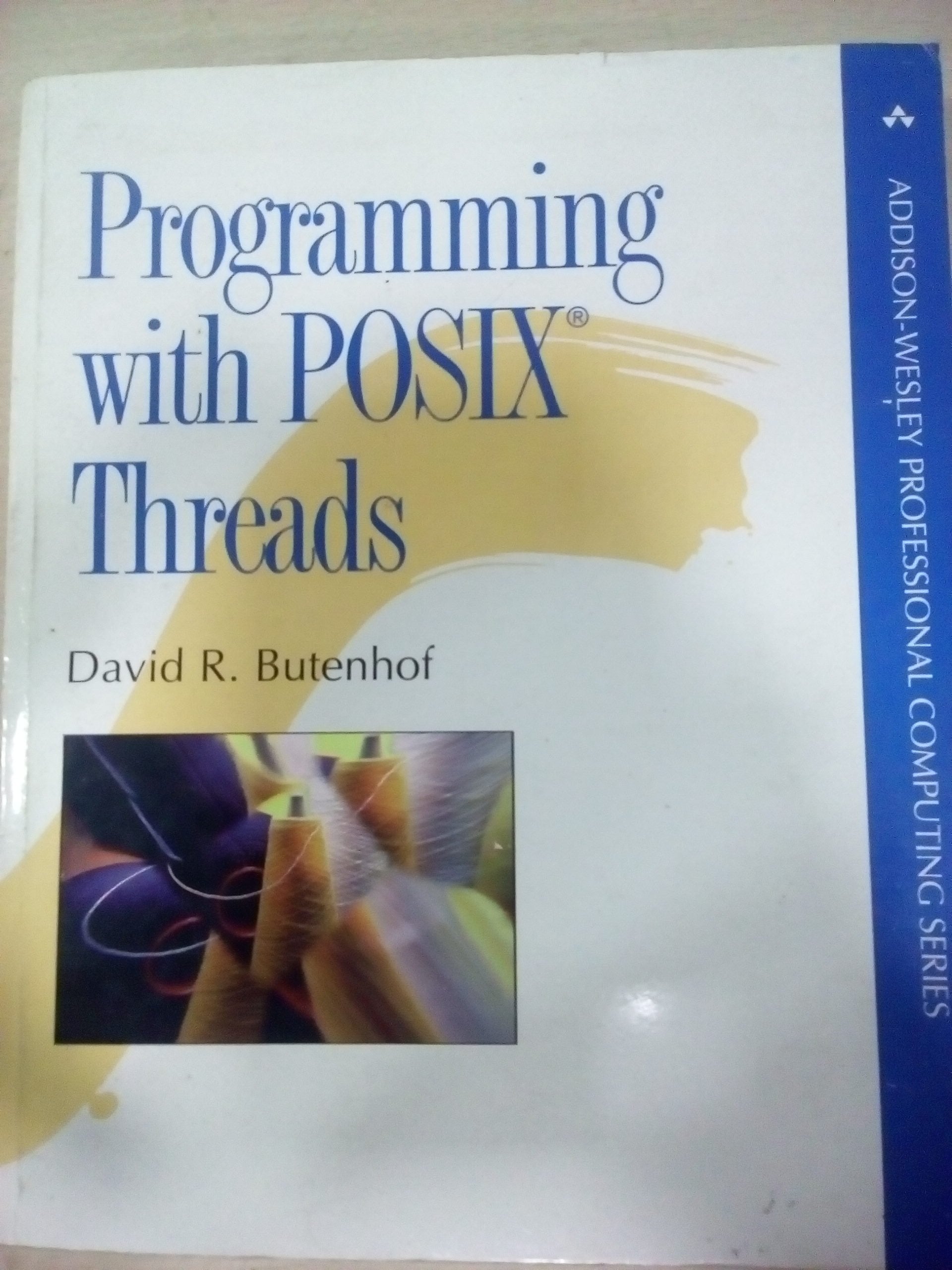
Programming with POSIX Threads,New
Sold by Ergodebooks, an authorized reseller.
Returns accepted within 30 days | support@ergodebooks.com
Shipping Information
- Free Standard Shipping — United States only
- Processing Time: 3–5 business days
- Estimated Delivery: 6–10 business days after dispatch
- Double-boxed, fully insured & discreetly packaged
- Tracking number sent via email once dispatched
Returns & Refund
Returns accepted within 30 days of delivery.
Damaged or Defective Item
Free return shipping + replacement or full refund
Wrong Item Received
Free return shipping + replacement or full refund
Change of Mind
Return shipping at customer's expense · 25% restocking fee applies
Payment Option

With this practical book, you will attain a solid understanding of threads and will discover how to put this powerful mode of programming to work in realworld applications.The primary advantage of threaded programming is that it enables your applications to accomplish more than one task at the same time by using the numbercrunching power of multiprocessor parallelism and by automatically exploiting I/O concurrency in your code, even on a single processor machine. The result: applications that are faster, more responsive to users, and often easier to maintain. Threaded programming is particularly well suited to network programming where it helps alleviate the bottleneck of slow network I/O.This book offers an indepth description of the IEEE operating system interface standard, POSIXAE (Portable Operating System Interface) threads, commonly called Pthreads. Written for experienced C programmers, but assuming no previous knowledge of threads, the book explains basic concepts such as asynchronous programming, the lifecycle of a thread, and synchronization. You then move to more advanced topics such as attributes objects, threadspecific data, and realtime scheduling. An entire chapter is devoted to 'real code,' with a look at barriers, read/write locks, the work queue manager, and how to utilize existing libraries. In addition, the book tackles one of the thorniest problems faced by thread programmersdebuggingwith valuable suggestions on how to avoid code errors and performance problems from the outset.Numerous annotated examples are used to illustrate realworld concepts. A Pthreads minireference and a look at future standardization are also included.
⚠️ WARNING (California Proposition 65):
This product may contain chemicals known to the State of California to cause cancer, birth defects, or other reproductive harm.
For more information, please visit www.P65Warnings.ca.gov.
- Q: What is 'Programming with POSIX Threads' about? A: 'Programming with POSIX Threads' provides a comprehensive understanding of threaded programming using the POSIX standard. It covers essential concepts and practical applications for experienced C programmers.
- Q: Who is the author of the book? A: The book is authored by David Butenhof, who has expertise in concurrent programming and has contributed significantly to the field.
- Q: What topics are covered in the book? A: The book covers basic concepts of threads, synchronization, advanced topics like thread-specific data, real-time scheduling, and practical examples for real-world applications.
- Q: Is this book suitable for beginners? A: While the book is geared towards experienced C programmers, it starts with fundamental concepts that may be beneficial for beginners looking to understand threaded programming.
- Q: How many pages does the book have? A: The book contains 400 pages, providing in-depth coverage of its topics.
- Q: What is the publication date of this book? A: 'Programming with POSIX Threads' was published on May 16, 1997.
- Q: What format is the book available in? A: The book is available in paperback format.
- Q: Does the book include practical examples? A: Yes, the book includes numerous annotated examples to illustrate real-world concepts related to threaded programming.
- Q: What is the main advantage of using threaded programming? A: Threaded programming allows applications to perform multiple tasks simultaneously, utilizing the power of multiprocessor parallelism and improving responsiveness.
- Q: Does the book address debugging in threaded programming? A: Yes, the book includes a chapter focused on debugging, offering valuable suggestions to avoid common code errors and performance issues.