
Title
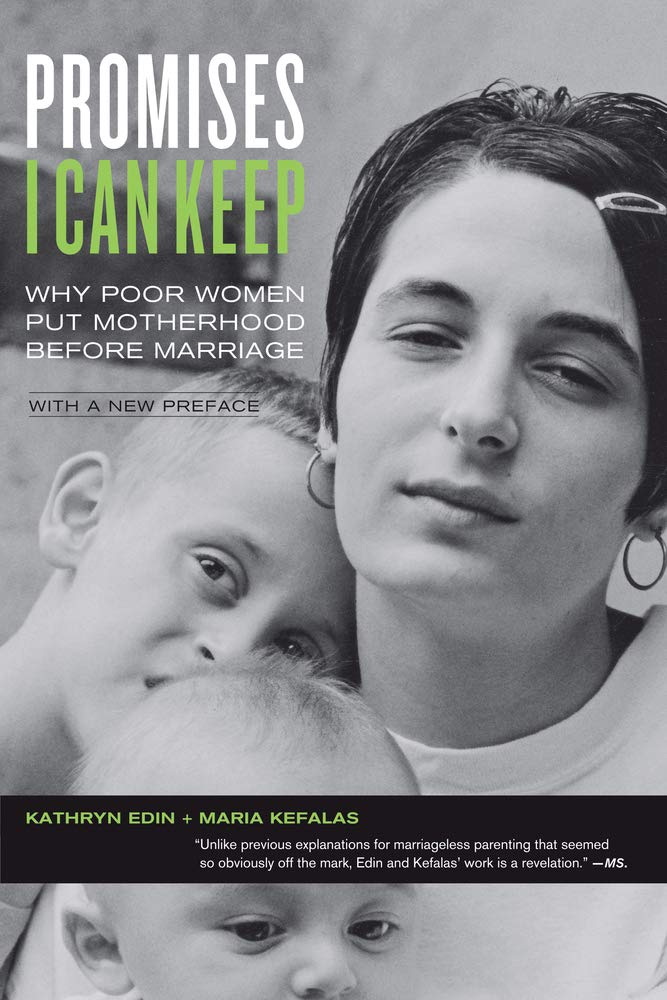
Promises I Can Keep: Why Poor Women Put Motherhood Before Marriage, With A New Preface,Used
Sold by Ergodebooks, an authorized reseller.
Returns accepted within 30 days | support@ergodebooks.com
Shipping Information
- Free Standard Shipping — United States only
- Processing Time: 3–5 business days
- Estimated Delivery: 6–10 business days after dispatch
- Double-boxed, fully insured & discreetly packaged
- Tracking number sent via email once dispatched
Returns & Refund
Returns accepted within 30 days of delivery.
Damaged or Defective Item
Free return shipping + replacement or full refund
Wrong Item Received
Free return shipping + replacement or full refund
Change of Mind
Return shipping at customer's expense · 25% restocking fee applies
Payment Option

Millie Acevedo Bore Her First Child Before The Age Of 16 And Dropped Out Of High School To Care For Her Newborn. Now 27, She Is The Unmarried Mother Of Three And Is Raising Her Kids In One Of Philadelphia'S Poorest Neighborhoods. Would She And Her Children Be Better Off If She Had Waited To Have Them And Had Married Their Father First? Why Do So Many Poor American Youth Like Millie Continue To Have Children Before They Can Afford To Take Care Of Them?Over A Span Of Five Years, Sociologists Kathryn Edin And Maria Kefalas Talked Indepth With 162 Lowincome Single Moms Like Millie To Learn How They Think About Marriage And Family. Promises I Can Keep Offers An Intimate Look At What Marriage And Motherhood Mean To These Women And Provides The Most Extensive Ontheground Study To Date Of Why They Put Children Before Marriage Despite The Daunting Challenges They Know Lie Ahead.
⚠️ WARNING (California Proposition 65):
This product may contain chemicals known to the State of California to cause cancer, birth defects, or other reproductive harm.
For more information, please visit www.P65Warnings.ca.gov.
- Q: How many pages does this book have? A: This book has three hundred twenty pages. It provides an in-depth exploration of motherhood among low-income women.
- Q: What is the binding type of this book? A: The binding type is paperback. This makes it lightweight and easy to handle for casual reading.
- Q: What are the dimensions of the book? A: The book measures six inches in length, zero point seventy-one inches in width, and nine point zero two inches in height.
- Q: Who is the author of this book? A: The author is Kathryn Edin. She is a renowned sociologist known for her research on family dynamics.
- Q: What is the genre of this book? A: The genre is sociology. It focuses on the societal challenges faced by low-income single mothers.
- Q: What age group is this book suitable for? A: This book is suitable for adults and older teens. It discusses complex social issues surrounding motherhood.
- Q: How can I apply the insights from this book? A: You can apply the insights by understanding the social contexts influencing motherhood decisions. This could inform discussions about family and policy.
- Q: Is this book appropriate for academic study? A: Yes, it is appropriate for academic study. It provides extensive research findings that can support sociology and gender studies.
- Q: Is there a specific audience for this book? A: The primary audience includes sociologists, students, and anyone interested in family studies. It offers unique perspectives on motherhood.
- Q: What do I do if my book arrives damaged? A: You should contact the seller for a replacement or refund. Most sellers have a return policy for damaged items.
- Q: Can I return this book if I don't like it? A: Yes, you can usually return it. Check the return policy of the seller for specific conditions.
- Q: What if I have questions about the book's content? A: You can look for online discussions or reviews. Many readers share their insights and analyses on platforms like Goodreads.
- Q: How should I store this book to keep it in good condition? A: Store it upright on a shelf in a cool, dry place. This will help maintain its quality over time.
- Q: Is this book considered a scholarly resource? A: Yes, it is considered a scholarly resource. It is based on five years of research and interviews with low-income mothers.
- Q: What themes are explored in this book? A: The book explores themes of motherhood, marriage, and socio-economic challenges faced by women. It provides deep insights into personal choices.
- Q: How can I benefit from reading this book? A: You can benefit by gaining a deeper understanding of the socio-economic factors affecting family dynamics. It challenges common perceptions about motherhood.