If you have any questions, you are always welcome to contact us. We'll get back to you as soon as possible, withing 24 hours on weekdays.
Customer service
All questions about your order, return and delivery must be sent to our customer service team by e-mail at yourstore@yourdomain.com
Sale & Press
If you are interested in selling our products, need more information about our brand or wish to make a collaboration, please contact us at press@yourdomain.com
Help
If you have any questions, you are always welcome to contact us. We'll get back to you as soon as possible, withing 24 hours on weekdays.
Customer service
All questions about your order, return and delivery must be sent to our customer service team by e-mail at yourstore@yourdomain.com
Sale & Press
If you are interested in selling our products, need more information about our brand or wish to make a collaboration, please contact us at press@yourdomain.com
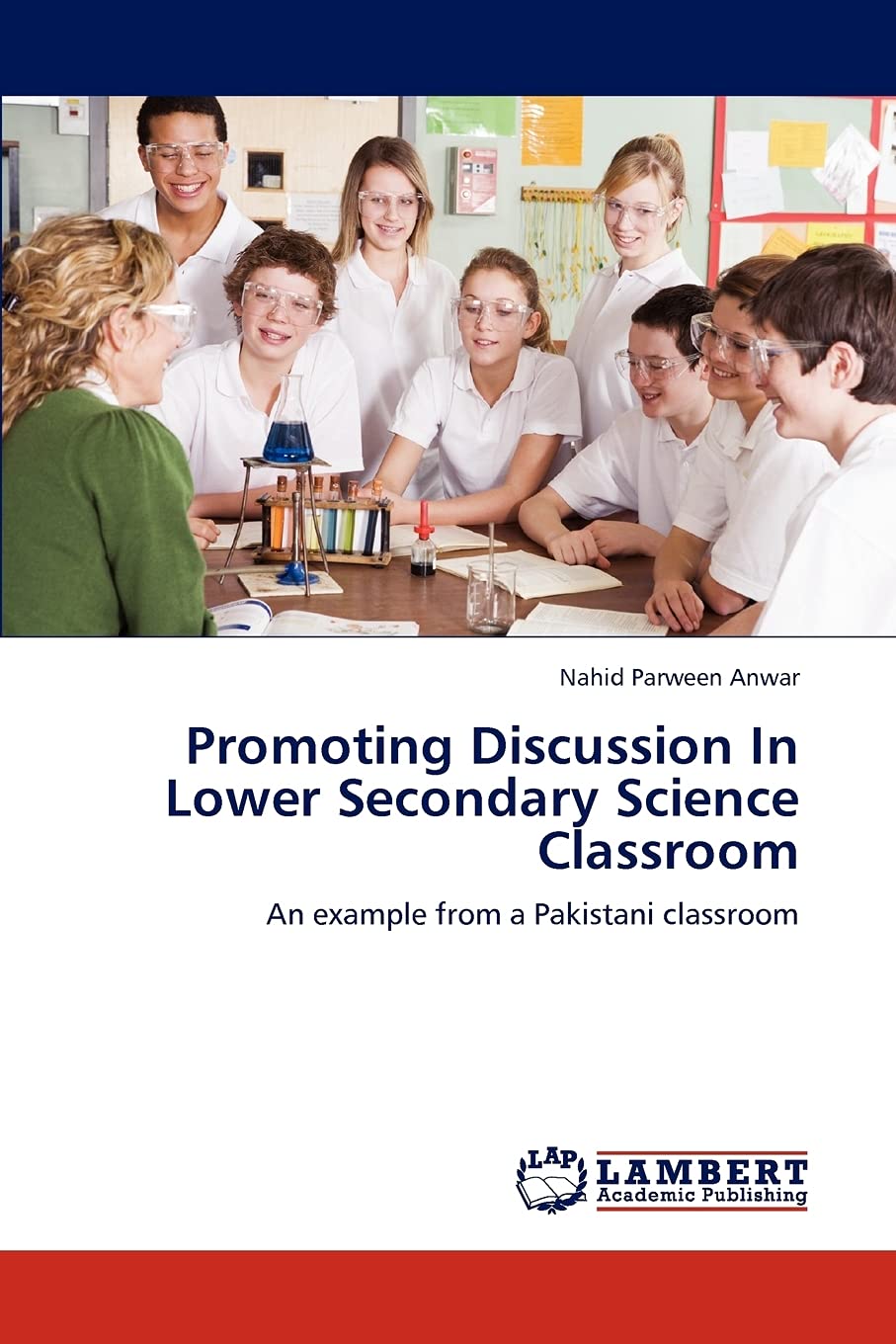
The aim of this study was to promote discussion in the lower secondary class of a private school. Action research methodology based on Kemmis, Mc Taggart and Retallick (2004) cyclic model was used. Different phases of the model are: identifying the general idea, reconnaissance, plan, act, observe, reflect, and then entering into the next cycle by replanning. Data were collected through interview and classroom observation. Various teaching strategies (e.g. poster, PredictObserveExplainPOE, discrepant event) and classroom organizations (e.g. whole class, group work) were used to promote discussion. Findings revealed that the use of various teaching strategies especially POE and discrepant events encouraged childrens participation in discussion. Furthermore, children showed more interest when they were involved in discussion by linking science with daily life. Gradual incline in the level of difficulty of activities supported promoting discussion in the classroom. The study has implications for science teachers as well as teacher educators in their teaching of science and professional development programmes, respectively.
⚠️ WARNING (California Proposition 65):
This product may contain chemicals known to the State of California to cause cancer,
birth defects, or other reproductive harm.
For MAP (Minimum Advertised Price) violations and Intellectual Property (IP) or Trademark concerns, please contact:
support@ergodebooks.com
⚠️ California Proposition 65 Warning: Some products sold on this website may expose you to chemicals known to the State of California to cause cancer, birth defects, or other reproductive harm. For more information, visit www.P65Warnings.ca.gov.