
Title
Promoting Inclusive Classroom Dynamics in Higher Education,Used
Sold by Ergodebooks, an authorized reseller.
Returns accepted within 30 days | support@ergodebooks.com
Shipping Information
- Free Standard Shipping — United States only
- Processing Time: 3–5 business days
- Estimated Delivery: 6–10 business days after dispatch
- Double-boxed, fully insured & discreetly packaged
- Tracking number sent via email once dispatched
Returns & Refund
Returns accepted within 30 days of delivery.
Damaged or Defective Item
Free return shipping + replacement or full refund
Wrong Item Received
Free return shipping + replacement or full refund
Change of Mind
Return shipping at customer's expense · 25% restocking fee applies
Payment Option

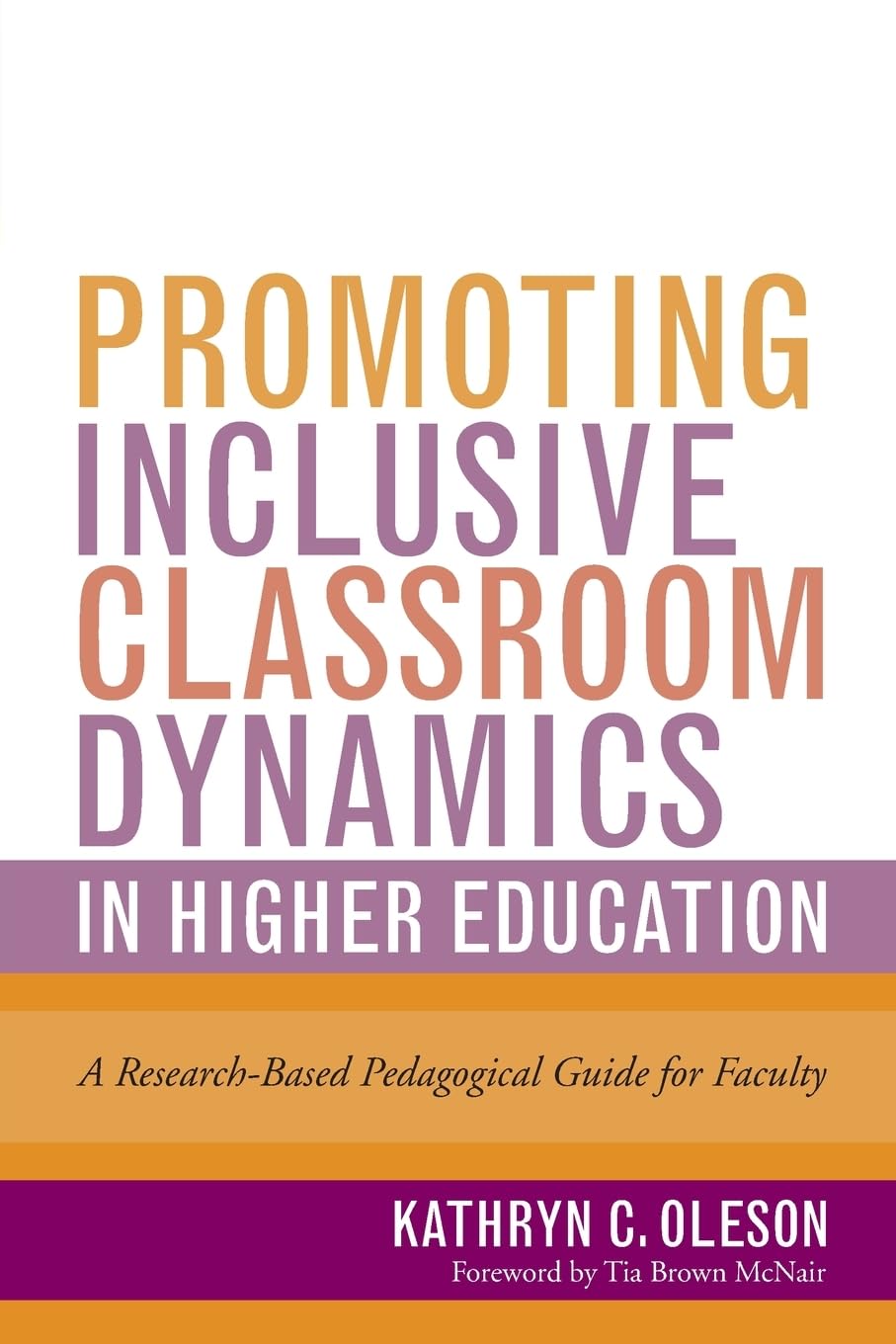
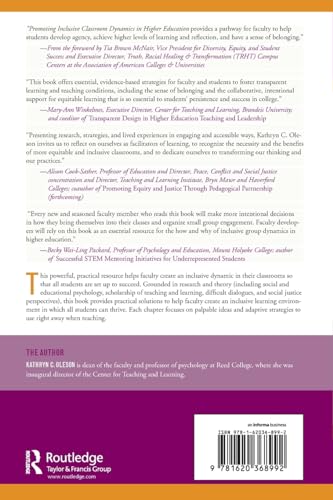
This powerful, practical resource helps faculty create an inclusive dynamic in their classrooms, so that all students are set up to succeed. Grounded in research and theory (including educational psychology, scholarship of teaching and learning, intergroup dialogue, and social justice theory), this book provides practical solutions to help faculty create an inclusive learning environment in which all students can thrive. Each chapter focuses on palpable ideas and adaptive strategies to use right away when teaching. The first chapter consider professors intersecting personal and social identities and their expectations for themselves and their students. Chapter 2 considers students backgrounds, including class, race, disability, and gender, and focuses on what students bring to the classroom, exploring their basic psychological needs of autonomy, competence, and belonging; their approaches to learning; and their selfdoubts and uncertainties. Chapter 3 draws on universallydesigned learning in combination with educational design rooted in social justice and multiculturalism to describe ways to design spaces in which students flourish academically. Two chapters focus on classroom dynamics. Chapter 4 primarily focuses on preparation for having difficult conversations in the classroom, considering how instructors can create a shared understanding between themselves and their students. Chapter 5 focuses on inthemoment strategies to both create and manage discomfort about sensitive and controversial topics while supporting students of various social identities (such as gender, race, disability). In the closing chapter, the author integrates all the elements in the preceding chapters, and also presents more general collegewide programs to help faculty develop and improve their teaching.
⚠️ WARNING (California Proposition 65):
This product may contain chemicals known to the State of California to cause cancer, birth defects, or other reproductive harm.
For more information, please visit www.P65Warnings.ca.gov.