
Title
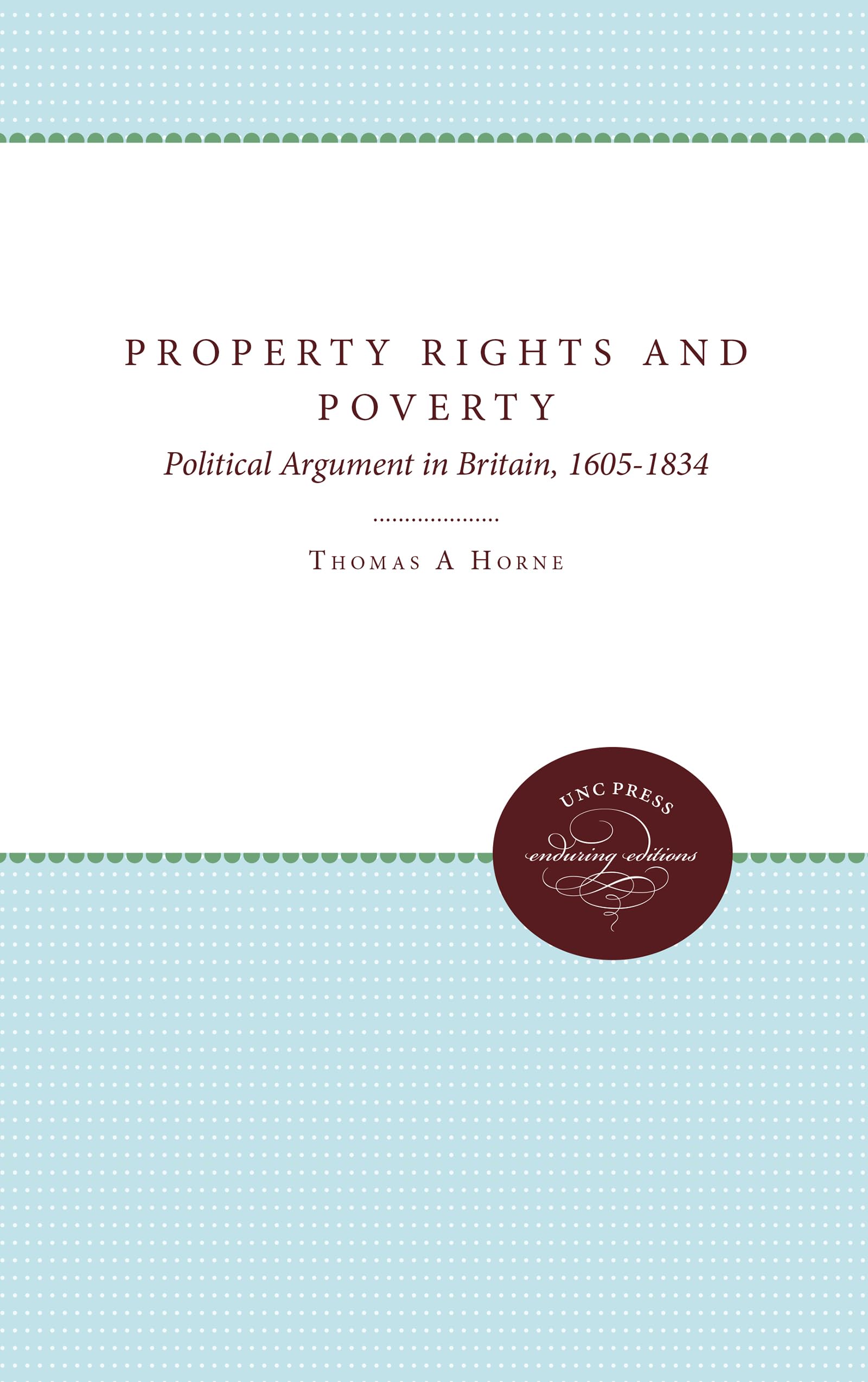
Property Rights And Poverty: Political Argument In Britain, 16051834,Used
Sold by Ergodebooks, an authorized reseller.
Returns accepted within 30 days | support@ergodebooks.com
Shipping Information
- Free Standard Shipping — United States only
- Processing Time: 3–5 business days
- Estimated Delivery: 6–10 business days after dispatch
- Double-boxed, fully insured & discreetly packaged
- Tracking number sent via email once dispatched
Returns & Refund
Returns accepted within 30 days of delivery.
Damaged or Defective Item
Free return shipping + replacement or full refund
Wrong Item Received
Free return shipping + replacement or full refund
Change of Mind
Return shipping at customer's expense · 25% restocking fee applies
Payment Option

Focusing primarily on British political thought from the mid1600s to the mid1800s, Thomas Horne examines the philosophical links between property rights and welfare rights. He demonstrates that the defense of property did not preclude a rationale for aiding the poor. In doing so, he provides valuable insights into the origins of both classical liberalism and the contemporary welfare state.Horne first considers the writings of Hugo Grotius, the Dutch philosopher and jurist who laid out the terms for the debate over owning property as a natural right. Like later natural law theorists, Grotius was concerned with the question of how God's grant of the earth to all humanity could be reconciled with the idea of owning private property. Horne continues by surveying the writings of a wide range of political thinkersJohn Locke, David Hume, Jeremy Bentham, and many othersin order to follow the progress of the property rights debate in England through the seventeenth, eighteenth, and early nineteenth centuries.According to Horne, virtually every defense of property rights written during this period carried with it a selflimiting feature that took into account the welfare rights of those without property. Thus, while British political thought typically defended individual property rights as consistent witheven demanded bynatural law, it also insisted that all individuals had a right, under some circumstances, to the use of resources necessary for their welfare. The right to exclude and the right to be included were not understood as necessarily contradictory or antagonistic aspects of a just property arrangement. Instead, the problem posed by the tradition of property theory presented here was how to recognize both property rights and welfare rights in a single legal code.Originally published in 1990.A UNC Press Enduring Edition UNC Press Enduring Editions use the latest in digital technology to make available again books from our distinguished backlist that were previously out of print. These editions are published unaltered from the original, and are presented in affordable paperback formats, bringing readers both historical and cultural value.
⚠️ WARNING (California Proposition 65):
This product may contain chemicals known to the State of California to cause cancer, birth defects, or other reproductive harm.
For more information, please visit www.P65Warnings.ca.gov.