If you have any questions, you are always welcome to contact us. We'll get back to you as soon as possible, withing 24 hours on weekdays.
Customer service
All questions about your order, return and delivery must be sent to our customer service team by e-mail at yourstore@yourdomain.com
Sale & Press
If you are interested in selling our products, need more information about our brand or wish to make a collaboration, please contact us at press@yourdomain.com
Help
If you have any questions, you are always welcome to contact us. We'll get back to you as soon as possible, withing 24 hours on weekdays.
Customer service
All questions about your order, return and delivery must be sent to our customer service team by e-mail at yourstore@yourdomain.com
Sale & Press
If you are interested in selling our products, need more information about our brand or wish to make a collaboration, please contact us at press@yourdomain.com
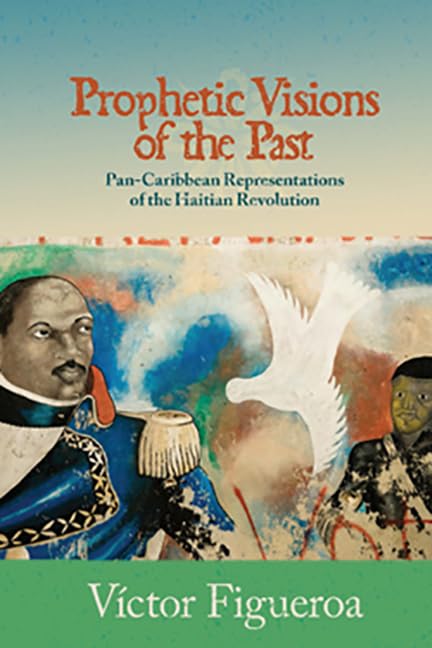
In Prophetic Visions of the Past: PanCaribbean Representations of the Haitian Revolution, Vctor Figueroa examines how the Haitian Revolution has been represented in twentiethcentury literary works from across the Caribbean. Building on the scholarship of key thinkers of the Latin American decolonial turn such as Enrique Dussel, Anbal Quijano, Walter Mignolo, and Nelson MaldonadoTorres, Figueroa argues that examining how Haitis neighbors tell the story of the Revolution illuminates its role as a fundamental turning point in both the development and radical questioning of the modern/colonial world system.Prophetic Visions of the Past includes chapters on literary texts from a wide array of languages, histories, and perspectives. Figueroa addresses work by Alejo Carpentier (Cuba), C. L. R. James (Trinidad), Luis Pals Matos (Puerto Rico), Aim Csaire (Martinique), Derek Walcott (Saint Lucia), Edouard Glissant (Martinique), and Manuel Zapata Olivella (Colombia). While underscoring each writers unique position, Figueroa also addresses their shared geographical, historical, and sociopolitical preoccupations, which are closely linked to the regions prolonged experience of colonial interventions. Ultimately, these analyses probe how, for the larger Caribbean region, the Haitian Revolution continues to reflect the tension between inspiring revolutionary hopes and an awareness of ongoing colonial objectification and exploitation.
⚠️ WARNING (California Proposition 65):
This product may contain chemicals known to the State of California to cause cancer,
birth defects, or other reproductive harm.
For MAP (Minimum Advertised Price) violations and Intellectual Property (IP) or Trademark concerns, please contact:
support@ergodebooks.com
⚠️ California Proposition 65 Warning: Some products sold on this website may expose you to chemicals known to the State of California to cause cancer, birth defects, or other reproductive harm. For more information, visit www.P65Warnings.ca.gov.