
Title
Proslavery and Sectional Thought in the Early South, 17401829: An Anthology,Used
Sold by Ergodebooks, an authorized reseller.
Returns accepted within 30 days | support@ergodebooks.com
Shipping Information
- Free Standard Shipping — United States only
- Processing Time: 3–5 business days
- Estimated Delivery: 6–10 business days after dispatch
- Double-boxed, fully insured & discreetly packaged
- Tracking number sent via email once dispatched
Returns & Refund
Returns accepted within 30 days of delivery.
Damaged or Defective Item
Free return shipping + replacement or full refund
Wrong Item Received
Free return shipping + replacement or full refund
Change of Mind
Return shipping at customer's expense · 25% restocking fee applies
Payment Option

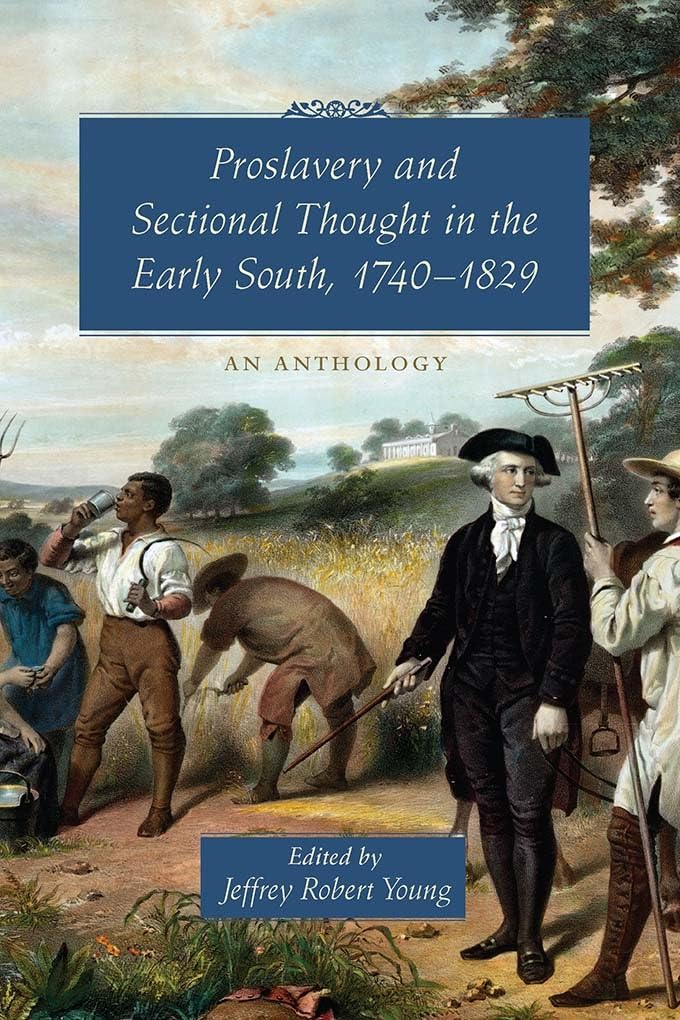
Thirteen treatises recall the history of slavery's defenders beginning in the colonial SouthIn Proslavery and Sectional Thought in the Early South, 17401829, Jeffrey Robert Young has assembled thirteen texts that reveal the development of proslavery perspectives across the colonial and early national South, from Maryland to Georgia. The tracts, lectures, sermons, and petitions in this volume demonstrate that defenses of human bondage had a history in southern thought that long predated the later antebellum era traditionally associated with the genesis of such positive defenses of slavery. Previous anthologies, notably Drew Gilpin Faust's The Ideology of Slavery, have made the perspectives of antebellum slavery's defenders widely available to scholars and students, but earlier proslavery thinkers have remained largely inaccessible to modern readers. Young's anthology offers a corrective.In his introduction to the volume, Young explores the relationship between proslavery thought, Christianity, racism, and sectionalism. He emphasizes the ways in which justifications for slavery were introduced into the American South by reformers who hoped to integrate the region into a transatlantic religious community. These early proponents of slavery tended to minimize racial distinctions between master and slave, and they hoped to minimize the cultural distance between southern plantations and English society.Only in the early nineteenth centurywith the rise of an increasingly influential abolition movementdid proslavery thinkers begin to justify their beliefs with approaches that underscored differences between North and South. Even then the theorists included in this anthology emphasized the extent to which southern slaveholders' claims to mastery were rooted in a Western moral tradition that reached back to antiquity.
⚠️ WARNING (California Proposition 65):
This product may contain chemicals known to the State of California to cause cancer, birth defects, or other reproductive harm.
For more information, please visit www.P65Warnings.ca.gov.