If you have any questions, you are always welcome to contact us. We'll get back to you as soon as possible, withing 24 hours on weekdays.
Customer service
All questions about your order, return and delivery must be sent to our customer service team by e-mail at yourstore@yourdomain.com
Sale & Press
If you are interested in selling our products, need more information about our brand or wish to make a collaboration, please contact us at press@yourdomain.com
Help
If you have any questions, you are always welcome to contact us. We'll get back to you as soon as possible, withing 24 hours on weekdays.
Customer service
All questions about your order, return and delivery must be sent to our customer service team by e-mail at yourstore@yourdomain.com
Sale & Press
If you are interested in selling our products, need more information about our brand or wish to make a collaboration, please contact us at press@yourdomain.com
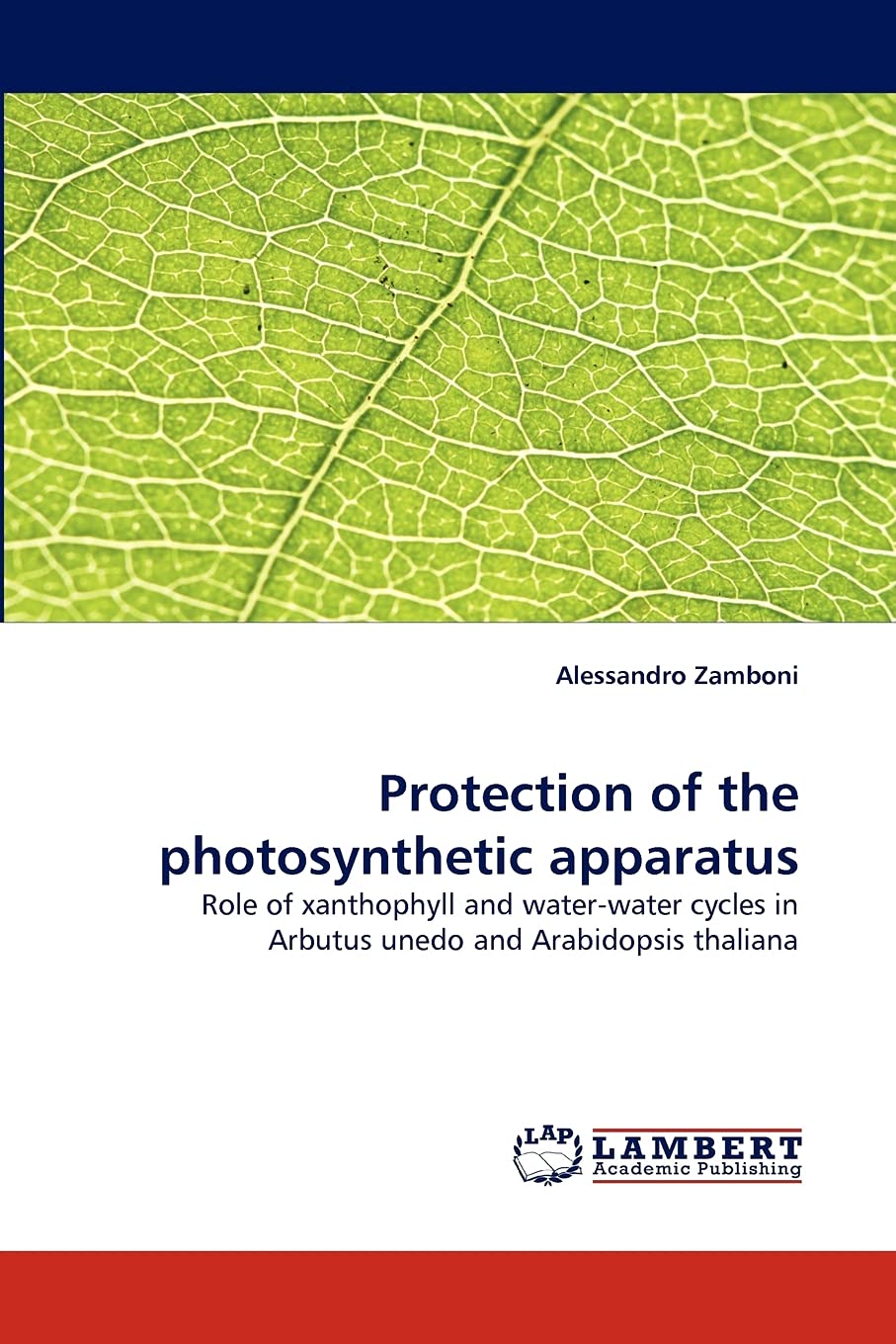
Photosynthetic organisms have sought out the delicate balance between efficient light harvesting under limited irradiance and regulated energy dissipation under excess irradiance. One of the protective mechanisms is the thermal energy dissipation through the xanthophyll cycle that may transform harmlessly the excitation energy into heat and thereby prevent the formation of damaging active oxygen species (AOS). Another important biological pathway is the chloroplast waterwater cycle. This mechanism is active in the scavenging of AOS, when there is over reduction of components of the photosynthetic electron transport chain. The control of the VDE gene and the variations of a set of physiological parameters, such as chlorophyll florescence and AOS content, have been investigated in response to excess of light and drought condition using Arabidopsis thaliana and Arbutus unedo.
⚠️ WARNING (California Proposition 65):
This product may contain chemicals known to the State of California to cause cancer,
birth defects, or other reproductive harm.
For MAP (Minimum Advertised Price) violations and Intellectual Property (IP) or Trademark concerns, please contact:
support@ergodebooks.com
⚠️ California Proposition 65 Warning: Some products sold on this website may expose you to chemicals known to the State of California to cause cancer, birth defects, or other reproductive harm. For more information, visit www.P65Warnings.ca.gov.