

Title
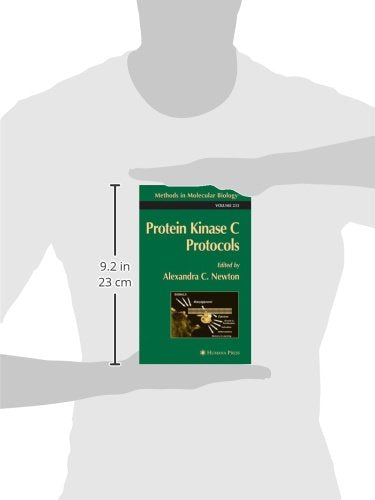
Protein Kinase C Protocols (Methods in Molecular Biology, 233),Used
Sold by Ergodebooks, an authorized reseller.
Returns accepted within 30 days | support@ergodebooks.com
Shipping Information
- Free Standard Shipping — United States only
- Processing Time: 3–5 business days
- Estimated Delivery: 6–10 business days after dispatch
- Double-boxed, fully insured & discreetly packaged
- Tracking number sent via email once dispatched
Returns & Refund
Returns accepted within 30 days of delivery.
Damaged or Defective Item
Free return shipping + replacement or full refund
Wrong Item Received
Free return shipping + replacement or full refund
Change of Mind
Return shipping at customer's expense · 25% restocking fee applies
Payment Option

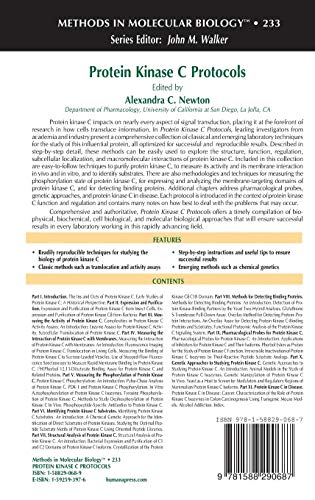
Since the discovery that protein kinase C (PKC) transduces the ab dance of signals that result in phospholipid hydrolysis, this enzyme has been at the forefront of research in signal transduction. Protein Kinase C Protocols covers fundamental methods for studying the structure, function, regulation, subcellular localization, and macromolecular interactions of PKC. Protein Kinase C Protocols is divided into 11 sections representing the major aspects of PKC regulation and function. Part I contains an introduction and a historical perspective on the discovery of PKC by Drs. Yasutomi Nishizuka and Ushio Kikkawa. Part II describes methods to purify PKC. Part III describes the standard methods for measuring PKC activity: its enzymatic activity and its stimulusdependent translocation from the cytosol to the membrane. Part IV describes methods for measuring the membrane interaction of PKC in vivo and in vitro. Part V provides methodologies and techniques for measuring the ph phorylation state of PKC, including a protocol for measuring the activity of PKCs upstream kinase, PDK1. Novel methods for identifying substrates are described in Part VI. Part VII presents protocols for expressing and analyzing the membrane targeting domains of PKC. Part VIII provides a comprehensive c pilation of methods used to identify binding partners for PKC. Part IX describes pharmacological probes used to study PKC. The book ends with a presentation of genetic approaches to study PKC (Part X) and a discussion of approaches used to study PKC in disease (Part XI).
⚠️ WARNING (California Proposition 65):
This product may contain chemicals known to the State of California to cause cancer, birth defects, or other reproductive harm.
For more information, please visit www.P65Warnings.ca.gov.