
Title
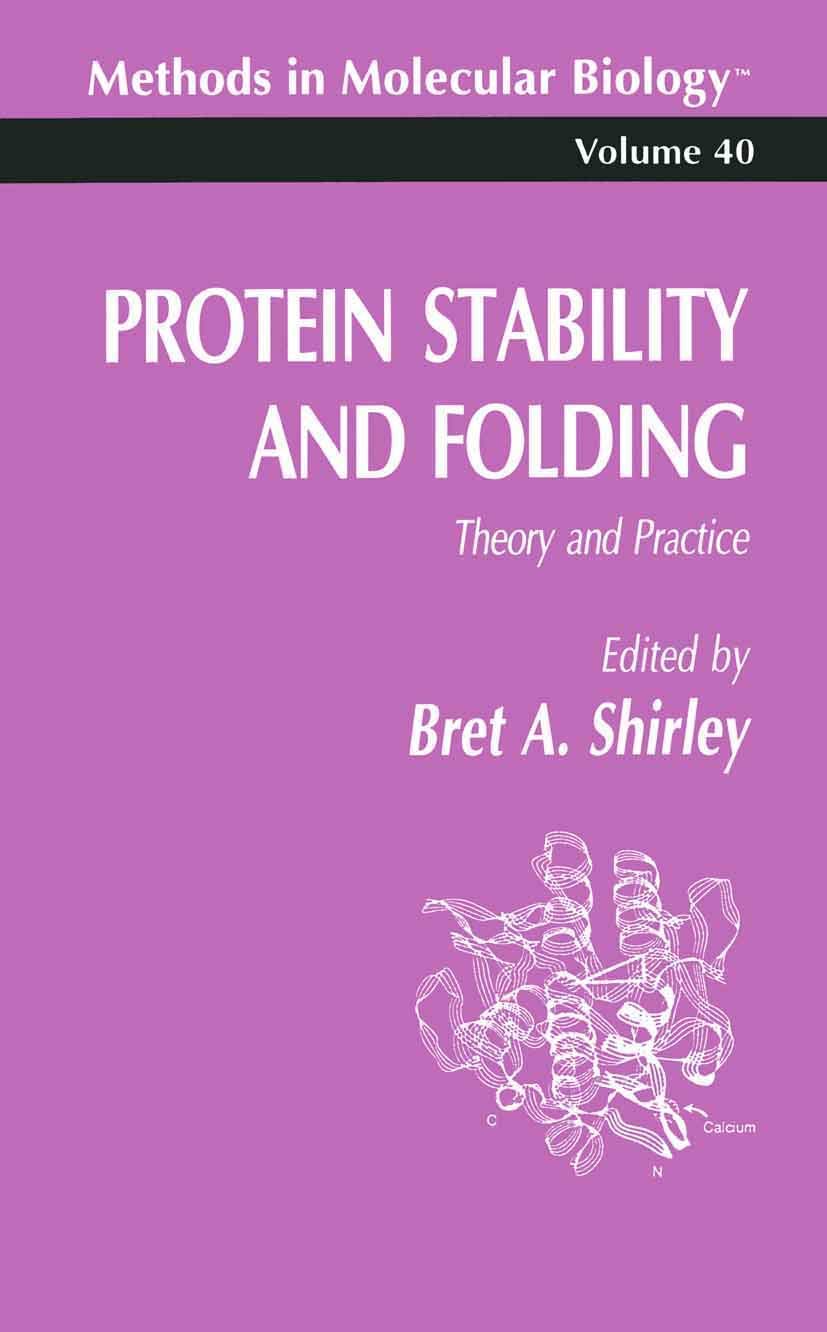
Protein Stability and Folding: Theory and Practice (Methods in Molecular Biology, 40),Used
Sold by Ergodebooks, an authorized reseller.
Returns accepted within 30 days | support@ergodebooks.com
Shipping Information
- Free Standard Shipping — United States only
- Processing Time: 3–5 business days
- Estimated Delivery: 6–10 business days after dispatch
- Double-boxed, fully insured & discreetly packaged
- Tracking number sent via email once dispatched
Returns & Refund
Returns accepted within 30 days of delivery.
Damaged or Defective Item
Free return shipping + replacement or full refund
Wrong Item Received
Free return shipping + replacement or full refund
Change of Mind
Return shipping at customer's expense · 25% restocking fee applies
Payment Option

The intent of this work is to bring together in a single volume the techniques that are most widely used in the study of protein stability and protein folding. Over the last decade our understanding of how p teins fold and what makes the folded conformation stable has advanced rapidly. The development of recombinant DNA techniques has made possible the production of large quantities of virtually any protein, as well as the production of proteins with altered amino acid sequence. Improvements in instrumentation, and the development and refinement of new techniques for studying these recombinant proteins, has been central to the progress made in this field. To give the reader adequate background information about the s ject, the first two chapters of this book review two different, yet related, aspects of protein stability. The first chapter presents a review of our current understanding of the forces involved in determining the conf mational stability of proteins as well as their threedimensional folds. The second chapter deals with the chemical stability of proteins and the pathways by which their covalent structure can degrade. The remainder of the book is devoted to techniques used in the study of these two major areas of protein stability, as well as several areas of active research. Although some techniques, such as Xray crystallography and mass spectroscopy, are used in the study of protein stability, they are beyond the scope of this book and will not be covered extensively.
⚠️ WARNING (California Proposition 65):
This product may contain chemicals known to the State of California to cause cancer, birth defects, or other reproductive harm.
For more information, please visit www.P65Warnings.ca.gov.