If you have any questions, you are always welcome to contact us. We'll get back to you as soon as possible, withing 24 hours on weekdays.
Customer service
All questions about your order, return and delivery must be sent to our customer service team by e-mail at yourstore@yourdomain.com
Sale & Press
If you are interested in selling our products, need more information about our brand or wish to make a collaboration, please contact us at press@yourdomain.com
Help
If you have any questions, you are always welcome to contact us. We'll get back to you as soon as possible, withing 24 hours on weekdays.
Customer service
All questions about your order, return and delivery must be sent to our customer service team by e-mail at yourstore@yourdomain.com
Sale & Press
If you are interested in selling our products, need more information about our brand or wish to make a collaboration, please contact us at press@yourdomain.com
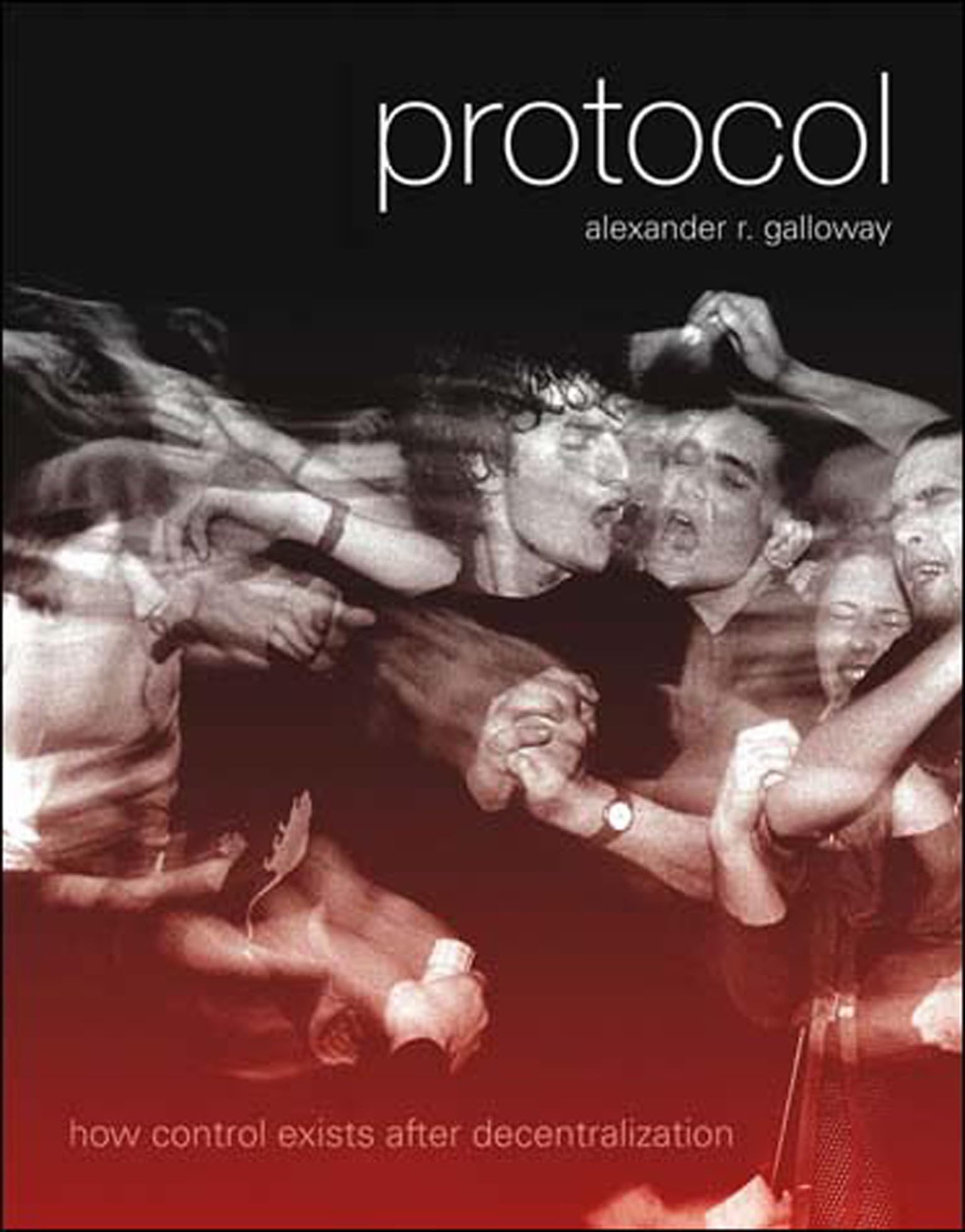
How Control Exists after DecentralizationIs the Internet a vast arena of unrestricted communication and freely exchanged information or a regulated, highly structured virtual bureaucracy? In Protocol, Alexander Galloway argues that the founding principle of the Net is control, not freedom, and that the controlling power lies in the technical protocols that make network connections (and disconnections) possible. He does this by treating the computer as a textual medium that is based on a technological language, code. Code, he argues, can be subject to the same kind of cultural and literary analysis as any natural language; computer languages have their own syntax, grammar, communities, and cultures. Instead of relying on established theoretical approaches, Galloway finds a new way to write about digital media, drawing on his backgrounds in computer programming and critical theory. 'Disciplinehopping is a necessity when it comes to complicated sociotechnical topics like protocol,' he writes in the preface.Galloway begins by examining the types of protocols that exist, including TCP/IP, DNS, and HTML. He then looks at examples of resistance and subversionhackers, viruses, cyberfeminism, Internet artwhich he views as emblematic of the larger transformations now taking place within digital culture. Written for a nontechnical audience, Protocol serves as a necessary counterpoint to the wildly utopian visions of the Net that were so widespread in earlier days.
⚠️ WARNING (California Proposition 65):
This product may contain chemicals known to the State of California to cause cancer,
birth defects, or other reproductive harm.
For MAP (Minimum Advertised Price) violations and Intellectual Property (IP) or Trademark concerns, please contact:
support@ergodebooks.com
⚠️ California Proposition 65 Warning: Some products sold on this website may expose you to chemicals known to the State of California to cause cancer, birth defects, or other reproductive harm. For more information, visit www.P65Warnings.ca.gov.