
Title
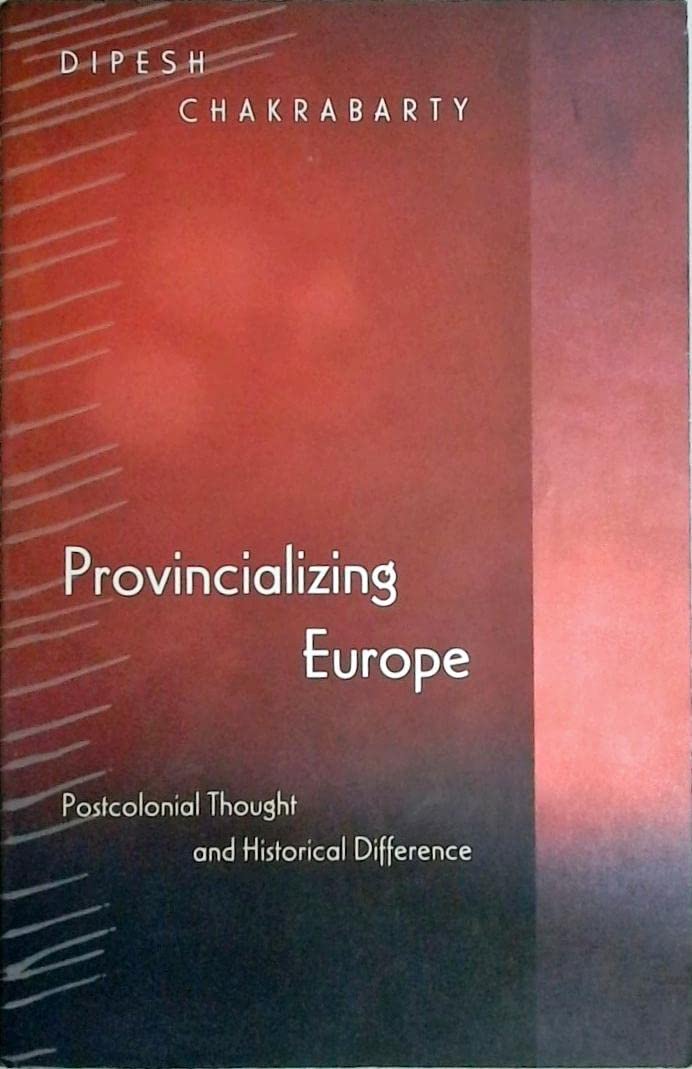
Provincializing Europe: Postcolonial Thought And Historical Difference,Used
Sold by Ergodebooks, an authorized reseller.
Returns accepted within 30 days | support@ergodebooks.com
Shipping Information
- Free Standard Shipping — United States only
- Processing Time: 3–5 business days
- Estimated Delivery: 6–10 business days after dispatch
- Double-boxed, fully insured & discreetly packaged
- Tracking number sent via email once dispatched
Returns & Refund
Returns accepted within 30 days of delivery.
Damaged or Defective Item
Free return shipping + replacement or full refund
Wrong Item Received
Free return shipping + replacement or full refund
Change of Mind
Return shipping at customer's expense · 25% restocking fee applies
Payment Option

Can European Thought Be Dislodged From The Center Of The Practice Of History In A Noneuropean Place? What Problems Arise When We Translate Cultural Practices Into The Categories Of Social Science? Provincializing Europe Is One Of The First Booklength Treatments On How Postcolonial Thinking Impacts On The Social Sciences. This Book Explores, Through A Series Of Linked Essays, The Problems Of Thought That Present Themselves When We Think Of A Place Such As India Through The Categories Of Modern, European Social Science And, In Particular, History.Provincializing Europe Is A Sustained Conversation Between Historical Thinking And Postcolonial Perspectives. It Addresses The Mythical Figure Of Europe That Is Often Taken To Be The Original Site Of The Modern In Many Histories Of Capitalist Transition In Nonwestern Countries. This Imaginary Europe, Chakrabarty Argues, Is Built Right Into The Social Sciences. The Very Idea Of Historicizing Carries With It Some Peculiarly European Assumptions About Disenchanted Space, Secular Time, And Human Sovereignty. Measured Against Such Mythical Standards, Capitalist Transition In The Third World Has Often Seemed Either Incomplete Or Lacking. Chakrabarty Finds That 'Nativism,' However, Is No Answer To Eurocentrism, Because The Universals Propounded By European Enlightenment Remain Indispensable To Any Social Critique That Seeks To Address Issues Of Social Justice And Equity. Provincializing Europe Proposes That Every Case Of Transition To Capitalism Is A Case Of Translation As Wella Translation Of Existing Worlds And Their Thoughtcategories Into The Categories And Selfunderstandings Of Capitalist Modernity. Chakrabarty Demonstrates, Both Theoretically And With Examples From Colonial And Contemporary India, How Such Translational Histories May Be Thought And Written. Provincializing Europe Is Not A Project Of Shunning European Thought. It Is A Project Of Globalizing Such Thought By Exploring How It May Be Renewed Both For And From The Margins.
⚠️ WARNING (California Proposition 65):
This product may contain chemicals known to the State of California to cause cancer, birth defects, or other reproductive harm.
For more information, please visit www.P65Warnings.ca.gov.