
Title
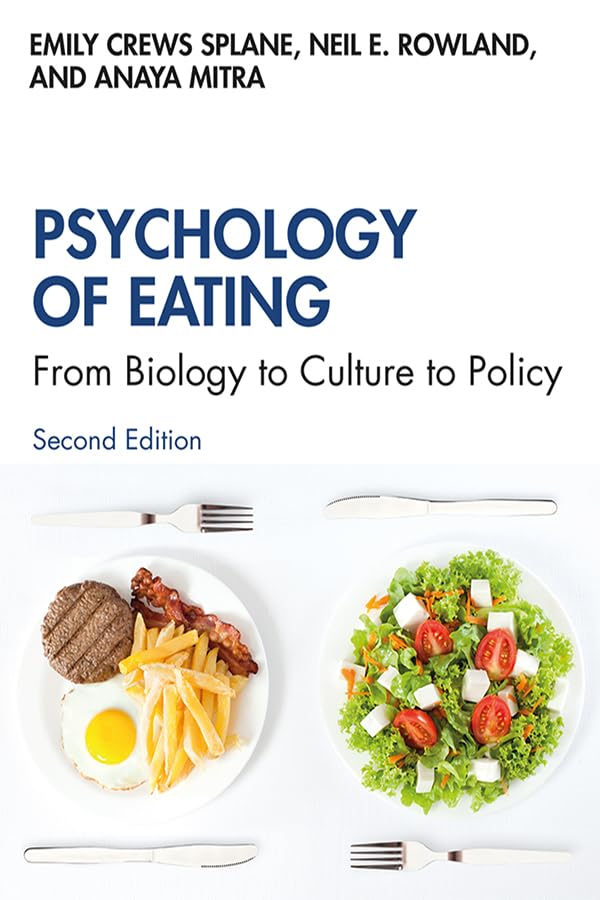
Psychology Of Eating: From Biology To Culture To Policy
Sold by Ergodebooks, an authorized reseller.
Returns accepted within 30 days | support@ergodebooks.com
Shipping Information
- Free Standard Shipping — United States only
- Processing Time: 3–5 business days
- Estimated Delivery: 6–10 business days after dispatch
- Double-boxed, fully insured & discreetly packaged
- Tracking number sent via email once dispatched
Returns & Refund
Returns accepted within 30 days of delivery.
Damaged or Defective Item
Free return shipping + replacement or full refund
Wrong Item Received
Free return shipping + replacement or full refund
Change of Mind
Return shipping at customer's expense · 25% restocking fee applies
Payment Option

The Psychology Of Eating Is The Essential Multidisciplinary Introduction To The Psychology Of Eating, Looking At The Biological, Genetic, Developmental, And Social Determinants Of How Humans Find And Assimilate Food.Thoroughly Revised And Updated, The New Edition Brings Multifaceted Expertise To The Topic Of Normal And Dysfunctional Food Intake, Juxtaposing Normal Eating, Eating In Environments Of Food Scarcity, And The Phenomenon Of Abnormal Eating Prevalent In Many Modernday Developed Societies. Eating Disorders Are Not A Focus, But Also Emerge From, This Approach. Key Features Include:A New Expanded Section Considering The Roles Of Business And Government In Creating And Potentially Solving The Issue Of Abnormal Eatinglearning Objectives, Talking Points, And Endofchapter Glossarieschapterbychapter Selfassessment Questions.With Questions Of Food Production, Food Choice, And Environmental Sustainability Becoming More Critical In An Increasingly Populated World, This Is Crucial Reading For Undergraduate Courses In Psychology And Other Disciplines With A Holistic And Critical Thinking Approach To The Psychology Of Food Intake.
⚠️ WARNING (California Proposition 65):
This product may contain chemicals known to the State of California to cause cancer, birth defects, or other reproductive harm.
For more information, please visit www.P65Warnings.ca.gov.
- Q: How many pages does this book have? A: This book has two hundred fifty-two pages. It's a comprehensive guide exploring the psychology of eating.
- Q: What is the binding type of this book? A: The binding type is paperback. This makes it lightweight and easy to carry.
- Q: What are the dimensions of this book? A: The dimensions are seven point zero one inches in length, zero point five seven inches in width, and ten inches in height. These dimensions make it a convenient size for reading.
- Q: Who is the author of this book? A: The author is Emily Crews Splane. She combines expertise from various disciplines in the field of psychology.
- Q: What is the main focus of this book? A: The main focus is the psychology of eating. It examines biological, genetic, and social factors influencing food intake.
- Q: Is this book suitable for undergraduate courses? A: Yes, it is suitable for undergraduate courses. It offers a multi-disciplinary approach to the psychology of food.
- Q: How does this book address eating disorders? A: The book does not focus on eating disorders specifically. However, it discusses factors that lead to abnormal eating patterns.
- Q: What kind of learning aids does this book include? A: The book includes learning objectives, talking points, and end-of-chapter glossaries. These tools help enhance understanding of the material.
- Q: Are there self-assessment questions in this book? A: Yes, there are chapter-by-chapter self-assessment questions. These help reinforce the concepts discussed.
- Q: What is the publisher of this book? A: The publisher is Routledge. They are known for their academic and professional publications.
- Q: Is this book a good resource for understanding food production issues? A: Yes, it addresses food production and choice issues. This is increasingly relevant in today's context of sustainability.
- Q: Does this book provide insights into government roles in eating habits? A: Yes, it features an expanded section on the roles of business and government. This includes their impact on eating behaviors.
- Q: Is this book appropriate for a general audience? A: Yes, it's appropriate for a general audience interested in psychology and food. It presents complex ideas in an accessible manner.
- Q: How does this book relate biology to eating habits? A: The book explores biological determinants of eating. It discusses how genetics and development influence food preferences.
- Q: Can this book help with critical thinking about food intake? A: Yes, it encourages critical thinking about food intake. The multi-faceted approach promotes a deeper understanding of eating behaviors.