
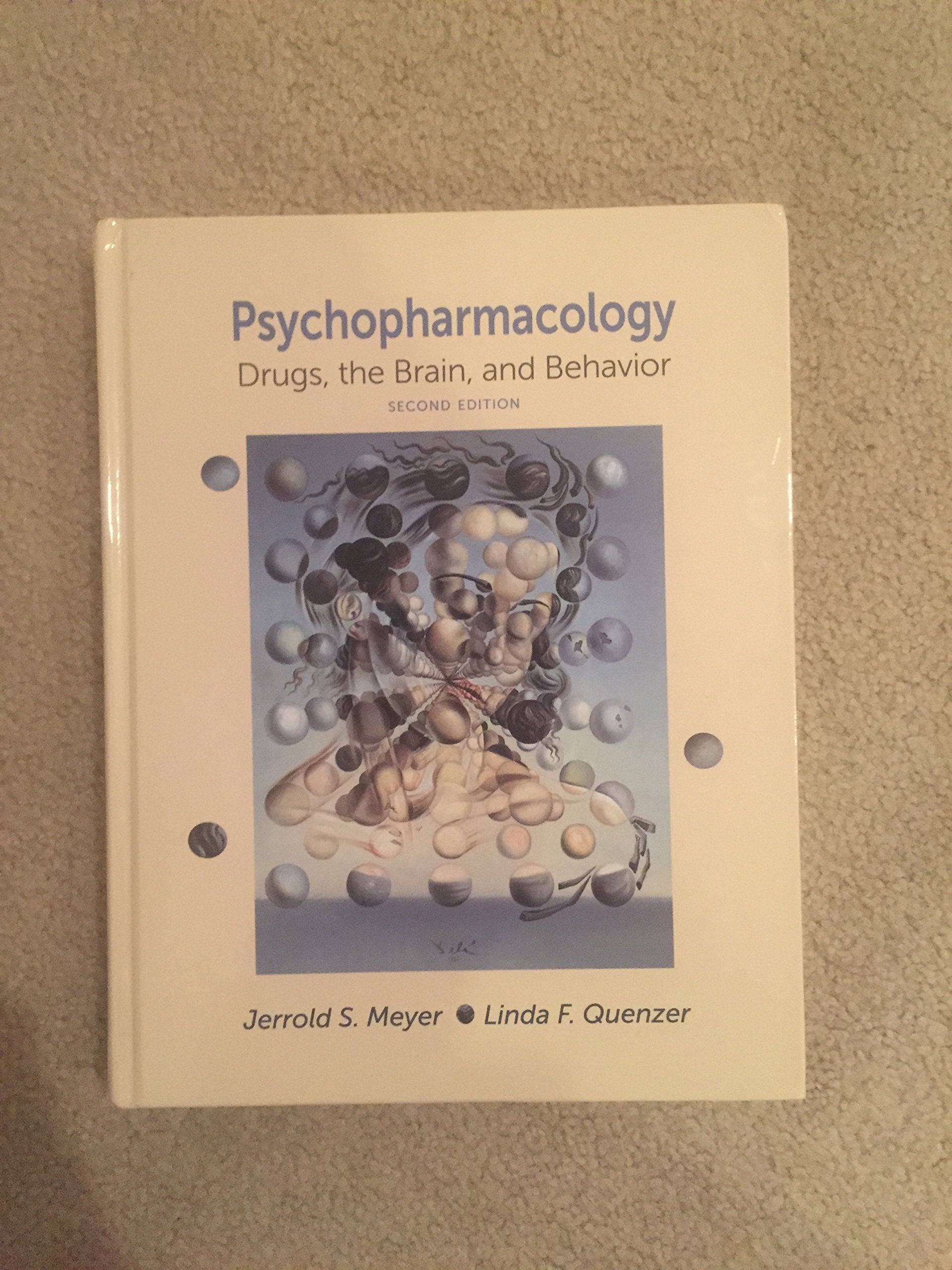
Title

Psychopharmacology: Drugs, The Brain, And Behavior,Used
Sold by Ergodebooks, an authorized reseller.
Returns accepted within 30 days | support@ergodebooks.com
Shipping Information
- Free Standard Shipping — United States only
- Processing Time: 3–5 business days
- Estimated Delivery: 6–10 business days after dispatch
- Double-boxed, fully insured & discreetly packaged
- Tracking number sent via email once dispatched
Returns & Refund
Returns accepted within 30 days of delivery.
Damaged or Defective Item
Free return shipping + replacement or full refund
Wrong Item Received
Free return shipping + replacement or full refund
Change of Mind
Return shipping at customer's expense · 25% restocking fee applies
Payment Option

The First Edition Of Psychopharmacology: Drugs, The Brain, And Behavior, Published In 2004, Was Unique In Its Breadth Of Coverage Ranging From Historical Accounts Of Drug Use To Clinical And Preclinical Behavioral Studies To The Latest Research On Drug Effects In Transgenic Mouse Models. Now Extensively Updated, The New Second Edition Features:*A New And Timely Discussion Of Emerging Substances Of Abuse Such As Salvia Divinorum, 'Spice' Or 'K2,' And 'Bath Salts'*Presentation Of Key Biological Concepts Such As Epigenetics To Help Students Understand Current Ideas About How Mental Illnesses Arise And How Drugs Act On The Brain To Treat These Illnesses*Two New Chapters That Provide Detailed Information On Various Neurodegenerative Disorders And The Effects Of Neurotoxicants And Endocrine Disruptors On Brain Function And Behavior*A Student Companion Website That Contains Outlines, Flashcards And Key Terms, Select Animations, And Web Boxes For Further Exploration*An Instructor'S Resource Library That Contains All Textbook Figures And Tables, Lecture Powerpoints, And A Test Bank.Student Engagement With The Material Is Fostered By Opening Each Chapter With A Relevant Vignette And By Providing Breakout Boxes Presenting Novel And, In Some Cases, Controversial Topics For Special Discussion. Box Themes Include History Of Psychopharmacology, Pharmacology In Action, Clinical Applications, And The Cutting Edge. The Book Is Lavishly Illustrated With Full Color Photographs And Line Art Depicting Important Concepts And Experimental Data.Psychopharmacology: Drugs, The Brain, And Behavior, Second Edition Is Appropriate For Undergraduate Or Beginning Level Graduate Courses In Psychopharmacology Or Drugs And Behavior That Emphasize Relationships Between The Behavioral Effects Of Psychoactive Drugs And Their Mechanisms Of Action.Resourcesfor Studentsnew For The Second Edition, The Psychopharmacology Companion Website Includes A Variety Of Resources To Help Students Learn And Review The Material Presented In The Textbook, And To Expand The Coverage Of The Textbook. The Site Includes The Following:*Chapter Outlines*Animations: Detailed, Narrated Animations Of Some Of The Key Complex Processes Described In The Textbook*Web Boxes Presenting Novel Or Cutting Edge Topics For Special Discussion*Web Links: A Collection Of Suggested Websites Related To Each Chapter*Flashcards & Key Terms: A Great Way For Students To Learn And Review The Key Terminology Introduced In Each Chapterfor Instructorsavailable To Qualified Adopters Of The Textbook, Psychopharmacology'S Instructor'S Resource Library Provides Instructors With A Range Of Resources To Help Them Prepare Their Lectures And Assess Their Students. The Irl Includes The Following:*Textbook Figures & Tables: All Of The Figures (Art And Photos) And Tables From The Textbook Are Provided Both As High Resolution And Low Resolution Jpeg Images.*Powerpoint Presentations: Two Presentations Are Provided For Each Chapter Of The Textbook:All Figures And Tables From The Chapter, Ready To Insert Into Custom Presentationsa Complete Lecture Presentation That Includes Comprehensive Lecture Notes And Selected Figures*Test Bank (See Below For Details)*Computerized Test Bankincluded In The Instructor'S Resource Library, The Psychopharmacology Test Bank Includes 50 Test Questions Per Chapter, Consisting Of Approximately Forty Multiple Choice, And Ten Short Answer. The Questions Have Been Designed To Provide Instructors With A Good Selection Of Factual And Conceptual Questions, At A Range Of Difficulty Levels. The Test Bank Is Provided As Microsoft Word Files.In Addition To The Microsoft Word Version Of The Test Bank, All Questions Are Available In Wimba'S Diploma Test Creation Software (Software Included). Diploma Makes It Easy To Create Quizzes And Exams Using Any Combination Of Publisher Provided Questions And Your Own Questions, And To Print Or Publish Your Exams For Online Use.
⚠️ WARNING (California Proposition 65):
This product may contain chemicals known to the State of California to cause cancer, birth defects, or other reproductive harm.
For more information, please visit www.P65Warnings.ca.gov.
- Q: How many pages does the book have? A: This book has seven hundred pages. It provides extensive coverage of psychopharmacology, including drug effects and behavioral studies.
- Q: What is the binding type of this book? A: The binding type is hardcover. This makes it durable and suitable for frequent use in academic settings.
- Q: What are the dimensions of the book? A: The dimensions are eleven point one inches in length, one point eighteen inches in width, and eight point seven inches in height. These sizes make it easy to handle and store.
- Q: Who is the author of this book? A: The author is Jerrold S. Meyer. He is known for his expertise in psychopharmacology and behavioral neuroscience.
- Q: Is this book suitable for undergraduate students? A: Yes, this book is appropriate for undergraduate or beginning level graduate courses. It emphasizes the relationship between psychoactive drugs and behavior.
- Q: How do I access the Companion Website for this book? A: You can access the Companion Website through the link provided in the textbook. It offers useful resources like outlines and flashcards to enhance learning.
- Q: What resources are available for instructors? A: Instructors have access to a Resource Library containing figures, lecture PowerPoints, and a test bank. These resources support lecture preparation and student assessment.
- Q: Can this book help with understanding drug effects in mental illness? A: Yes, it provides key biological concepts and discussions on how drugs act on the brain to treat mental illnesses. This includes insights into epigenetics.
- Q: Does this book cover emerging substances of abuse? A: Yes, it features discussions on emerging substances like Salvia divinorum and 'bath salts.' These timely topics are crucial for understanding current drug trends.
- Q: How should I keep this book in good condition? A: Store the book upright in a dry place to prevent damage. Avoid exposing it to extreme temperatures or moisture to maintain its quality.
- Q: What if I receive a damaged copy of this book? A: If you receive a damaged copy, contact the seller for a return or exchange. Most sellers have policies in place to handle such issues.
- Q: Is this book appropriate for beginners in psychopharmacology? A: Yes, the content is designed for beginners. It breaks down complex concepts into understandable sections, making it accessible for new learners.
- Q: How can I use the flashcards provided on the Companion Website? A: You can use the flashcards for reviewing key terms and concepts introduced in each chapter. They are a great study aid for mastering the material.
- Q: Are there any animations available on the Companion Website? A: Yes, detailed, narrated animations are available. They help explain complex processes discussed in the textbook.
- Q: Does the book include test questions for students? A: Yes, it includes a test bank with fifty questions per chapter. These questions vary in difficulty and cover both factual and conceptual knowledge.