If you have any questions, you are always welcome to contact us. We'll get back to you as soon as possible, withing 24 hours on weekdays.
Customer service
All questions about your order, return and delivery must be sent to our customer service team by e-mail at yourstore@yourdomain.com
Sale & Press
If you are interested in selling our products, need more information about our brand or wish to make a collaboration, please contact us at press@yourdomain.com
Help
If you have any questions, you are always welcome to contact us. We'll get back to you as soon as possible, withing 24 hours on weekdays.
Customer service
All questions about your order, return and delivery must be sent to our customer service team by e-mail at yourstore@yourdomain.com
Sale & Press
If you are interested in selling our products, need more information about our brand or wish to make a collaboration, please contact us at press@yourdomain.com
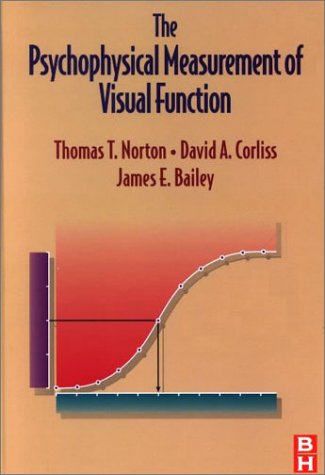
Many different mathematical and statistical methods are essential in crop modeling. They are necessary in the development, analysis and application of crop models. Up to now, however, there has been no single source where crop modelers could learn about these methods. Furthermore, these methods are often described in other contexts and their application to crop modeling is not always straightforward.This book aims at making a large range of relevant mathematical and statistical methods accessible to crop modelers. Each methodology chapter starts from basic principles and simple applications and builds gradually to stateoftheart methods. Crop models are used as examples, and practical advice on applying the methods to crop models is given.Working with Dynamic Crop Models is an essential learning and reference resource for students and researchers who want to understand and apply rigorous methods to crop models. This book will also be of value for other fields which use dynamic models of complex systems. Each chapter features an overview summarizing the chapter, declarative headings throughout for instant review, study guide questions, and a glossary. Explanations of the neural mechanisms underlying visual function help readers understand how vision is measured. It details the scientific basis of how visual function is measured and applies laboratory measurement to clinical procedures.
⚠️ WARNING (California Proposition 65):
This product may contain chemicals known to the State of California to cause cancer,
birth defects, or other reproductive harm.
For MAP (Minimum Advertised Price) violations and Intellectual Property (IP) or Trademark concerns, please contact:
support@ergodebooks.com
⚠️ California Proposition 65 Warning: Some products sold on this website may expose you to chemicals known to the State of California to cause cancer, birth defects, or other reproductive harm. For more information, visit www.P65Warnings.ca.gov.