If you have any questions, you are always welcome to contact us. We'll get back to you as soon as possible, withing 24 hours on weekdays.
Customer service
All questions about your order, return and delivery must be sent to our customer service team by e-mail at yourstore@yourdomain.com
Sale & Press
If you are interested in selling our products, need more information about our brand or wish to make a collaboration, please contact us at press@yourdomain.com
Help
If you have any questions, you are always welcome to contact us. We'll get back to you as soon as possible, withing 24 hours on weekdays.
Customer service
All questions about your order, return and delivery must be sent to our customer service team by e-mail at yourstore@yourdomain.com
Sale & Press
If you are interested in selling our products, need more information about our brand or wish to make a collaboration, please contact us at press@yourdomain.com
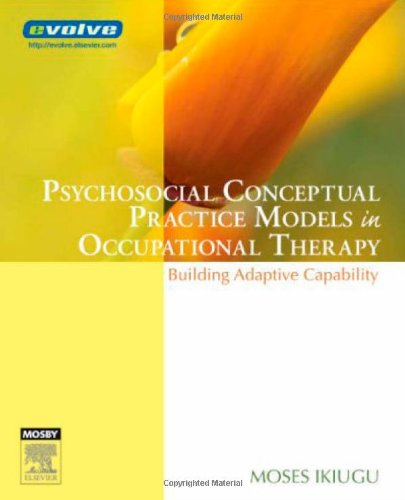
This book examines the occupational therapy paradigm (its focal viewpoint, core constructs, and values) as well as the role of complexity/chaos theory as a scientific framework for occupational therapy research and practice. Unlike other current OT texts, this book uses clinical case examples to illustrate application of proposed changes to make procedures consistent with the latest Occupational Therapy Practice Framework. The reader walks away with a clear grasp of the theoretical principles guiding his or her treatment interventions, the explanations behind those principles, and the applicable intervention for said techniques and procedures. An emphasis on clinicalreasoning skills, including information on different types of reasoning skills as well as the MAPP model of teaching helps the student and clinician translate theoretical principles into practice. The section on specific interventions addresses each of the conceptual practice models according to a consistent chapter template, which enables the reader to apply conceptual practice models in realworld contexts. Preview questions at the beginning of each chapter alert the reader to important concepts in the upcoming text. Critical analysis of the theoretical core provides suggested modifications to increase consistency with the new occupational therapy paradigm.
⚠️ WARNING (California Proposition 65):
This product may contain chemicals known to the State of California to cause cancer,
birth defects, or other reproductive harm.
For MAP (Minimum Advertised Price) violations and Intellectual Property (IP) or Trademark concerns, please contact:
support@ergodebooks.com
⚠️ California Proposition 65 Warning: Some products sold on this website may expose you to chemicals known to the State of California to cause cancer, birth defects, or other reproductive harm. For more information, visit www.P65Warnings.ca.gov.