
Title
Public Policy and Program Evaluation,Used
Sold by Ergodebooks, an authorized reseller.
Returns accepted within 30 days | support@ergodebooks.com
Shipping Information
- Free Standard Shipping — United States only
- Processing Time: 3–5 business days
- Estimated Delivery: 6–10 business days after dispatch
- Double-boxed, fully insured & discreetly packaged
- Tracking number sent via email once dispatched
Returns & Refund
Returns accepted within 30 days of delivery.
Damaged or Defective Item
Free return shipping + replacement or full refund
Wrong Item Received
Free return shipping + replacement or full refund
Change of Mind
Return shipping at customer's expense · 25% restocking fee applies
Payment Option

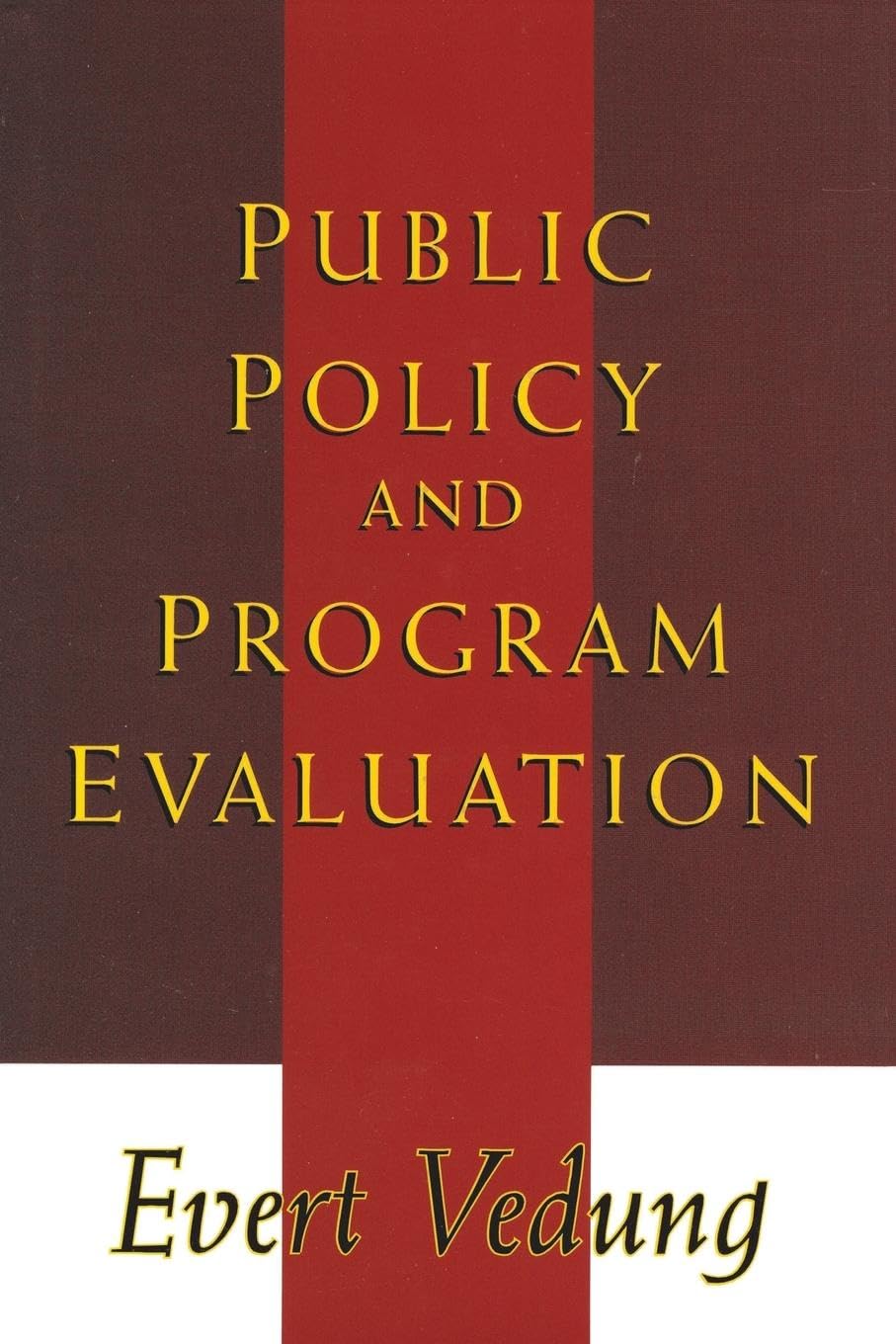
Evaluation is a controversial and littleunderstood strategy of public governance, control, and decision making. As early as classical antiquity, scholars were summoned to court to counsel kings. Public policy and program evaluation is a recent addition to the great chain of attempts to use the brainpower of scholars and scientists to further the interests of the state. Evaluation scholars are asked to provide retrospective assessments of the implementation, output, and outcome of government measures in order to effect deeper understanding and wellgrounded decisions on the part of those in charge of government operations. Evaluation is the process of distinguishing the worthwhile from the worthless, the precious from the useless; evaluation implies looking backward in order to be able to steer forward better.Written from a political science perspective, Public Policy and Program Evaluation provides an overview of the possibilities and limits of public sector evaluation. Evert Vedung examines evaluation as a mechanism for monitoring, systematizing, and grading government activities and their results so that public officials, in their futureoriented work, will be able to act as responsibly, creatively, and efficiently as possible. Topics discussed include: 'Evaluation, Rationality, and Theories of Public Management'; 'Models of Evaluation'; 'Internal or External Evaluation'; 'Impact Assessment as Tryout and Social Experimentation'; 'Process Evaluation and Implementation Theory'; 'The EightProblems Approach to Evaluation'; and 'Uses and Users of Evaluation.'All evaluation rests upon the idea that perceptions, opinions, intentions, judgmentsin short, everything concerned with the world of human consciousnessplay such interesting roles in political and administrative action that their functions are worth investigating. Through experience, humans may learn from past actions. The interventions of the modern state are so extensive, their execution so complicated, and their potential consequences so farreaching that science and social research are needed to monitor operations and establish impacts. As an excellent Introduction to the field of policy evaluation, Public Policy and Program Evaluation will be a valuable resource for students of public administration, public policy, political science, education, and sociology.
⚠️ WARNING (California Proposition 65):
This product may contain chemicals known to the State of California to cause cancer, birth defects, or other reproductive harm.
For more information, please visit www.P65Warnings.ca.gov.