
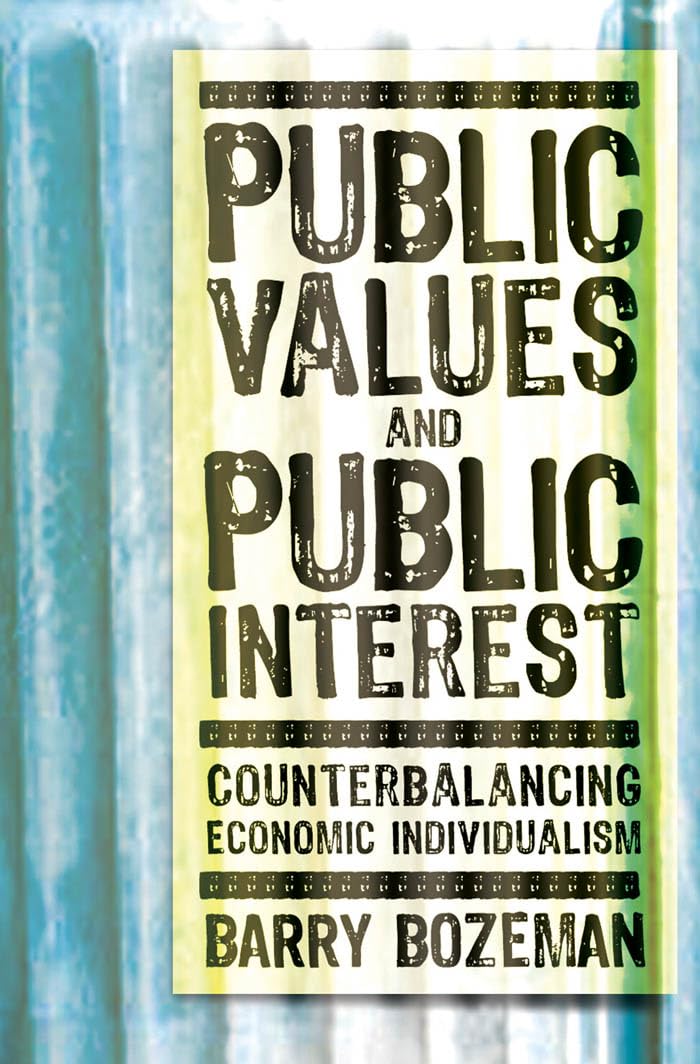
Title
Public Values And Public Interest: Counterbalancing Economic Individualism (Public Management And Change)
Sold by Ergodebooks, an authorized reseller.
Returns accepted within 30 days | support@ergodebooks.com
Shipping Information
- Free Standard Shipping — United States only
- Processing Time: 3–5 business days
- Estimated Delivery: 6–10 business days after dispatch
- Double-boxed, fully insured & discreetly packaged
- Tracking number sent via email once dispatched
Returns & Refund
Returns accepted within 30 days of delivery.
Damaged or Defective Item
Free return shipping + replacement or full refund
Wrong Item Received
Free return shipping + replacement or full refund
Change of Mind
Return shipping at customer's expense · 25% restocking fee applies
Payment Option

Economic Individualism And Marketbased Values Dominate Today'S Policymaking And Public Management Circles Often At The Expense Of The Common Good. In His New Book, Barry Bozeman Demonstrates The Continuing Need For Public Interest Theory In Government. Public Values And Public Interest Offers A Direct Theoretical Challenge To The Utility Of Economic Individualism, The Prevailing Political Theory In The Western World.The Book'S Arguments Are Steeped In A Practical And Practicable Theory That Advances Public Interest As A Viable And Important Measure In Any Analysis Of Policy Or Public Administration. According To Bozeman, Public Interest Theory Offers A Dynamic And Flexible Approach That Easily Adapts To Changing Situations And Balances Today'S Marketdriven Attitudes With The Concepts Of Common Good Advocated By Aristotle, Saint Thomas Aquinas, John Locke, And John Dewey.In Constructing The Case For Adopting A New Governmental Paradigm Based On What He Terms Managing Publicness, Bozeman Demonstrates Why Economic Indices Alone Fail To Adequately Value Social Choice In Many Cases. He Explores The Implications Of Privatization Of A Wide Array Of Governmental Services Among Them Social Security, Defense, Prisons, And Water Supplies. Bozeman Constructs Analyses From Both Perspectives In An Extended Study Of Genetically Modified Crops To Compare The Policy Outcomes Using Different Core Values And Questions The Public Value Of Engaging In The Practice Solely For The Sake Of Cheaper Food.Thoughtful, Challenging, And Timely, Public Values And Public Interest Shows How The Quest For Fairness Can Once Again Play A Full Part In Public Policy Debates And Public Administration.
⚠️ WARNING (California Proposition 65):
This product may contain chemicals known to the State of California to cause cancer, birth defects, or other reproductive harm.
For more information, please visit www.P65Warnings.ca.gov.
- Q: What is the main theme of 'Public Values and Public Interest'? A: The main theme of the book is the challenge to economic individualism in policymaking, advocating for public interest theory as a vital approach to public administration and policy analysis.
- Q: Who is the author of this book? A: The author of 'Public Values and Public Interest' is Barry Bozeman.
- Q: When was 'Public Values and Public Interest' published? A: The book was published on October 24, 2007.
- Q: What is the format of this book? A: This book is available in paperback format.
- Q: How many pages does 'Public Values and Public Interest' have? A: The book contains 224 pages.
- Q: What condition is the book in? A: The book is listed as a used book in good condition.
- Q: What topics does the book cover? A: The book covers topics such as the implications of privatization, public interest theory, and the comparison of policy outcomes based on different core values.
- Q: Is there a specific audience for this book? A: The book is aimed at policymakers, scholars, and students interested in public administration, public policy, and political theory.
- Q: Does the book consider historical perspectives? A: Yes, the book discusses concepts from historical figures such as Aristotle, Saint Thomas Aquinas, John Locke, and John Dewey.
- Q: What is the significance of 'managing publicness' as mentioned in the book? A: Managing publicness is proposed as a new governmental paradigm that seeks to balance market-driven attitudes with the common good.