
Title
Publicprivate Policy Partnerships (Mit Press)
Sold by Ergodebooks, an authorized reseller.
Returns accepted within 30 days | support@ergodebooks.com
Shipping Information
- Free Standard Shipping — United States only
- Processing Time: 3–5 business days
- Estimated Delivery: 6–10 business days after dispatch
- Double-boxed, fully insured & discreetly packaged
- Tracking number sent via email once dispatched
Returns & Refund
Returns accepted within 30 days of delivery.
Damaged or Defective Item
Free return shipping + replacement or full refund
Wrong Item Received
Free return shipping + replacement or full refund
Change of Mind
Return shipping at customer's expense · 25% restocking fee applies
Payment Option

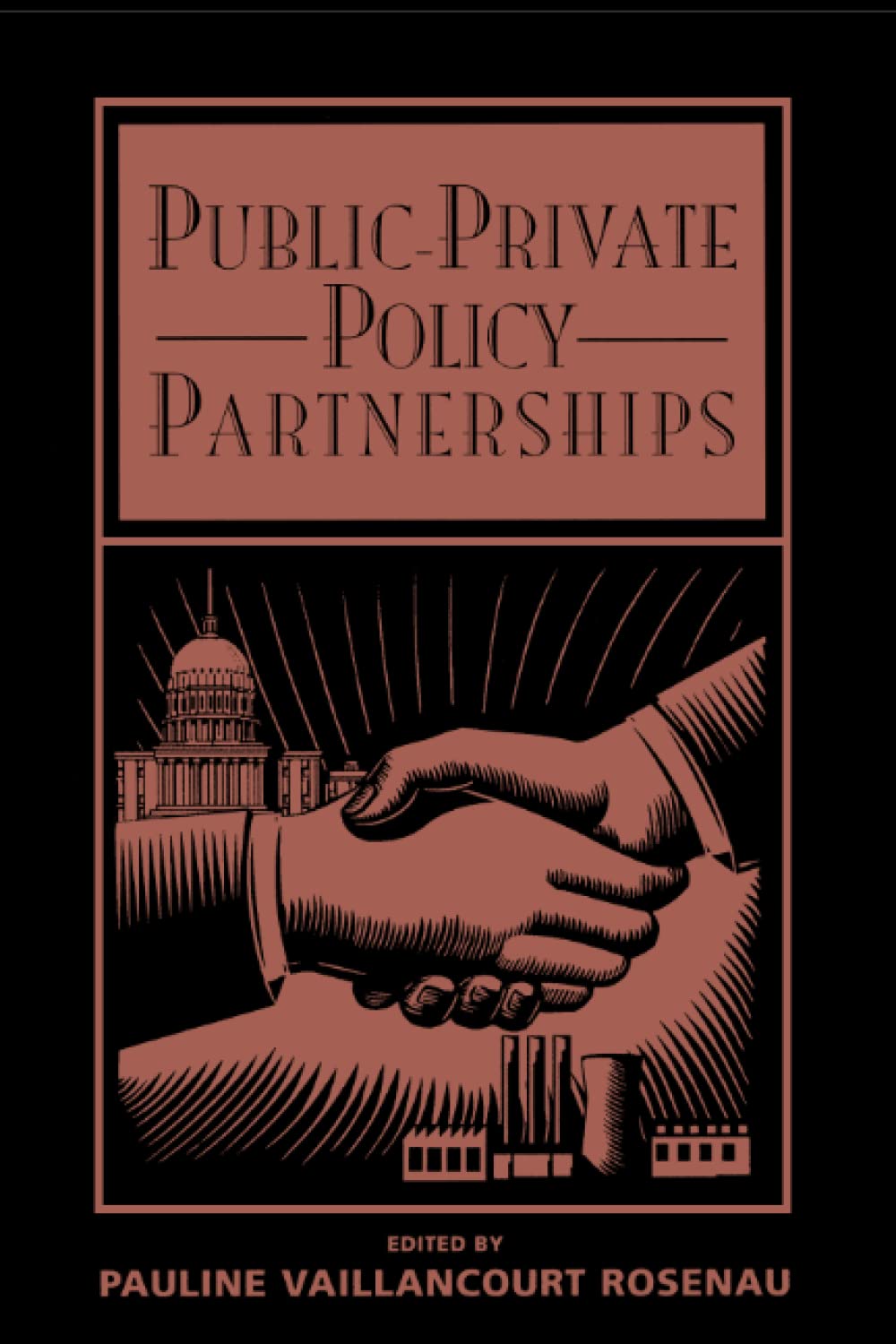
Partnerships between the public and private sectors to fulfill public functions are on the increase at every level of government. In the United States and Canada they currently operate in most policy areas, and in the U.S. trial programs are planned by the Internal Revenue Service, the Census Bureau, and the Social Security Administration. Partnerships represent the second generation of efforts to bring competitive market discipline to bear on government operations. Unlike the first generation of privatizing efforts, partnering involves sharing both responsibility and financial risk. In the best situations, the strengths of each sector maximize overall performance. In these cases, partnering institutionalizes collaborative arrangements in which the differences between the sectors become blurred. This is the first book to evaluate publicprivate partnerships in a broad range of policy areas. The chapters focus on education, health care and health policy, welfare, prisons, the criminal justice system, environmental policy, energy policy, technology research and development, and transportation. The contributors come from a number of fields, including political science, education, law, economics, and public health. They merge experiential and socialscientific findings to examine how partnerships perform, to identify the conditions in which they work best, and to determine when they might be expected to fail.ContributorsRonald J. Daniels, James A. Dunn, Jr., Sheldon Kamieniecki, Harry M. Levin, Stephen H. Linder, Nicholas P. Lovrich, Jr., Mark Carl Rom, Pauline Vaillancourt Rosenau, Walter A. Rosenbaum, Anne Larason Schneider, David Shafie, Julie Silvers, Michael S. Sparer, Joseph E. Stiglitz, Michael J. Trebilcock, Scott J. Wallsten
⚠️ WARNING (California Proposition 65):
This product may contain chemicals known to the State of California to cause cancer, birth defects, or other reproductive harm.
For more information, please visit www.P65Warnings.ca.gov.