If you have any questions, you are always welcome to contact us. We'll get back to you as soon as possible, withing 24 hours on weekdays.
Customer service
All questions about your order, return and delivery must be sent to our customer service team by e-mail at yourstore@yourdomain.com
Sale & Press
If you are interested in selling our products, need more information about our brand or wish to make a collaboration, please contact us at press@yourdomain.com
Help
If you have any questions, you are always welcome to contact us. We'll get back to you as soon as possible, withing 24 hours on weekdays.
Customer service
All questions about your order, return and delivery must be sent to our customer service team by e-mail at yourstore@yourdomain.com
Sale & Press
If you are interested in selling our products, need more information about our brand or wish to make a collaboration, please contact us at press@yourdomain.com
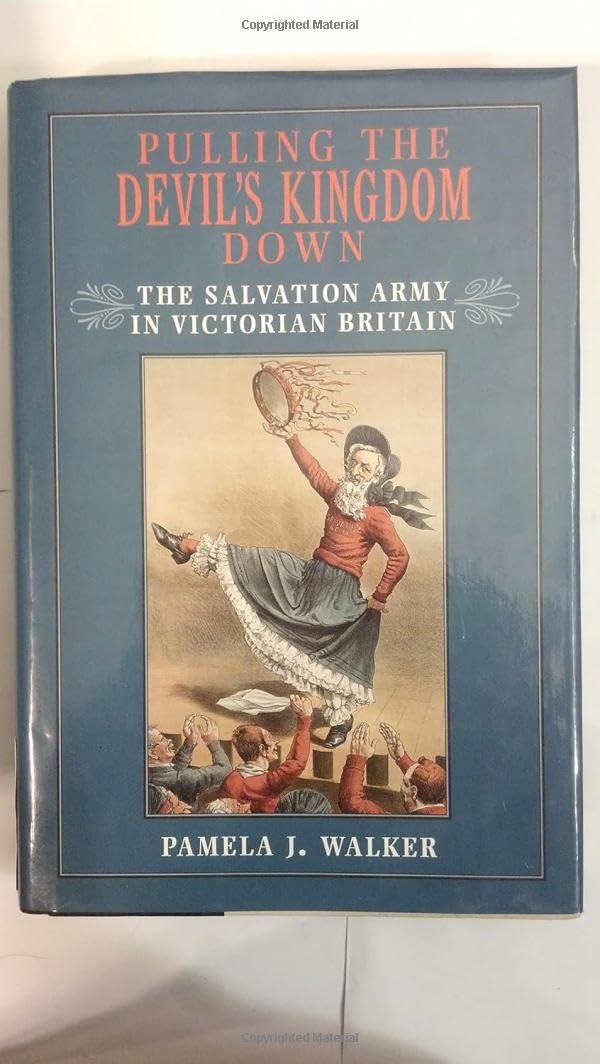
Those People In Uniforms Who Ring Bells And Raise Money For The Poor During The Holiday Season Belong To A Religious Movement That In 1865 Combined Early Feminism, Street Preaching, Holiness Theology, And Intentionally Outrageous Singing Into What Soon Became The Salvation Army. In Pulling The Devil'S Kingdom Down, Pamela Walker Emphasizes How Thoroughly The Army Entered Into Nineteenthcentury Urban Life. She Follows The Movement From Its Methodist Roots And East London Origins Through Its Struggles With The Established Denominations Of England, Problems With The Law And The Media, And Public Manifestations That Included Street Brawls With Workingclass Toughs.The Salvation Army Was A Neighborhood Religion, With A 'Battle Plan' Especially Suited To Urban Workingclass Geography And Cultural Life. The Ability To Use Popular Leisure Activities As Inspiration Was A Major Factor In The Army'S Success, Since Pubs, Music Halls, Sports, And Betting Were Regarded As Its Principal Rivals. Salvationist Women Claimed The 'Right To Preach' And Enjoyed Spiritual Authority And Public Visibility More Extensively Than In Virtually Any Other Religious Or Secular Organization. Opposition To The New Movement Was Equally Energetic And Took Many Forms, But Even As Contemporary Music Hall Performers Ridiculed The 'Hallelujah Lasses,' The Salvation Army Was Spreading Across Great Britain And The Continent, And On To North America. The Army Offered A Distinctive Response To The Dilemmas Facing Victorian Christians, In Particular The Relationship Between What Salvationists Believed And The Work They Did. Walker Fills In The Social, Cultural, And Religious Contexts That Make That Relationship Come To Life.
⚠️ WARNING (California Proposition 65):
This product may contain chemicals known to the State of California to cause cancer,
birth defects, or other reproductive harm.
For MAP (Minimum Advertised Price) violations and Intellectual Property (IP) or Trademark concerns, please contact:
support@ergodebooks.com
⚠️ California Proposition 65 Warning: Some products sold on this website may expose you to chemicals known to the State of California to cause cancer, birth defects, or other reproductive harm. For more information, visit www.P65Warnings.ca.gov.