
Title
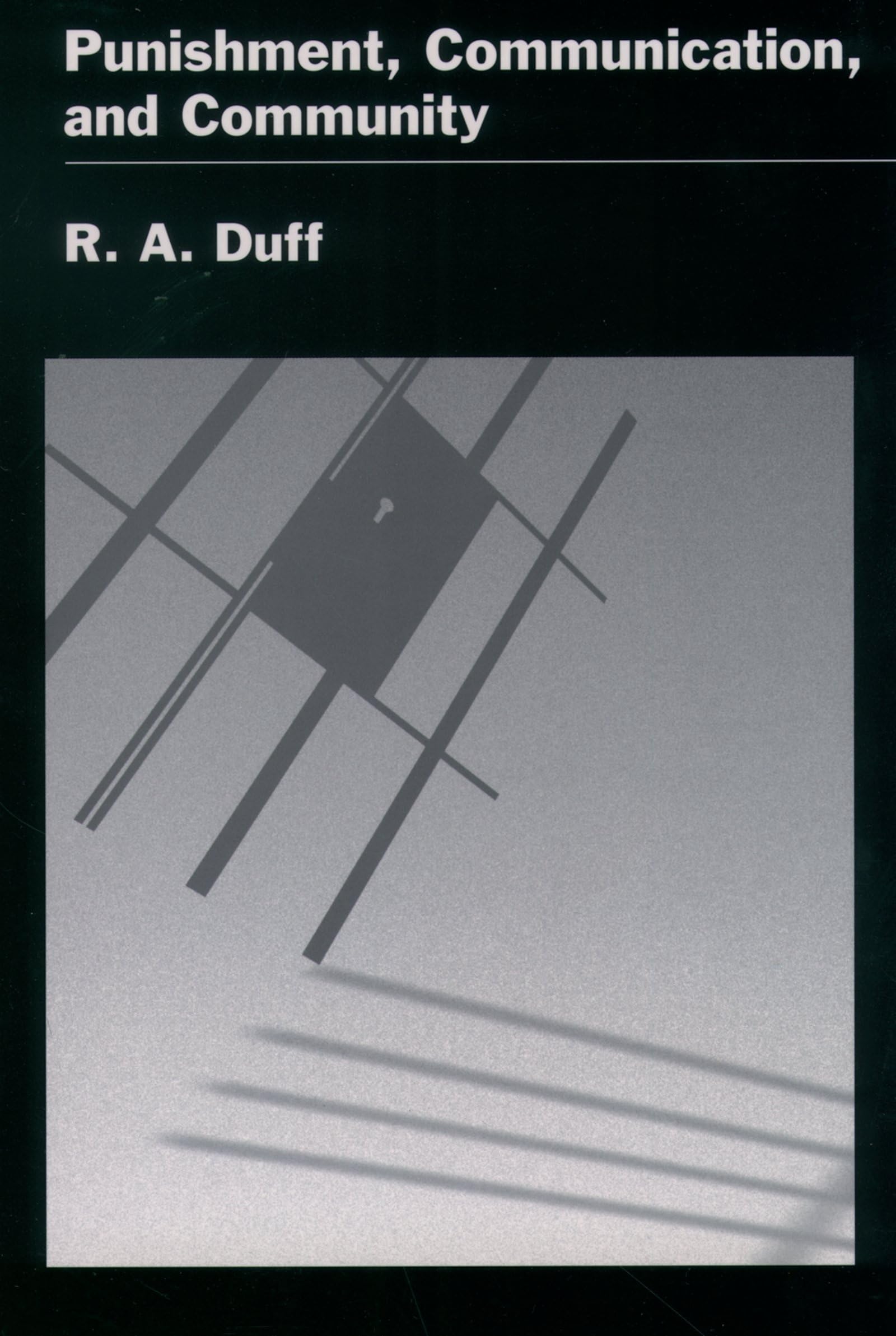
Punishment, Communication, and Community (Studies in Crime and Public Policy),Used
Sold by Ergodebooks, an authorized reseller.
Returns accepted within 30 days | support@ergodebooks.com
Shipping Information
- Free Standard Shipping — United States only
- Processing Time: 3–5 business days
- Estimated Delivery: 6–10 business days after dispatch
- Double-boxed, fully insured & discreetly packaged
- Tracking number sent via email once dispatched
Returns & Refund
Returns accepted within 30 days of delivery.
Damaged or Defective Item
Free return shipping + replacement or full refund
Wrong Item Received
Free return shipping + replacement or full refund
Change of Mind
Return shipping at customer's expense · 25% restocking fee applies
Payment Option

The question 'What can justify criminal punishment ?' becomes especially insistent at times, like our own, of penal crisis, when serious doubts are raised not only about the justice or efficacy of particular modes of punishment, but about the very legitimacy of the whole penal system. Recent theorizing about punishment offers a variety of answers to that questionanswers that try to make plausible sense of the idea that punishment is justified as being deserved for past crimes; answers that try to identify some beneficial consequences in terms of which punishment might be justified; as well as abolitionist answers telling us that we should seek to abolish, rather than to justify, criminal punishment.This book begins with a critical survey of recent trends in penal theory, but goes on to develop an original account (based on Duff's earlier Trials and Punishments) of criminal punishment as a mode of moral communication, aimed at inducing repentance, reform, and reconciliation through reparationan account that undercuts the traditional controversies between consequentialist and retributivist penal theories, and that shows how abolitionist concerns can properly be met by a system of communicative punishments. In developing this account, Duff articulates the 'liberal communitarian' conception of political society (and of the role of the criminal law) on which it depends; he discusses the meaning and role of different modes of punishment, showing how they can constitute appropriate modes of moral communication between political community and its citizens; and he identifies the essential preconditions for the justice of punishment as thus conceivedpreconditions whose nonsatisfaction makes our own system of criminal punishment morally problematic.Punishment, Communication, and Community offers no easy answers, but provides a rich and ambitious ideal of what criminal punishment could bean ideal of what criminal punishment cold beand ideal that challenges existing penal theories as well as our existing penal theories as well as our existing penal practices.
⚠️ WARNING (California Proposition 65):
This product may contain chemicals known to the State of California to cause cancer, birth defects, or other reproductive harm.
For more information, please visit www.P65Warnings.ca.gov.