If you have any questions, you are always welcome to contact us. We'll get back to you as soon as possible, withing 24 hours on weekdays.
Customer service
All questions about your order, return and delivery must be sent to our customer service team by e-mail at yourstore@yourdomain.com
Sale & Press
If you are interested in selling our products, need more information about our brand or wish to make a collaboration, please contact us at press@yourdomain.com
Help
If you have any questions, you are always welcome to contact us. We'll get back to you as soon as possible, withing 24 hours on weekdays.
Customer service
All questions about your order, return and delivery must be sent to our customer service team by e-mail at yourstore@yourdomain.com
Sale & Press
If you are interested in selling our products, need more information about our brand or wish to make a collaboration, please contact us at press@yourdomain.com
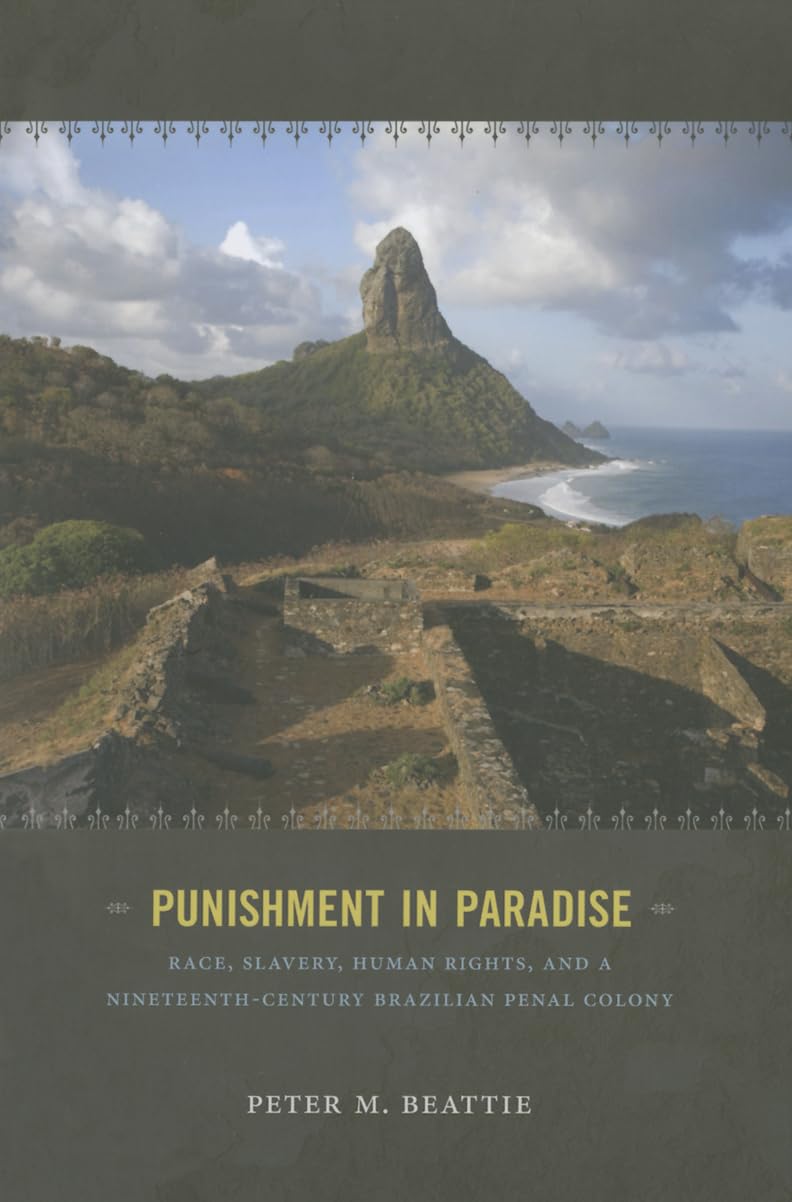
Throughout the nineteenth century the idyllic island of Fernando de Noronha, which lies two hundred miles off Brazil's northeastern coast, was home to Brazil's largest forced labor penal colony. In Punishment in Paradise Peter M. Beattie uses Noronha as a case study to understand nineteenthcentury Brazil's varied social and cultural values, especially in relation to justice, class, color, civil condition, human rights and labor. As Brazils slave population declined after 1850, the use of colonialera disciplinary practices at Noronhasuch as flogging and forced laborstoked anxieties about human rights and Brazils international image. Beattie contends that the treatment of slaves, convicts, and other social categories subject to coercive labor extraction were interconnected and that reforms that benefitted one of these categories made them harder to deny to others. In detailing Noronha's history and the end of slavery as part of an international expansion of human rights, Beattie places Brazil firmly in the purview of Atlantic history.
⚠️ WARNING (California Proposition 65):
This product may contain chemicals known to the State of California to cause cancer,
birth defects, or other reproductive harm.
For MAP (Minimum Advertised Price) violations and Intellectual Property (IP) or Trademark concerns, please contact:
support@ergodebooks.com
⚠️ California Proposition 65 Warning: Some products sold on this website may expose you to chemicals known to the State of California to cause cancer, birth defects, or other reproductive harm. For more information, visit www.P65Warnings.ca.gov.