
Title
Purely Functional Data Structures,Used
Sold by Ergodebooks, an authorized reseller.
Returns accepted within 30 days | support@ergodebooks.com
Shipping Information
- Free Standard Shipping — United States only
- Processing Time: 3–5 business days
- Estimated Delivery: 6–10 business days after dispatch
- Double-boxed, fully insured & discreetly packaged
- Tracking number sent via email once dispatched
Returns & Refund
Returns accepted within 30 days of delivery.
Damaged or Defective Item
Free return shipping + replacement or full refund
Wrong Item Received
Free return shipping + replacement or full refund
Change of Mind
Return shipping at customer's expense · 25% restocking fee applies
Payment Option

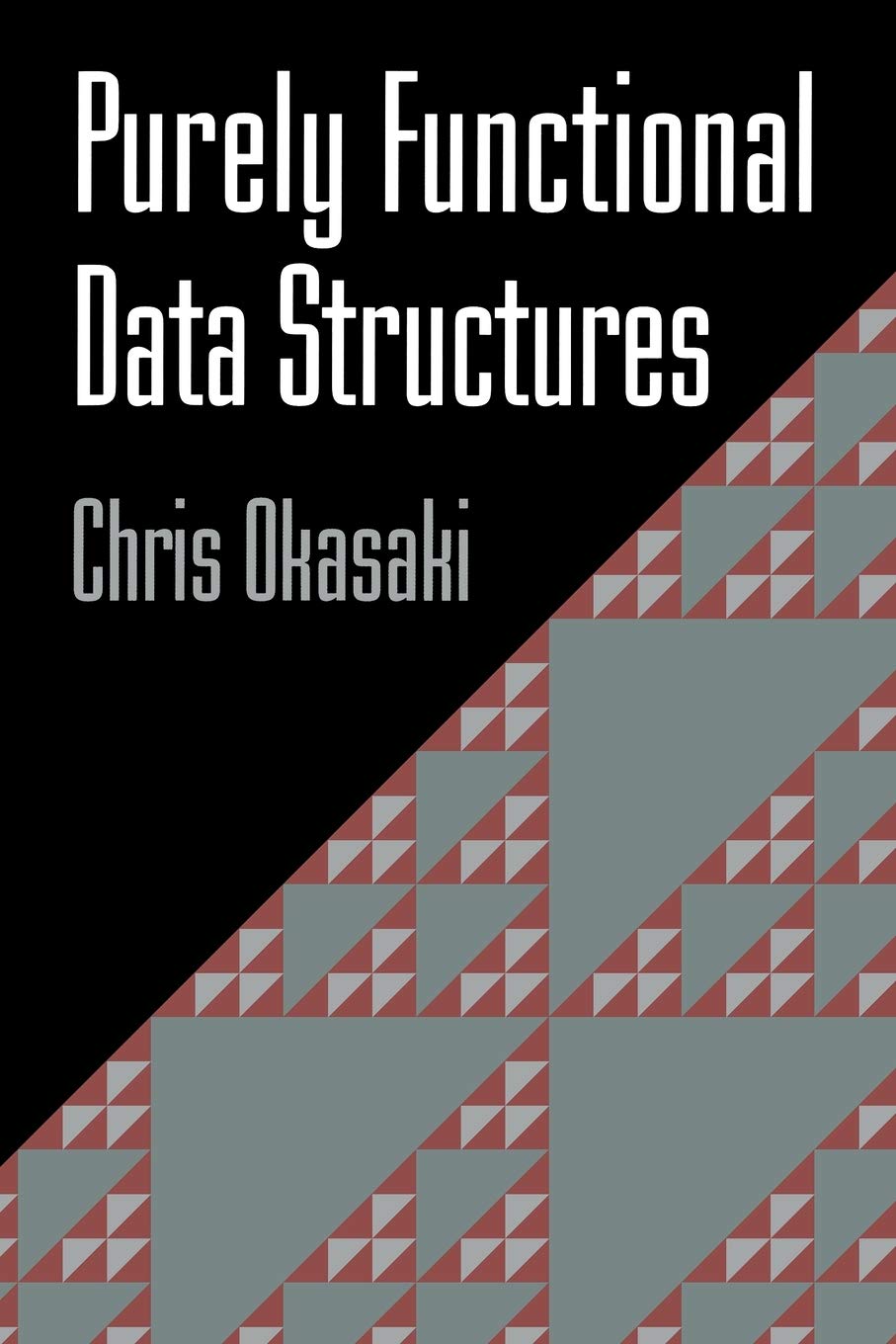
Most books on data structures assume an imperative language such as C or C++. However, data structures for these languages do not always translate well to functional languages such as Standard ML, Haskell, or Scheme. This book describes data structures from the point of view of functional languages, with examples, and presents design techniques that allow programmers to develop their own functional data structures. The author includes both classical data structures, such as redblack trees and binomial queues, and a host of new data structures developed exclusively for functional languages. All source code is given in Standard ML and Haskell, and most of the programs are easily adaptable to other functional languages. This handy reference for professional programmers working with functional languages can also be used as a tutorial or for selfstudy.
⚠️ WARNING (California Proposition 65):
This product may contain chemicals known to the State of California to cause cancer, birth defects, or other reproductive harm.
For more information, please visit www.P65Warnings.ca.gov.
- Q: How many pages does this book have? A: This book has two hundred thirty-two pages. It provides extensive information on data structures in functional programming.
- Q: What is the binding type of this book? A: The book is paperback bound. This makes it flexible and easy to handle for reading or studying.
- Q: What are the dimensions of this book? A: The book measures five point ninety-eight inches in length, zero point fifty-nine inches in width, and nine point zero two inches in height. These dimensions make it portable and convenient for readers.
- Q: Who is the author of this book? A: The author is Chris Okasaki. He is known for his expertise in functional programming and data structures.
- Q: What are the main topics covered in this book? A: The book covers data structures specifically for functional languages. It includes classical structures and new techniques.
- Q: What programming languages are used in the examples? A: The examples in the book are provided in Standard ML and Haskell. These languages are key to understanding functional programming concepts.
- Q: Is this book suitable for beginners? A: Yes, this book can be used as a tutorial or for self-study. It is designed to help readers understand functional data structures.
- Q: Can I use this book for self-study? A: Yes, it is suitable for self-study. The book provides clear explanations and examples that can enhance learning.
- Q: What level of programming knowledge do I need to understand this book? A: A basic understanding of programming concepts is recommended. Familiarity with functional programming will enhance comprehension.
- Q: How should I care for this book? A: To care for this book, keep it in a dry place and avoid exposing it to direct sunlight. This will help preserve its condition.
- Q: Is there a warranty for this book? A: Books typically do not come with a warranty. However, you can check the return policy where you purchase it.
- Q: What if this book arrives damaged? A: If the book arrives damaged, contact the seller for a replacement or return. Most sellers have policies for damaged goods.
- Q: How do I clean this book? A: To clean this book, gently wipe the cover with a soft, dry cloth. Avoid using liquids as they can damage the pages.
- Q: Is this book suitable for academic use? A: Yes, this book is suitable for academic use. It is a valuable resource for students studying functional programming.
- Q: Does this book include exercises or practice problems? A: The book does not explicitly mention exercises, but it provides examples that can be used for practice. Readers can implement the concepts discussed.