
Title
Putting Inequality in Context: Class, Public Opinion, and Representation in the United States,Used
Sold by Ergodebooks, an authorized reseller.
Returns accepted within 30 days | support@ergodebooks.com
Shipping Information
- Free Standard Shipping — United States only
- Processing Time: 3–5 business days
- Estimated Delivery: 6–10 business days after dispatch
- Double-boxed, fully insured & discreetly packaged
- Tracking number sent via email once dispatched
Returns & Refund
Returns accepted within 30 days of delivery.
Damaged or Defective Item
Free return shipping + replacement or full refund
Wrong Item Received
Free return shipping + replacement or full refund
Change of Mind
Return shipping at customer's expense · 25% restocking fee applies
Payment Option

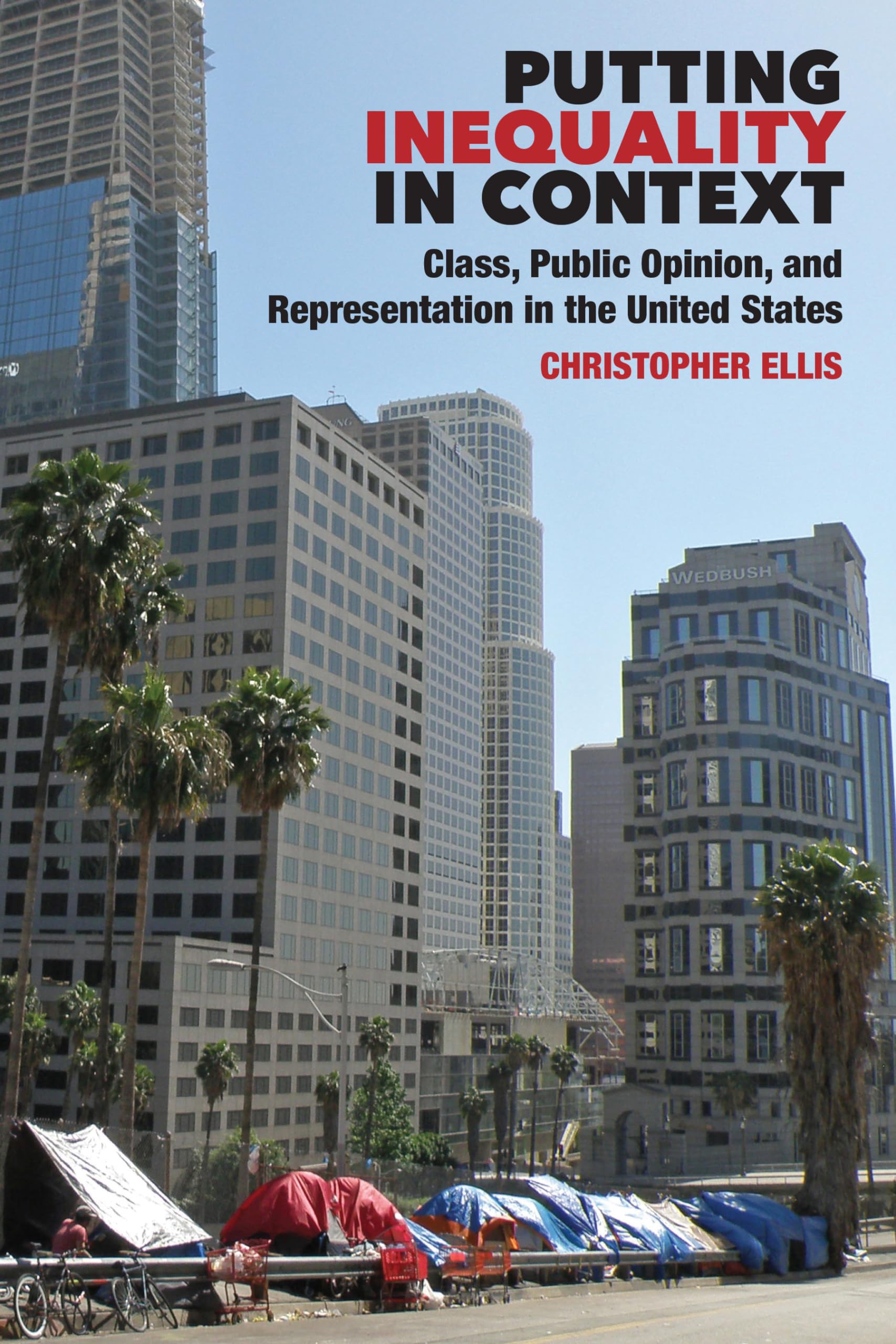
Rising income inequality is highlighted as one of the largest challenges facing the United States, affecting civic participation and political representation. Although the wealthy often can and do exert more political influence, this is not always the case. To fix political inequality, it is important to understand exactly how class divisions manifest themselves in political outcomes, and what factors serve to enhance, or depress, inequalities in political voice.Christopher Ellis argues citizensand legislatorsviews of class politics are driven by lived experience in particular communities. While some experience is formally political, on an informal basis citizens learn a great deal about their position in the broader socioeconomic spectrum and the social norms governing how class intersects with daytoday life. These factors are important for policymakers, since most legislators do not represent the public at large, but specific constituencies.Focusing on U.S. congressional districts as the contextual unit of interest, Ellis argues individuals political behavior cannot be separated from their environment, and shows how incomes role in political processes is affected by the contexts in which citizens and legislators interact. Political inequality exists in the aggregate, but it does not exist everywhere. It is, rather, a function of specific arrangements that depress the political influence of the poor. Identifying and understanding these factors is a crucial step in thinking about what reforms might be especially helpful in enhancing equality of political voice.
⚠️ WARNING (California Proposition 65):
This product may contain chemicals known to the State of California to cause cancer, birth defects, or other reproductive harm.
For more information, please visit www.P65Warnings.ca.gov.