
Title
Quantum Field Theory: A Modern Introduction,Used
Sold by Ergodebooks, an authorized reseller.
Returns accepted within 30 days | support@ergodebooks.com
Shipping Information
- Free Standard Shipping — United States only
- Processing Time: 3–5 business days
- Estimated Delivery: 6–10 business days after dispatch
- Double-boxed, fully insured & discreetly packaged
- Tracking number sent via email once dispatched
Returns & Refund
Returns accepted within 30 days of delivery.
Damaged or Defective Item
Free return shipping + replacement or full refund
Wrong Item Received
Free return shipping + replacement or full refund
Change of Mind
Return shipping at customer's expense · 25% restocking fee applies
Payment Option

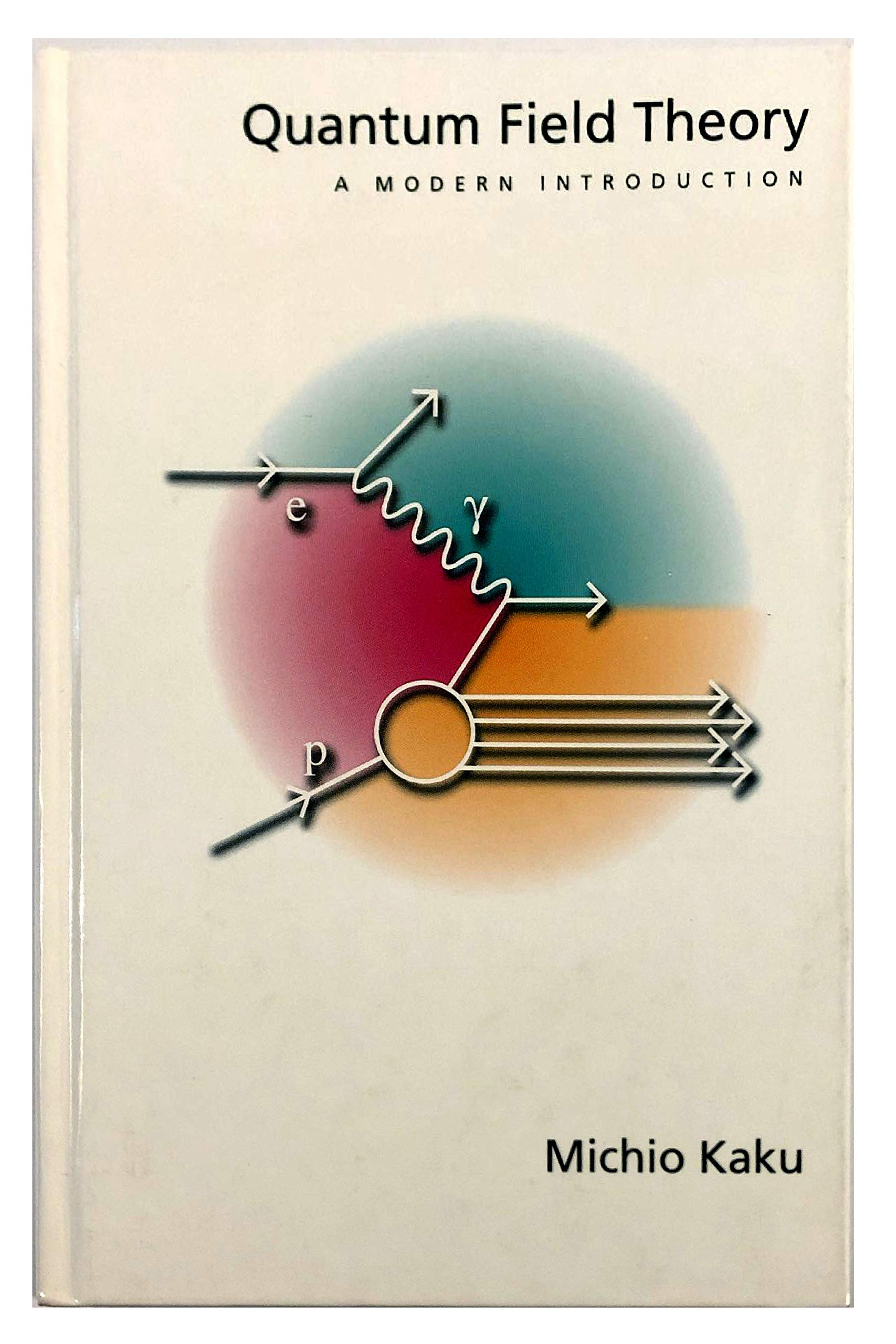
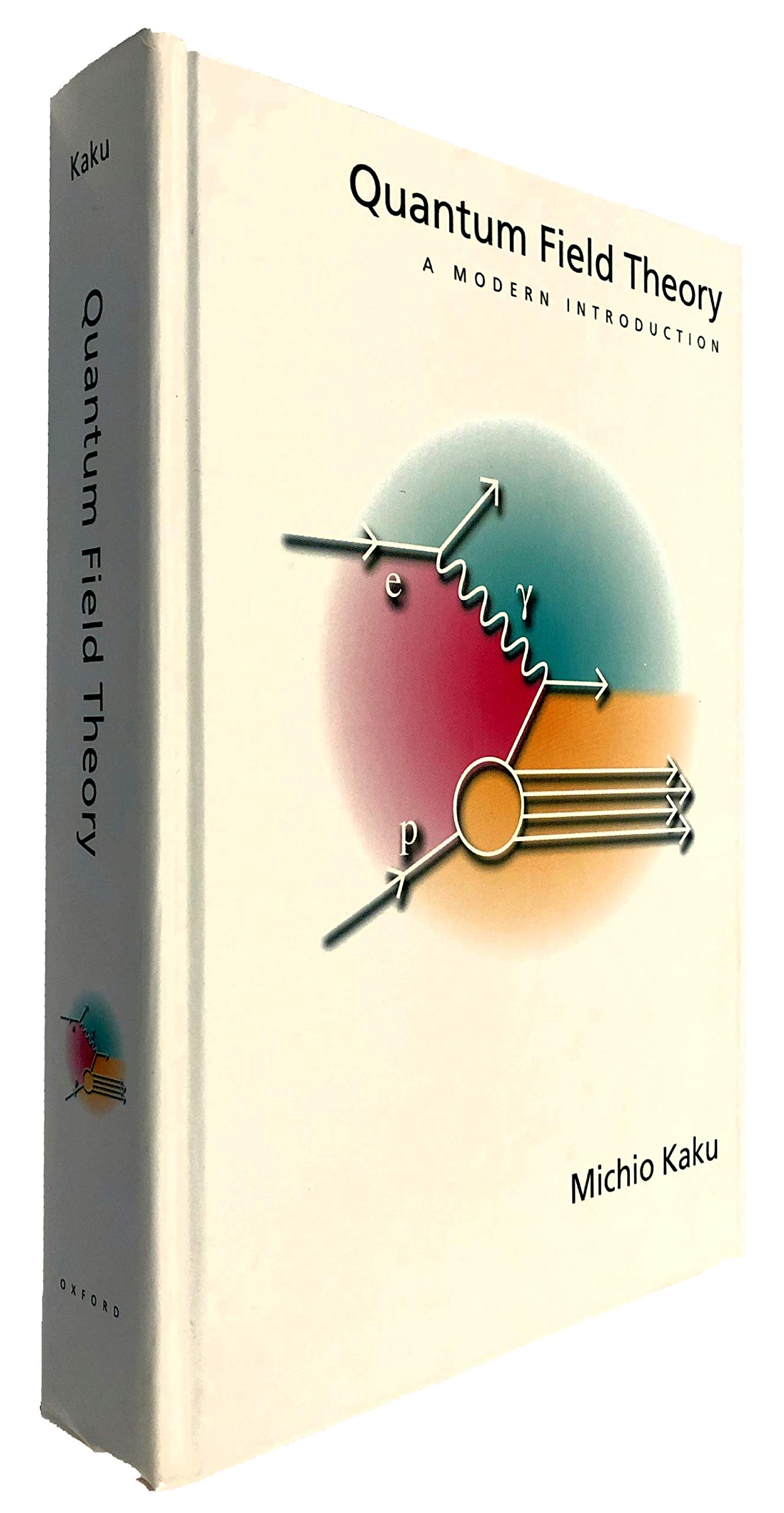
The rise of quantum electrodynamics (QED) made possible a number of excellent textbooks on quantum field theory in the 1960s. However, the rise of quantum chromodynamics (QCD) and the Standard Model has made it urgent to have a fully modern textbook for the 1990s and beyond. Building on the foundation of QED, Quantum Field Theory: A Modern Introduction presents a clear and comprehensive discussion of the gauge revolution and the theoretical and experimental evidence which makes the Standard Model the leading theory of subatomic phenomena. The book is divided into three parts: Part I, Fields and Renormalization, lays a solid foundation by presenting canonical quantization, Feynman rules and scattering matrices, and renormalization theory. Part II, Gauge Theory and the Standard Model, focuses on the Standard Model and discusses path integrals, gauge theory, spontaneous symmetry breaking, the renormalization group, and BPHZ quantization. Part III, Nonperturbative Methods and Unification, discusses more advanced methods which now form an essential part of field theory, such as critical phenomena, lattice gauge theory, instantons, supersymmetry, quantum gravity, supergravity, and superstrings.
⚠️ WARNING (California Proposition 65):
This product may contain chemicals known to the State of California to cause cancer, birth defects, or other reproductive harm.
For more information, please visit www.P65Warnings.ca.gov.
- Q: How many pages does 'Quantum Field Theory: A Modern Introduction' have? A: This book has seven hundred eighty-five pages. It provides an extensive exploration of quantum field theory.
- Q: What are the dimensions of the book? A: The book measures nine point five seven inches in length, one point six six inches in width, and six point five inches in height. These dimensions make it a manageable size for reading.
- Q: What type of binding does this book have? A: The book is bound in hardcover. This binding provides durability and a professional appearance.
- Q: Who is the author of this book? A: The author of 'Quantum Field Theory: A Modern Introduction' is Michio Kaku. He is renowned for his contributions to theoretical physics.
- Q: What category does this book fall under? A: This book falls under the category of Quantum Theory. It is suitable for those interested in advanced physics.
- Q: Is this book suitable for beginners in quantum physics? A: No, this book is not typically suitable for beginners. It is designed for readers with a foundational understanding of quantum mechanics.
- Q: Can this book be used as a textbook for advanced courses? A: Yes, this book is suitable for advanced courses in quantum field theory. It covers essential topics and advanced methods in the field.
- Q: What topics are covered in the book? A: The book covers topics like gauge theory, the Standard Model, and non-perturbative methods. It provides a comprehensive view of modern quantum field theory.
- Q: How should I take care of this hardcover book? A: To care for this book, keep it in a dry, cool place and avoid exposing it to direct sunlight. This helps maintain the integrity of the binding and pages.
- Q: Is there a warranty for this book? A: No, there is typically no warranty for books. However, you can check with the retailer for their return policy.
- Q: What if my book arrives damaged? A: If your book arrives damaged, contact the seller for a return or replacement. Most sellers have specific policies for damaged items.
- Q: Is it safe to read this book during pregnancy? A: Yes, it is safe to read this book during pregnancy. It contains no harmful content.
- Q: What makes this book different from other quantum field theory books? A: This book is unique for its modern approach and comprehensive coverage of topics like quantum chromodynamics and the Standard Model.
- Q: Does this book include exercises or problems? A: No, this book does not include exercises or problems. It focuses more on theoretical discussion and advanced concepts.
- Q: Is this book appropriate for self-study? A: Yes, this book can be used for self-study by those with a solid background in quantum mechanics. It is thorough and informative.
- Q: Who is the publisher of the book? A: The book is published by Oxford University Press, USA. It is known for producing high-quality academic texts.