
Title
Quintana Roo Archaeology,Used
Sold by Ergodebooks, an authorized reseller.
Returns accepted within 30 days | support@ergodebooks.com
Shipping Information
- Free Standard Shipping — United States only
- Processing Time: 3–5 business days
- Estimated Delivery: 6–10 business days after dispatch
- Double-boxed, fully insured & discreetly packaged
- Tracking number sent via email once dispatched
Returns & Refund
Returns accepted within 30 days of delivery.
Damaged or Defective Item
Free return shipping + replacement or full refund
Wrong Item Received
Free return shipping + replacement or full refund
Change of Mind
Return shipping at customer's expense · 25% restocking fee applies
Payment Option

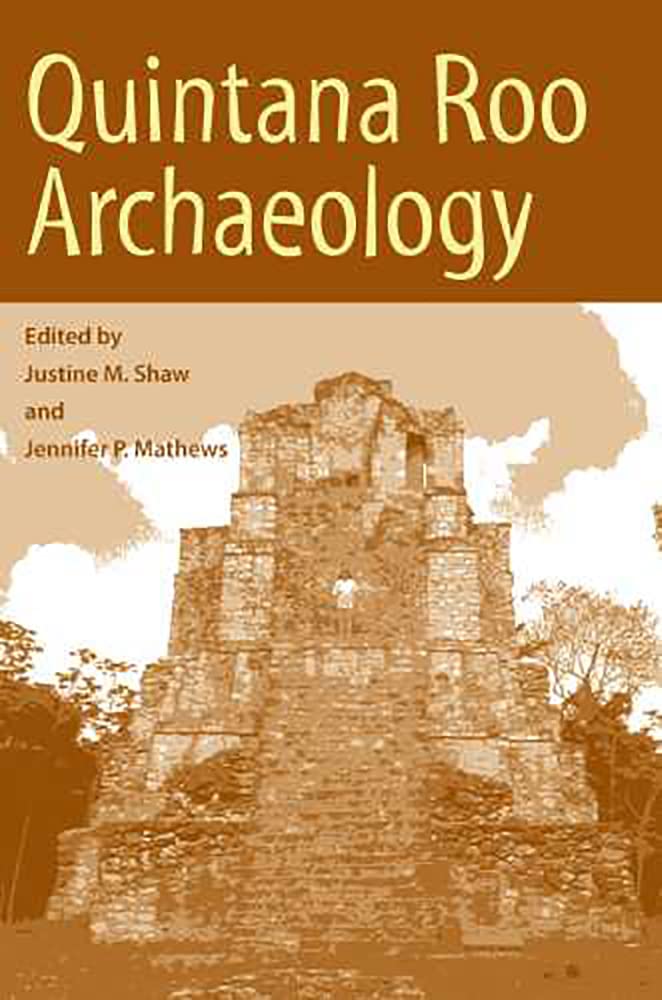
Mexicos southern state of Quintana Roo is often perceived by archaeologists as a blank spot on the map of the Maya world, a region generally assumed to hold little of interest thanks to its relative isolation from the rest of Mexico. But salvage archaeology required by recent development along the Maya Riviera, along with a suite of other ongoing and recent research projects, have shown that the region was critical in connecting coastal and inland zones, and it is now viewed as an important area in its own right from Preclassic through postcontact times.The first volume devoted to the archaeology of Quintana Roo, this book reveals a long tradition of exploration and discovery in the region and an increasingly rich recent history of study. Covering a time span from the Formative period through the early twentieth century, it offers a sampling of recent and ongoing research by Mexican, North American, and European archaeologists. Each of the chapters helps to integrate sites within and beyond the borders of the modern state, inviting readers to consider Quintana Roo as part of an interacting Maya world whose boundaries were entirely different from todays. In taking in the range of the region, the authors consider studies in the northern part of the state resulting from modern development around Cancn; the midstate sites of Muyil and Yookop, both of which witnessed continual occupations from the Middle Preclassic through the Postclassic; and new data from such southern sites as Cerros, Lagartera, and Chichmuul. The contributions consider such subjects as ceramic controversies, settlement shifts, site planning strategies, epigraphic and iconographic materials, the impact of recent coastal development, and the interplay between ancient, historic, and modern use of the region. Many of the chapters confirm the region as a cultural corridor between Cob and the southern lowland centers and address demographic shifts of the Terminal Classic through Postclassic periods, while others help elucidate some of Peter Harrisons Uaymil Survey work of the 1970s.Quintana Roo Archaeology unfolds a rich archaeological record spanning 2,500 years, depicting the depth and breadth of modern archaeological studies within the state. It is an important touchstone for Maya and Mesoamerican archaeologists, demonstrating the shifting web of connections between Quintanarooense sites and their neighbors, and confirming the need to integrate this region into a broader understanding of the ancient Maya.
⚠️ WARNING (California Proposition 65):
This product may contain chemicals known to the State of California to cause cancer, birth defects, or other reproductive harm.
For more information, please visit www.P65Warnings.ca.gov.