
Title
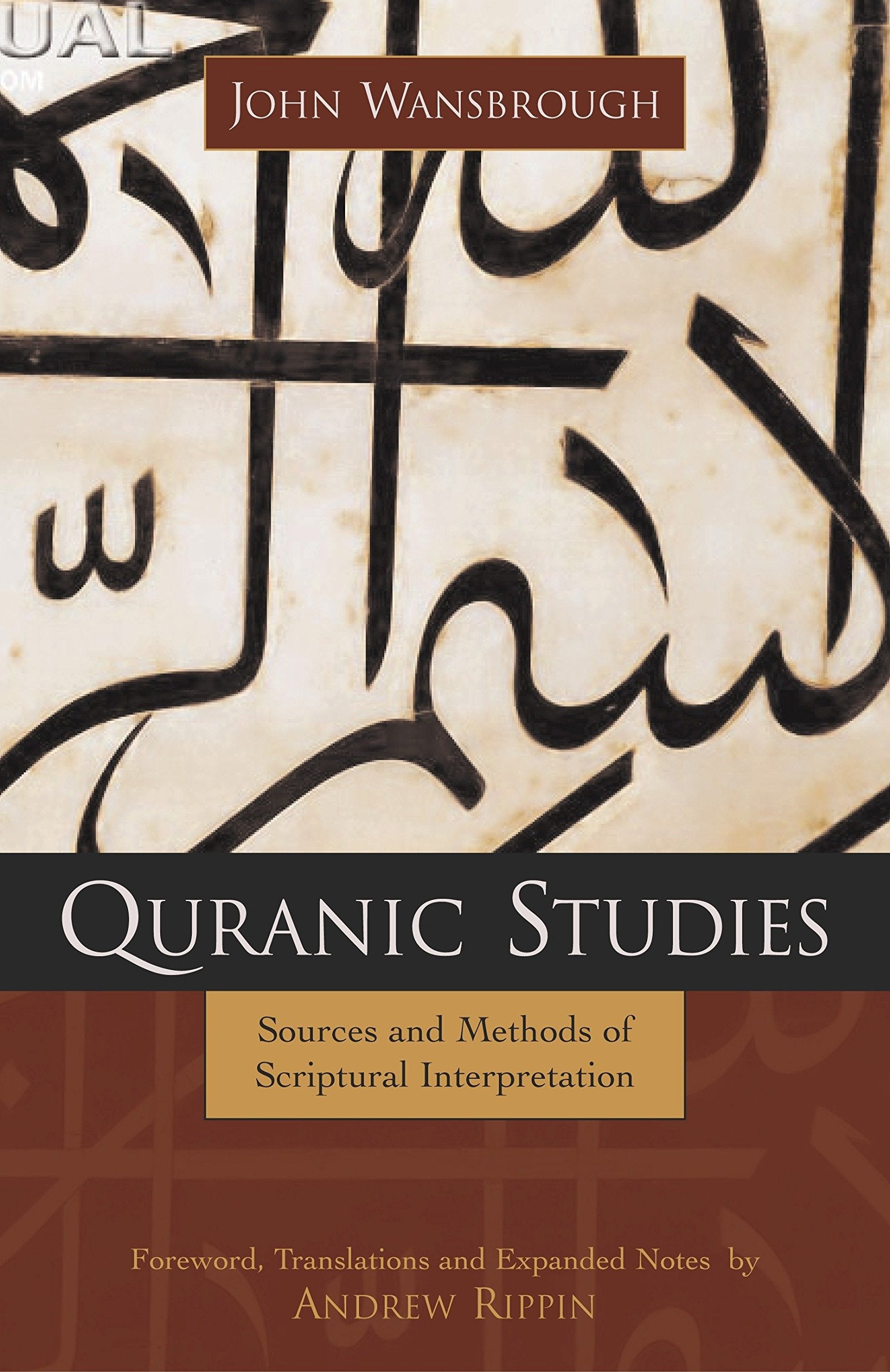
Quranic Studies: Sources and Methods of Scriptural Interpretation,New
Sold by Ergodebooks, an authorized reseller.
Returns accepted within 30 days | support@ergodebooks.com
Shipping Information
- Free Standard Shipping — United States only
- Processing Time: 3–5 business days
- Estimated Delivery: 6–10 business days after dispatch
- Double-boxed, fully insured & discreetly packaged
- Tracking number sent via email once dispatched
Returns & Refund
Returns accepted within 30 days of delivery.
Damaged or Defective Item
Free return shipping + replacement or full refund
Wrong Item Received
Free return shipping + replacement or full refund
Change of Mind
Return shipping at customer's expense · 25% restocking fee applies
Payment Option

One of the most innovative thinkers in the field of Islamic Studies was John Wansbrough (19282002), Professor of Semitic Studies and ProDirector of London University's School of Oriental and African Studies. Critiquing the traditional accounts of the origins of Islam as historically unreliable and heavily influenced by religious dogma, Wansbrough suggested radically new interpretations very different from the views of both the Muslim orthodoxy and most Western scholars.Originally published in 1977, Quranic Studies presents an indepth textual exegesis of the Quran based on form analysis. Noting the persistent use of monotheistic imagery stemming from JudeoChristian sources, he interpreted the rise of Islam as the development of what was originally a JudeoChristian sect. As this sect evolved and differentiated itself from its JudeoChristian roots, the Quran also evolved and was continuously in flux for over a century. Wansbrough concluded that the canonization of the text that we today call the Quran, and even the emergence of the concept of 'Islam,' probably did not occur till the end of the eighth century, more than 150 years after the death of Muhammad.Although his work remains controversial to this day, his fresh insights and approaches to the study of Islam continue to inspire scholars. This new edition contains a valuable assessment of Wansbrough's contributions and many useful textual notes and translations by Andrew Rippin (professor of history, University of Victoria).
⚠️ WARNING (California Proposition 65):
This product may contain chemicals known to the State of California to cause cancer, birth defects, or other reproductive harm.
For more information, please visit www.P65Warnings.ca.gov.
- Q: What is the main focus of 'Quranic Studies: Sources and Methods of Scriptural Interpretation'? A: The book primarily focuses on the innovative interpretations of the Quran and Islamic origins proposed by John Wansbrough, critiquing traditional historical accounts and exploring the text through form analysis.
- Q: Who is the author of this book and what is his significance? A: The author is John Wansbrough, a renowned scholar in Islamic Studies known for his controversial perspectives on the origins of Islam and his critical analysis of traditional narratives.
- Q: What edition of the book is available? A: The currently available edition is the First Edition, published on August 31, 2004.
- Q: How many pages does this book have? A: The book consists of 320 pages.
- Q: What are some notable features of this book? A: Notable features include its mint condition, same-day dispatch for orders received before noon, guaranteed packaging, and a no-quibble returns policy.
- Q: What type of binding does this book have? A: The book is bound in hardcover.
- Q: Is there any additional commentary in this edition? A: Yes, this new edition includes assessments of Wansbrough's contributions along with useful textual notes and translations by Andrew Rippin.
- Q: What type of readers would benefit from this book? A: This book is suitable for scholars, students, and anyone interested in Islamic Studies, particularly those seeking alternative perspectives on Quranic interpretation.
- Q: Are there any controversial aspects to Wansbrough's views? A: Yes, Wansbrough's interpretations remain controversial and challenge both traditional Muslim views and many Western scholarly perspectives.
- Q: How can I ensure the book remains in good condition? A: To keep the book in mint condition, store it in a cool, dry place, handle it with clean hands, and avoid exposing it to direct sunlight or moisture.