
Title
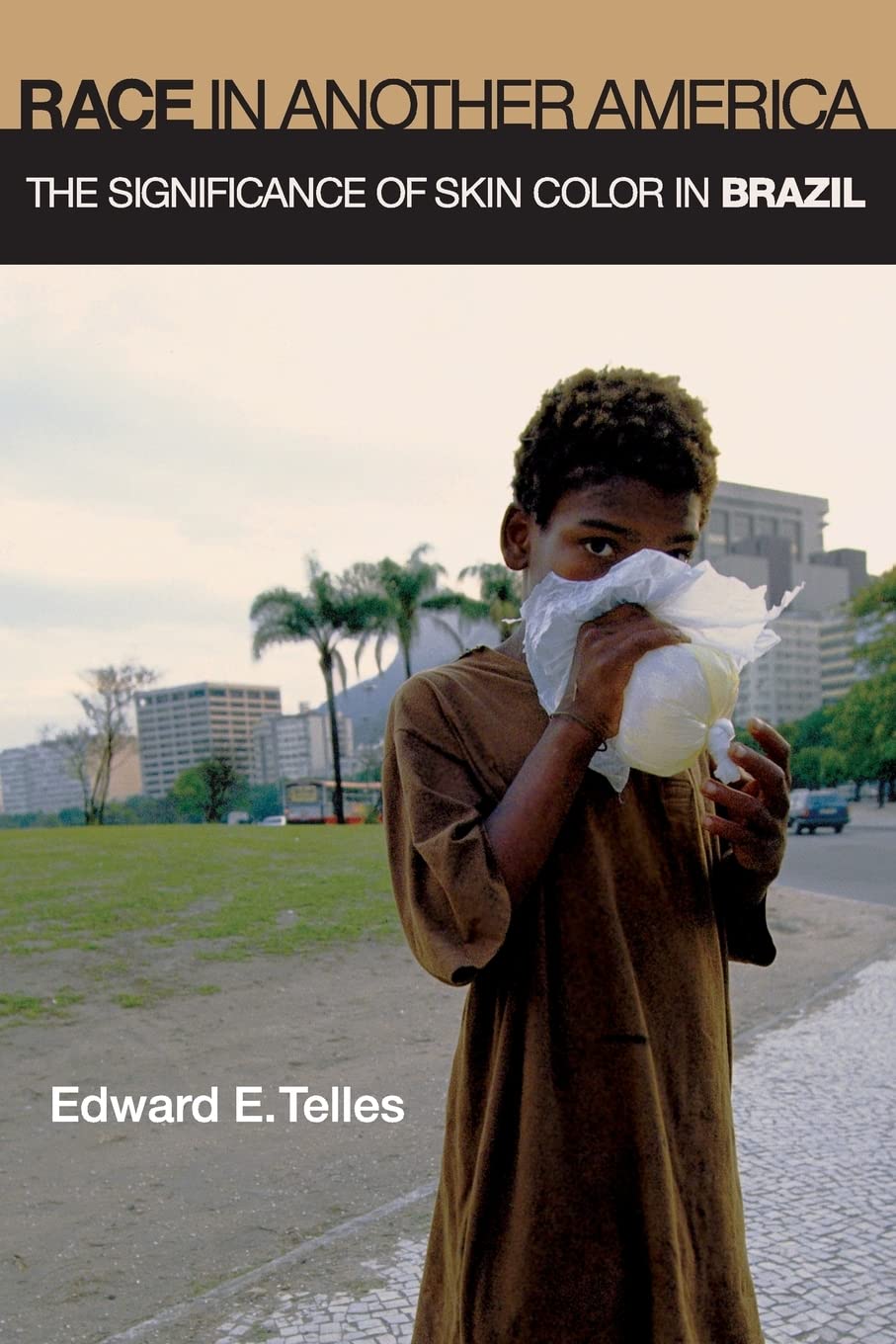
Race in Another America: The Significance of Skin Color in Brazil,Used
Sold by Ergodebooks, an authorized reseller.
Returns accepted within 30 days | support@ergodebooks.com
Shipping Information
- Free Standard Shipping — United States only
- Processing Time: 3–5 business days
- Estimated Delivery: 6–10 business days after dispatch
- Double-boxed, fully insured & discreetly packaged
- Tracking number sent via email once dispatched
Returns & Refund
Returns accepted within 30 days of delivery.
Damaged or Defective Item
Free return shipping + replacement or full refund
Wrong Item Received
Free return shipping + replacement or full refund
Change of Mind
Return shipping at customer's expense · 25% restocking fee applies
Payment Option

This is the most comprehensive and uptodate book on the increasingly important and controversial subject of race relations in Brazil. North American scholars of race relations frequently turn to Brazil for comparisons, since its history has many key similarities to that of the United States. Brazilians have commonly compared themselves with North Americans, and have traditionally argued that race relations in Brazil are far more harmonious because the country encourages race mixture rather than formal or informal segregation.More recently, however, scholars have challenged this national myth, seeking to show that race relations are characterized by exclusion, not inclusion, and that fairskinned Brazilians continue to be privileged and hold a disproportionate share of wealth and power.In this sociological and demographic study, Edward Telles seeks to understand the reality of race in Brazil and how well it squares with these traditional and revisionist views of race relations. He shows that both schools have it partly rightthat there is far more miscegenation in Brazil than in the United Statesbut that exclusion remains a serious problem. He blends his demographic analysis with ethnographic fieldwork, history, and political theory to try to 'understand' the enigma of Brazilian race relationshow inclusiveness can coexist with exclusiveness.The book also seeks to understand some of the political pathologies of buying too readily into unexamined ideas about race relations. In the end, Telles contends, the traditional myth that Brazil had harmonious race relations compared with the United States encouraged the government to do almost nothing to address its shortcomings.
⚠️ WARNING (California Proposition 65):
This product may contain chemicals known to the State of California to cause cancer, birth defects, or other reproductive harm.
For more information, please visit www.P65Warnings.ca.gov.