
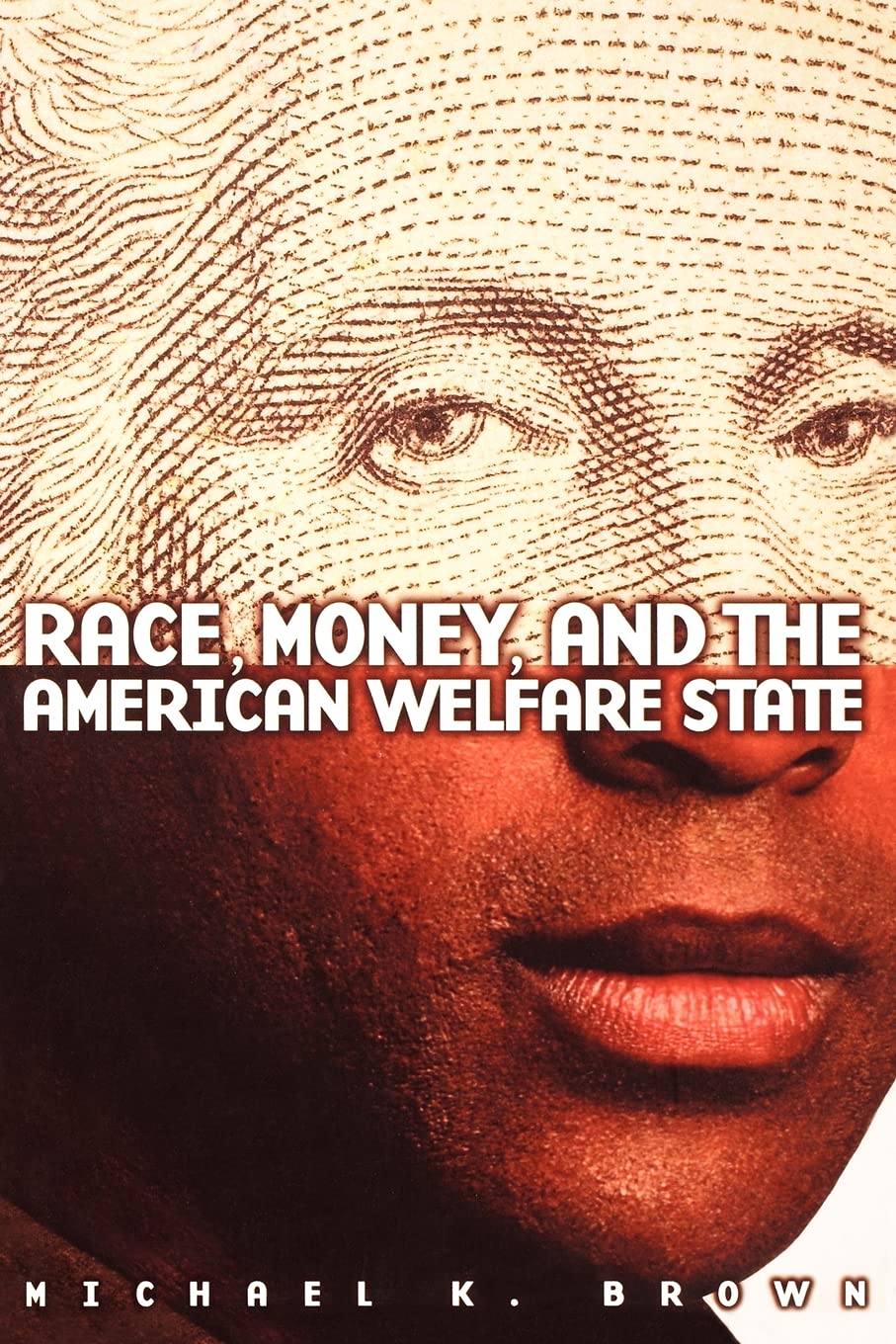
Title
Race, Money, And The American Welfare State,New
Sold by Ergodebooks, an authorized reseller.
Returns accepted within 30 days | support@ergodebooks.com
Shipping Information
- Free Standard Shipping — United States only
- Processing Time: 3–5 business days
- Estimated Delivery: 6–10 business days after dispatch
- Double-boxed, fully insured & discreetly packaged
- Tracking number sent via email once dispatched
Returns & Refund
Returns accepted within 30 days of delivery.
Damaged or Defective Item
Free return shipping + replacement or full refund
Wrong Item Received
Free return shipping + replacement or full refund
Change of Mind
Return shipping at customer's expense · 25% restocking fee applies
Payment Option

The American Welfare State Is Often Blamed For Exacerbating Social Problems Confronting African Americans While Failing To Improve Their Economic Lot. Michael K. Brown Contends That Our Welfare System Has In Fact Denied Them The Social Provision It Gives White Citizens While Stigmatizing Them As Recipients Of Government Benefits For Low Income Citizens. In His Provocative History Of America'S 'Safety Net' From Its Origins In The New Deal Through Much Of Its Dismantling In The 1990S, Brown Explains How The Forces Of Fiscal Conservatism And Racism Combined To Shape A Welfare State In Which Blacks Are Disproportionately Excluded From Mainstream Programs.Brown Describes How Business And Middle Class Opposition To Taxes And Spending Limited The Scope Of The Social Security Act And Work Relief Programs Of The 1930S And The Great Society In The 1960S. These Decisions Produced A Welfare State That Relies Heavily On Privately Provided Health And Pension Programs And Cash Benefits For The Poor. In A Society Characterized By Pervasive Racial Discrimination, This Outcome, Michael Brown Makes Clear, Has Led To A Racially Stratified Welfare System: By Denying African Americans Work, Whites Limited Their Access To Private Benefits As Well As To Social Security And Other Forms Of Social Insurance, Making Welfare Their 'Main Occupation.' In His Conclusion, Brown Addresses The Implications Of His Argument For Both Conservative And Liberal Critiques Of The Great Society And For Policies Designed To Remedy Innercity Poverty.
⚠️ WARNING (California Proposition 65):
This product may contain chemicals known to the State of California to cause cancer, birth defects, or other reproductive harm.
For more information, please visit www.P65Warnings.ca.gov.
- Q: How many pages does this book have? A: This book has four hundred sixteen pages. It provides an in-depth analysis of race and welfare in America.
- Q: What is the binding type of this book? A: The binding type is paperback. This makes it lightweight and easy to handle for readers.
- Q: What are the dimensions of the book? A: The dimensions are six inches in length, one point zero six inches in width, and nine point zero two inches in height. These measurements make it a manageable size for reading.
- Q: Who is the author of this book? A: The author is Michael K. Brown. He explores the complexities of the American welfare state through a historical lens.
- Q: What is the main topic of this book? A: The main topic is the American welfare state and its impact on African Americans. It critiques how welfare provisions are racially stratified.
- Q: How does the author support his arguments? A: The author supports his arguments with historical context and analysis. He examines policies from the New Deal to the 1990s.
- Q: Is this book suitable for academic research? A: Yes, this book is suitable for academic research. It includes extensive references and data to support its claims.
- Q: Is there a specific audience for this book? A: Yes, the book is aimed at readers interested in social issues and race relations. It's particularly relevant for students and scholars.
- Q: What kind of themes does this book explore? A: The book explores themes of race, economics, and social policy. It highlights the intersection of these issues in American society.
- Q: How should I care for this book? A: To care for this book, keep it in a dry place and avoid direct sunlight. This helps preserve the cover and pages.
- Q: Can this book be returned if damaged? A: Yes, the book can be returned if it arrives damaged. Check the seller's return policy for specific instructions.
- Q: What should I do if I have a problem with my order? A: If you have a problem with your order, contact customer support for assistance. They can help resolve any issues.
- Q: Is there a warranty for this book? A: No, there is typically no warranty for books. However, you can return them if unsatisfied or damaged.
- Q: How do I store this book to maintain its condition? A: Store this book upright on a shelf or in a bookcase. This prevents bending and keeps it in good condition.
- Q: Does this book include illustrations or charts? A: Yes, this book includes sixteen tables and nine charts/graphs. These visuals help illustrate the author's points.
- Q: What makes this book unique? A: This book is unique for its in-depth critique of the welfare state through the lens of race. It challenges common perceptions with thorough research.