
Title
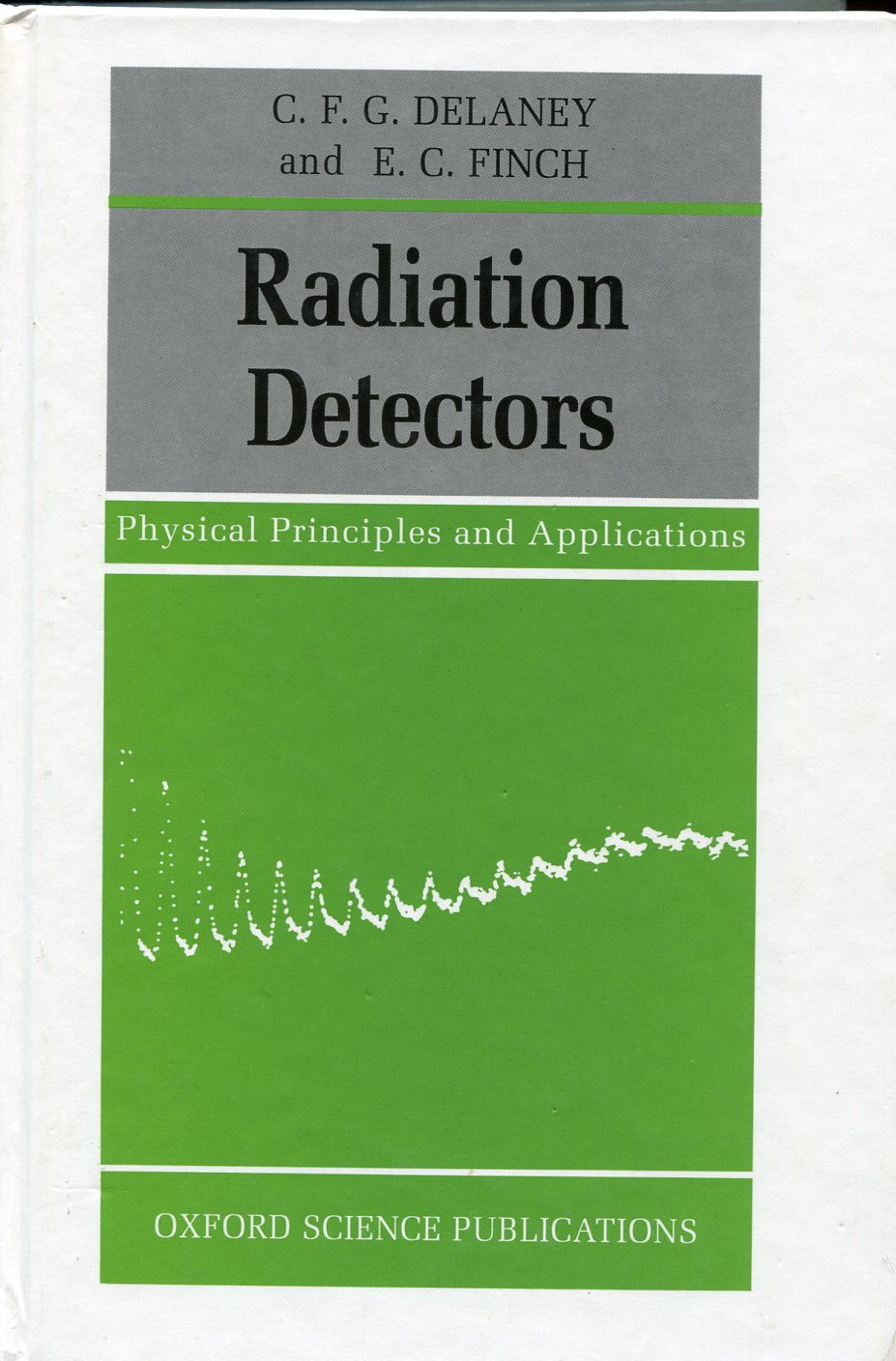
Radiation Detectors: Physical Principles And Applications (Oxford Science Publications)
Sold by Ergodebooks, an authorized reseller.
Returns accepted within 30 days | support@ergodebooks.com
Shipping Information
- Free Standard Shipping — United States only
- Processing Time: 3–5 business days
- Estimated Delivery: 6–10 business days after dispatch
- Double-boxed, fully insured & discreetly packaged
- Tracking number sent via email once dispatched
Returns & Refund
Returns accepted within 30 days of delivery.
Damaged or Defective Item
Free return shipping + replacement or full refund
Wrong Item Received
Free return shipping + replacement or full refund
Change of Mind
Return shipping at customer's expense · 25% restocking fee applies
Payment Option

From The Pocket Dosemeter And Photographic Emulsions To The Superheated Drop Detector And The Single Particle Calorimeter, This Text Describes The Wide Range Of Sensing Apparatus Used For Observing And Measuring Nuclear Radiation. Emphasis Is Placed On Simple But Thorough Explanations Of The Underlying Physics For Each Detector And On Their Applications. Introductions To The Types Of Radiation And Their Interaction With Matter Lead To Descriptions Of Well Established Devices Such As Ionization Chambers, Proportional And Geiger Counters, Scintillation Counters, Semiconductor Detectors, And Other More Recent Innovations Such As Semiconductor Drift Chambers And Dark Matter Detectors. A Separate Chapter Discusses Sources Of Noise And Their Influence On The Energy Resolution Achievable With Different Systems. The Book Has Been Written By Two Physicists Who Have Worked And Taught In The Field For Many Years. It Is Intended For Advanced Undergraduates And Graduate Students As Well As Technicians And Workers Who Use Sources Of Ionizing Radiation.
⚠️ WARNING (California Proposition 65):
This product may contain chemicals known to the State of California to cause cancer, birth defects, or other reproductive harm.
For more information, please visit www.P65Warnings.ca.gov.
- Q: How many pages does this book have? A: This book has three hundred seventy-six pages. It provides a comprehensive exploration of radiation detectors and their applications.
- Q: What are the dimensions of this book? A: The dimensions of this book are six and a half inches in length, one point zero six inches in width, and nine and a half inches in height.
- Q: What type of binding does this book have? A: This book is available in hardcover binding. This type of binding offers durability and a premium feel.
- Q: Who is the author of this book? A: The author of this book is C. F. G. Delaney. He has extensive experience in teaching and working in the field of nuclear physics.
- Q: What category does this book fall under? A: This book falls under the Nuclear category. It covers physical principles and applications related to radiation detection.
- Q: Is this book suitable for beginners? A: This book is intended for advanced undergraduates and graduate students. It may not be suitable for beginners without a background in physics.
- Q: What is the primary focus of this book? A: The primary focus of this book is on explaining the physics behind various radiation detectors. It also discusses their practical applications.
- Q: Can technicians benefit from this book? A: Yes, technicians can benefit from this book. It provides valuable insights into the operation and application of radiation detection devices.
- Q: Is this book relevant for those studying nuclear physics? A: Yes, this book is highly relevant for students studying nuclear physics. It covers essential concepts and technologies in the field.
- Q: Does the book include information on noise sources? A: Yes, the book includes a separate chapter discussing sources of noise. It explains their influence on energy resolution in detection systems.
- Q: What are the key topics covered in this book? A: Key topics include types of radiation, interaction with matter, ionization chambers, Geiger counters, and semiconductor detectors.
- Q: Is this book intended for professionals? A: Yes, this book is intended for professionals working with ionizing radiation. It serves as a reference for advanced concepts in radiation detection.
- Q: What makes this book unique? A: This book is unique due to its thorough explanations of detector physics and its comprehensive coverage of both traditional and modern detection methods.
- Q: How is the content structured in this book? A: The content is structured to introduce radiation types, followed by detailed descriptions of established and innovative detection devices.
- Q: Can this book be used as a textbook? A: Yes, this book can be used as a textbook for advanced courses in nuclear physics and radiation detection.
- Q: What type of audience is this book aimed at? A: This book is aimed at advanced undergraduates, graduate students, and professionals in the field of nuclear science.