If you have any questions, you are always welcome to contact us. We'll get back to you as soon as possible, withing 24 hours on weekdays.
Customer service
All questions about your order, return and delivery must be sent to our customer service team by e-mail at yourstore@yourdomain.com
Sale & Press
If you are interested in selling our products, need more information about our brand or wish to make a collaboration, please contact us at press@yourdomain.com
Help
If you have any questions, you are always welcome to contact us. We'll get back to you as soon as possible, withing 24 hours on weekdays.
Customer service
All questions about your order, return and delivery must be sent to our customer service team by e-mail at yourstore@yourdomain.com
Sale & Press
If you are interested in selling our products, need more information about our brand or wish to make a collaboration, please contact us at press@yourdomain.com
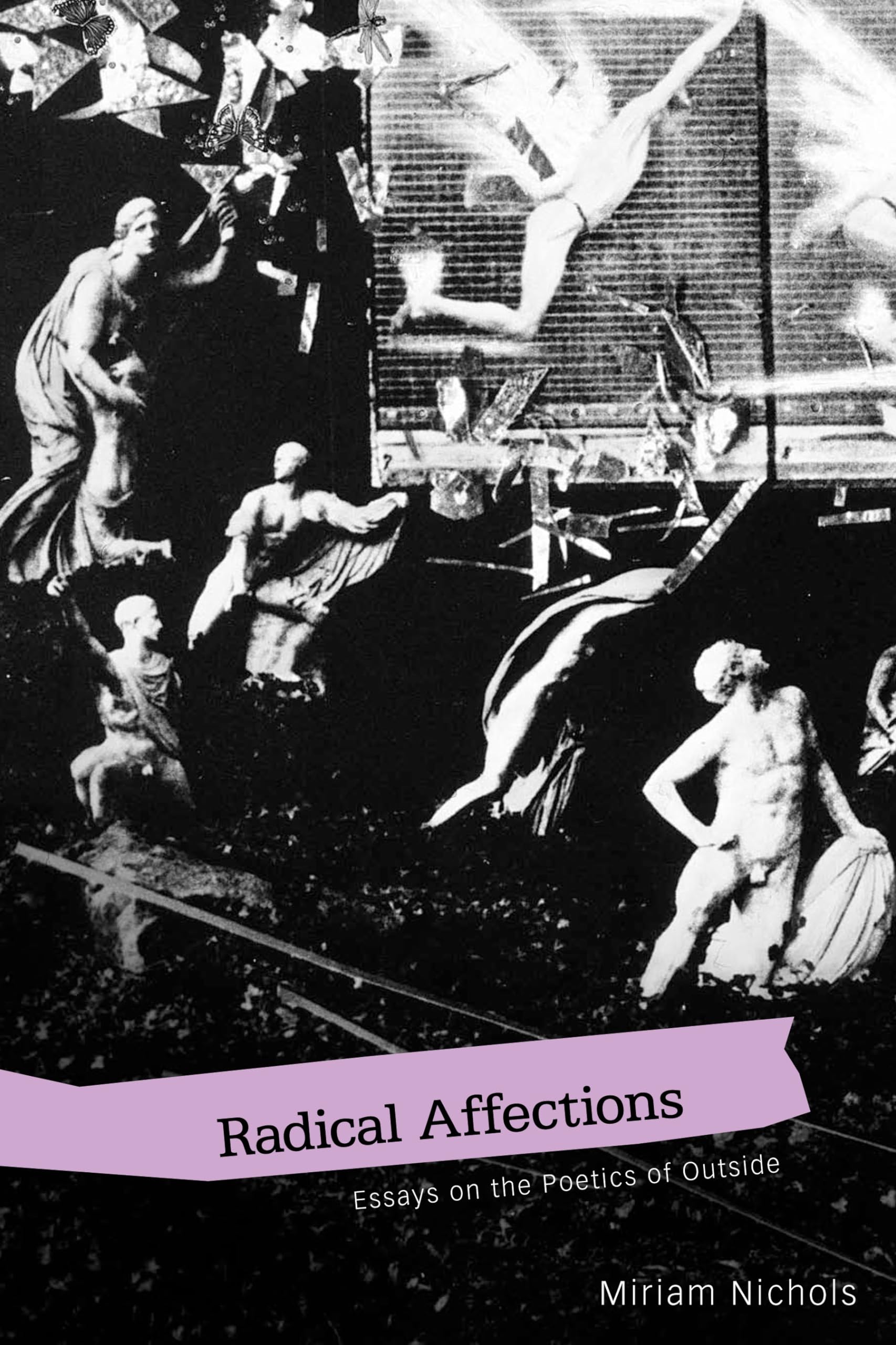
A study of six poets central to the New American poetryCharles Olson, Robert Creeley, Robert Duncan, Jack Spicer, Robin Blaser, and Susan Howewith an eye both toward challenging the theoretical lenses through which they have been viewed and to opening up this counter tradition to contemporary practiceIn 1950 the poet Charles Olson published his influential essay Projective Verse in which he proposed a poetry of open field compositionto replace traditional closed poetic forms with improvised forms that would reflect exactly the content of the poem.The poets and poetry that have followed in the wake of the projectivist movementthe Black Mountain group, the New York School, the San Francisco Renaissance, and the Language poetshave since been studied at length. But more often than not they have been studied through the lens of continental theory with the effect that these highly propositional, pragmatic, and adaptable forms of verse were interpreted in very cramped, polemical ways.Miriam Nichols highlights many of the impulses original to the thinking and methods of each poet: appeals to perceptual experience, spontaneity, renewed relationships with nature, engaging the felt worldwhat Nichols terms a poetics of outsidefocusing squarely on experiences beyond the selfregarding self. As Nichols states, these poets may well represent the last moment in recent cultural history when a serious poet could write from perception or pursue a visionary poetics without irony or quotation marks and expect serious intellectual attention.
⚠️ WARNING (California Proposition 65):
This product may contain chemicals known to the State of California to cause cancer,
birth defects, or other reproductive harm.
For MAP (Minimum Advertised Price) violations and Intellectual Property (IP) or Trademark concerns, please contact:
support@ergodebooks.com
⚠️ California Proposition 65 Warning: Some products sold on this website may expose you to chemicals known to the State of California to cause cancer, birth defects, or other reproductive harm. For more information, visit www.P65Warnings.ca.gov.