
Title
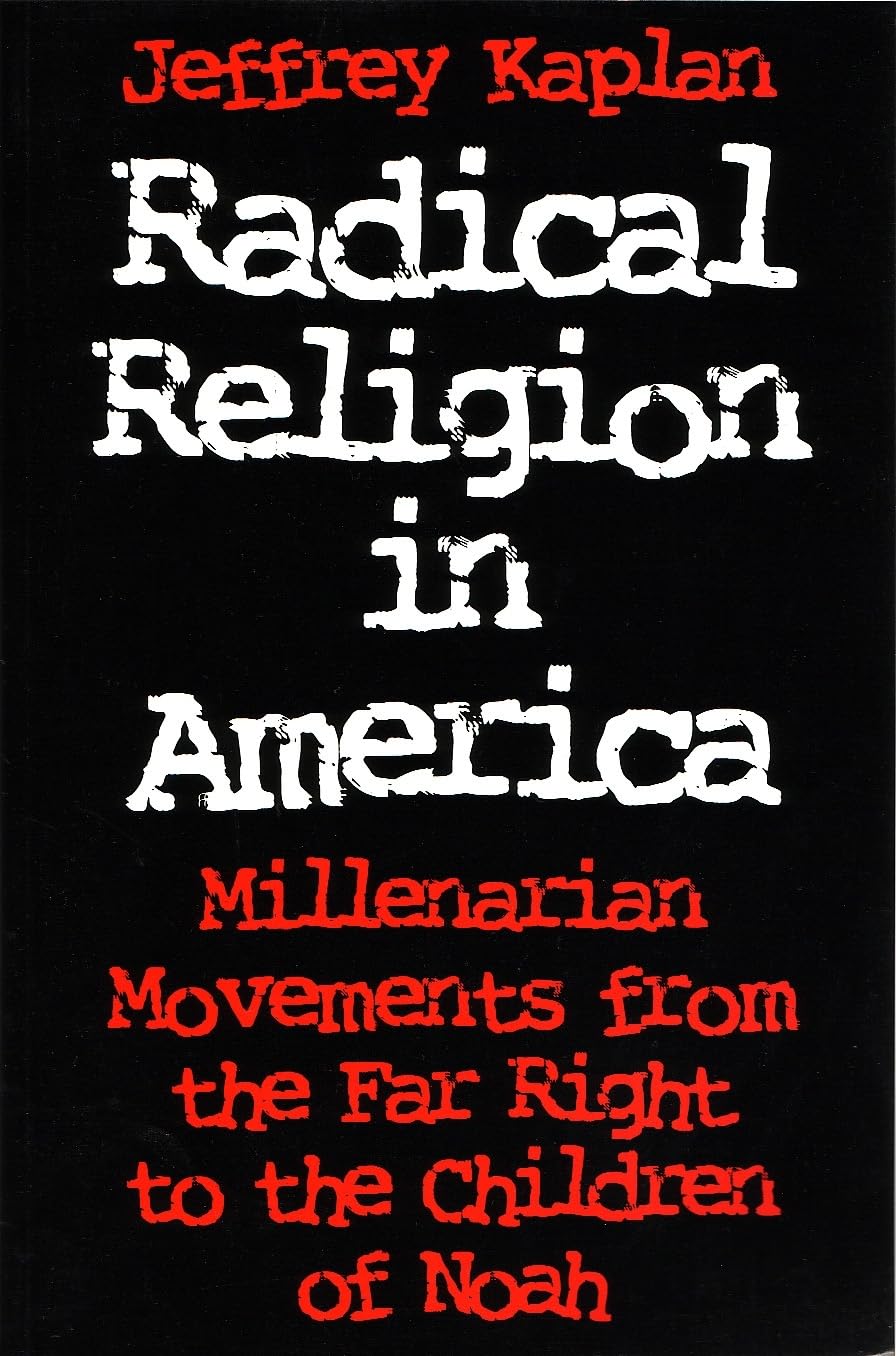
Radical Religion In America: Millenarian Movements From The Far Right To The Children Of Noah (Religion And Politics)
Sold by Ergodebooks, an authorized reseller.
Returns accepted within 30 days | support@ergodebooks.com
Shipping Information
- Free Standard Shipping — United States only
- Processing Time: 3–5 business days
- Estimated Delivery: 6–10 business days after dispatch
- Double-boxed, fully insured & discreetly packaged
- Tracking number sent via email once dispatched
Returns & Refund
Returns accepted within 30 days of delivery.
Damaged or Defective Item
Free return shipping + replacement or full refund
Wrong Item Received
Free return shipping + replacement or full refund
Change of Mind
Return shipping at customer's expense · 25% restocking fee applies
Payment Option

The Burning In Waco Of The Branch Davidian Compound And The Oklahoma City Bombing Have Heightened Fear Of American Extremist Groups. Jeffrey Kaplan Combines Interviews, Correspondence, And Publications Not Hitherto Accessible To Examine The Cultic Milieu In Which These Religious Movements Exist.Kaplan Discusses Several Radical Belief Systems, But Concentrates On Three Of The More Prominent Groups. They Include The Christian Identity, Whose Members Believe They Are The True Aryan Descendants Of Israeli Biblical Tribes; Odinism And The Related Asatru Movement, Which Attempts To Reconstruct The Practices Of Norsegermanic Paganism; And B'Bai Noah, The Antichristian Movement In Favor Of God'S Covenant With Noah.To Explain The Existence And Durability Of Religious Cults, He Applies The Philosophy Of Colin Campbell. From Martin Marty, He Employs The Mapping Theory To Place The Movements In The Sphere Of American Spirituality. His Work Details How The Groups Interact, The Internal Organizational Friction, And How The Private Anticult Groupsthe Antidefamation League, Klanwatch, And Cult Awareness Networkmonitor The Activity Of The Movements.He Argues That Rightwing Violence Is Primarily An Impulsive Act Carried Out By Parttime Revolutionaries Against Convenient Targets Or Against That Which Represents Change In The Status Quo. Thought Provoking In His Analysis, Kaplan Lays Bare The Issues For Current Debatehow Sectarian Organizations, Far Outside The Mainstream Of American Religious Life, Pose A Significant Challenge To Prevailing Conceptions Of The First Amendment. He Questions The Extent To Which Even The Most Antagonistic And Despised Groups Can Carry Out Fanatical Actions And Still Benefit From Such Protection.
⚠️ WARNING (California Proposition 65):
This product may contain chemicals known to the State of California to cause cancer, birth defects, or other reproductive harm.
For more information, please visit www.P65Warnings.ca.gov.
- Q: What is the main focus of 'Radical Religion in America'? A: 'Radical Religion in America' primarily examines millenarian movements in the U.S., focusing on radical belief systems such as Christian Identity, Odinism, and B'bai Noah.
- Q: Who is the author of this book? A: The author of 'Radical Religion in America' is Professor Jeffrey Kaplan, known for his research on extremist groups and cultic movements.
- Q: How many pages does the book have? A: 'Radical Religion in America' contains 368 pages.
- Q: What is the condition of the book being sold? A: The book is listed in 'Good' condition, indicating it may show some signs of wear but is still fully functional.
- Q: When was 'Radical Religion in America' published? A: The book was published on January 1, 1997.
- Q: What type of binding does this book have? A: 'Radical Religion in America' is available in paperback binding.
- Q: What are some themes discussed in the book? A: The book explores themes of radical religious beliefs, right-wing violence, the interaction of cults, and the challenges they pose to the First Amendment.
- Q: Is there any specific methodology used by the author? A: Jeffrey Kaplan utilizes interviews, correspondence, and previously inaccessible publications to analyze the cultic milieu of these movements.
- Q: Does the book address how these groups are monitored? A: Yes, the book discusses how anti-cult organizations like the Anti-Defamation League and Klanwatch monitor the activities of radical religious groups.
- Q: What is the significance of the book's content? A: 'Radical Religion in America' provides a critical analysis of how extremist religious movements challenge mainstream American religious life and societal norms.