
Title
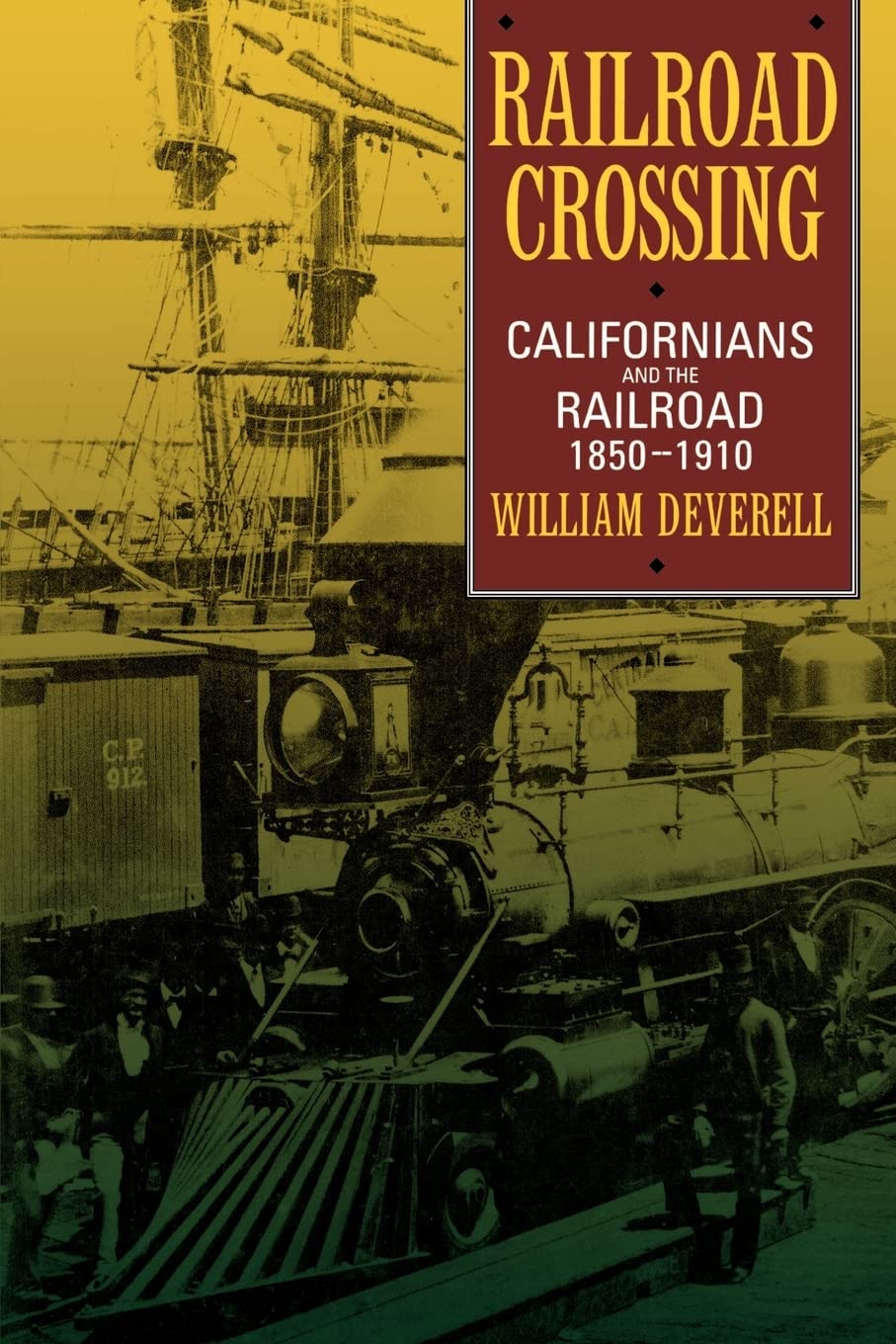
Railroad Crossing: Californians and the Railroad, 18501910,New
Sold by Ergodebooks, an authorized reseller.
Returns accepted within 30 days | support@ergodebooks.com
Shipping Information
- Free Standard Shipping — United States only
- Processing Time: 3–5 business days
- Estimated Delivery: 6–10 business days after dispatch
- Double-boxed, fully insured & discreetly packaged
- Tracking number sent via email once dispatched
Returns & Refund
Returns accepted within 30 days of delivery.
Damaged or Defective Item
Free return shipping + replacement or full refund
Wrong Item Received
Free return shipping + replacement or full refund
Change of Mind
Return shipping at customer's expense · 25% restocking fee applies
Payment Option

Nothing so changed nineteenthcentury America as did the railroad. Growing up together, the iron horse and the young nation developed a fast friendship. Railroad Crossing is the story of what happened to that friendship, particularly in California, and it illuminates the chaos that was industrial America from the middle of the nineteenth century through the first decade of the twentieth.Americans clamored for the progress and prosperity that railroads would surely bring, and no railroad was more crucial for California than the transcontinental line linking East to West. With Gold Rush prosperity fading, Californians looked to the railroad as the state's new savior. But social upheaval and economic disruption came down the tracks along with growth and opportunity.Analyzing the changes wrought by the railroad, William Deverell reveals the contradictory roles that technology and industrial capitalism played in the lives of Americans. That contrast was especially apparent in California, where the gigantic corporate 'Octopus'the Southern Pacific Railroadheld nearmonopoly status. The state's largest employer and biggest corporation, the S.P. was a key provider of jobs and transportationand wielder of tremendous political and financial clout.Deverell's lively study is peopled by a rich and disparate cast: railroad barons, newspaper editors, novelists, union activists, feminists, farmers, and the railroad workers themselves. Together, their lives reflect the many tensionspolitical, social, and economicthat accompanied the industrial transition of turnofthecentury America.
⚠️ WARNING (California Proposition 65):
This product may contain chemicals known to the State of California to cause cancer, birth defects, or other reproductive harm.
For more information, please visit www.P65Warnings.ca.gov.
- Q: What is the main focus of the book 'Railroad Crossing: Californians and the Railroad, 1850-1910'? A: The book focuses on the relationship between California and the railroad during the 19th century, exploring how this relationship impacted the social, economic, and political landscape of the state.
- Q: Who is the author of this book? A: The author of 'Railroad Crossing: Californians and the Railroad, 1850-1910' is William F. Deverell.
- Q: When was this book published? A: The book was published on March 22, 1996.
- Q: What is the format of the book? A: The book is available in paperback format.
- Q: How many pages does the book contain? A: The book contains 308 pages.
- Q: What topics are covered in the book? A: The book covers topics such as the impact of the railroad on California's economy, the social upheaval during industrialization, and the political power of the Southern Pacific Railroad.
- Q: Is the book suitable for academic research? A: Yes, the book provides a historical analysis that can be useful for academic research on American industrialization and transportation history.
- Q: What is the condition of the book? A: The book is listed as 'New'.
- Q: Who might be interested in reading this book? A: Readers interested in American history, railroad history, and the socio-economic impacts of industrialization would find this book valuable.
- Q: Does the book include any illustrations or photographs? A: The product details do not specify whether the book includes illustrations or photographs.