
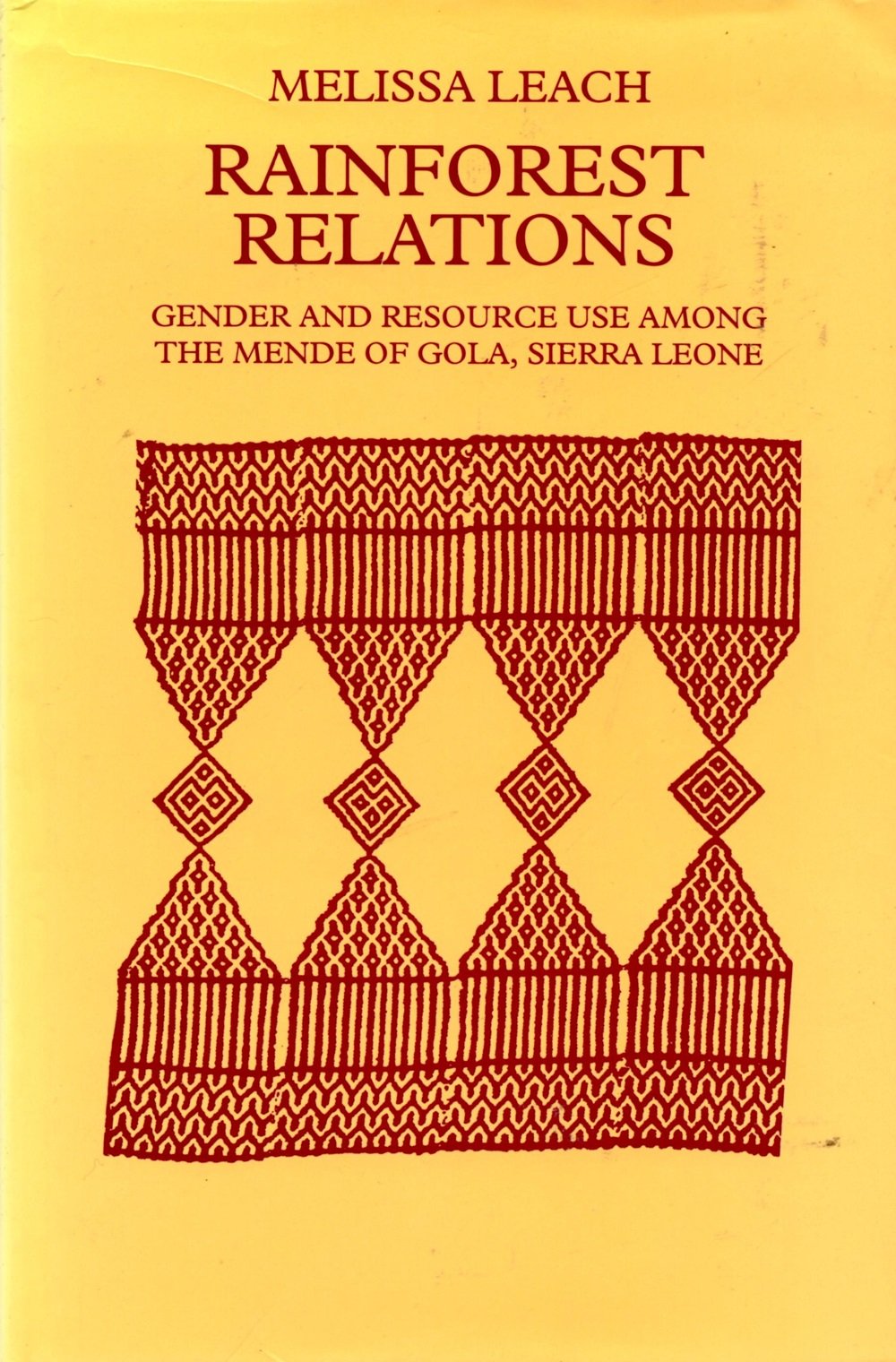
Title
Rain Forest Relations
Sold by Ergodebooks, an authorized reseller.
Returns accepted within 30 days | support@ergodebooks.com
Shipping Information
- Free Standard Shipping — United States only
- Processing Time: 3–5 business days
- Estimated Delivery: 6–10 business days after dispatch
- Double-boxed, fully insured & discreetly packaged
- Tracking number sent via email once dispatched
Returns & Refund
Returns accepted within 30 days of delivery.
Damaged or Defective Item
Free return shipping + replacement or full refund
Wrong Item Received
Free return shipping + replacement or full refund
Change of Mind
Return shipping at customer's expense · 25% restocking fee applies
Payment Option

Centering On The Mendespeaking People Living Around The Gola Forest Reserves In Sierra Leone, Rainforest Relations Shows How Local Communities And Individuals In Rainforest Regions Use And View Forest Resources Amid International Environmental Scrutiny And Changing Socioeconomic Conditions. Leach Argues That If Both The Rainforests And Their Human Inhabitants Are To Survive, Conservation Policies Must Refocus To Address Local Interests In General And Women'S Interests In Particular.Drawing On Anthropological Fieldwork In Mende Communities, Leach Details Daytoday Interaction With The Environment, Examining Labor And Tenure Arrangements, Gathered Products And Their Markets, Hunting And Fishing Practices, And Crop Types. She Focuses On Different Women'S And Men'S Experiences And Their Access To, Use, And Control Of The Land. She Shows How Links Between Local Women And Their Environment Depend On Dynamic Gender Relations In Agriculture, Forest Resource Use, And Social Life. This Gender Study Is Placed In The Context Of Both An Overview Of West African Conservation Agendas Over The Past Century And An Examination Of The Strengths And Weaknesses Of Ecofeminism And Other Currently Popular Approaches To Women And The Environment.
⚠️ WARNING (California Proposition 65):
This product may contain chemicals known to the State of California to cause cancer, birth defects, or other reproductive harm.
For more information, please visit www.P65Warnings.ca.gov.
- Q: What is the page count of 'Rain Forest Relations'? A: The book contains two hundred seventy-two pages. This length allows for an in-depth exploration of the subjects discussed.
- Q: What are the dimensions of 'Rain Forest Relations'? A: The book measures six point seventy-five inches in length, one inch in width, and nine point seventy-six inches in height. These dimensions make it a standard hardcover size.
- Q: What type of binding does 'Rain Forest Relations' have? A: The book features a hardcover binding. This enhances durability and protects the pages over time.
- Q: Who is the author of 'Rain Forest Relations'? A: The author is Melissa Leach. She is known for her anthropological work and insights into environmental issues.
- Q: What is the main topic of 'Rain Forest Relations'? A: The book centers on the Mende-speaking people and their relationship with rainforest resources. It addresses both conservation and local community interests.
- Q: Is 'Rain Forest Relations' suitable for academic study? A: Yes, the book is suitable for academic study. It provides valuable insights into social sciences, particularly in conservation and gender relations.
- Q: How should I care for 'Rain Forest Relations'? A: To care for the book, store it in a cool, dry place away from direct sunlight. This helps preserve its condition and longevity.
- Q: Can I clean the cover of 'Rain Forest Relations'? A: Yes, you can lightly wipe the cover with a soft, dry cloth. Avoid using water or cleaning solutions, as they may damage the book.
- Q: Is 'Rain Forest Relations' appropriate for children? A: The book is not specifically targeted at children. It deals with complex social and environmental issues that may be more suitable for older teens and adults.
- Q: Is 'Rain Forest Relations' a good resource for gender studies? A: Yes, the book offers significant insights into gender relations within environmental contexts. It is particularly beneficial for studies related to ecofeminism.
- Q: What are the key themes in 'Rain Forest Relations'? A: Key themes include conservation, gender relations, and local community perspectives on environmental resources. The book provides a comprehensive view of these topics.
- Q: How does 'Rain Forest Relations' address conservation policies? A: The book critiques current conservation policies and emphasizes the need to consider local and women's interests for effective environmental management.
- Q: What audience is 'Rain Forest Relations' intended for? A: The book is intended for scholars, students, and anyone interested in social sciences and environmental studies. It enriches understanding of complex interactions between communities and their environments.
- Q: Does 'Rain Forest Relations' include fieldwork insights? A: Yes, the book is based on anthropological fieldwork in Mende communities. This provides real-world context to the discussions on environmental use and gender.
- Q: Is there a focus on women's experiences in 'Rain Forest Relations'? A: Yes, the book highlights women's experiences and their interactions with the environment. It emphasizes the importance of gender in conservation discussions.
- Q: What makes 'Rain Forest Relations' unique? A: The book's unique perspective comes from its focus on local communities' experiences and the critical analysis of gender relations in environmental contexts.